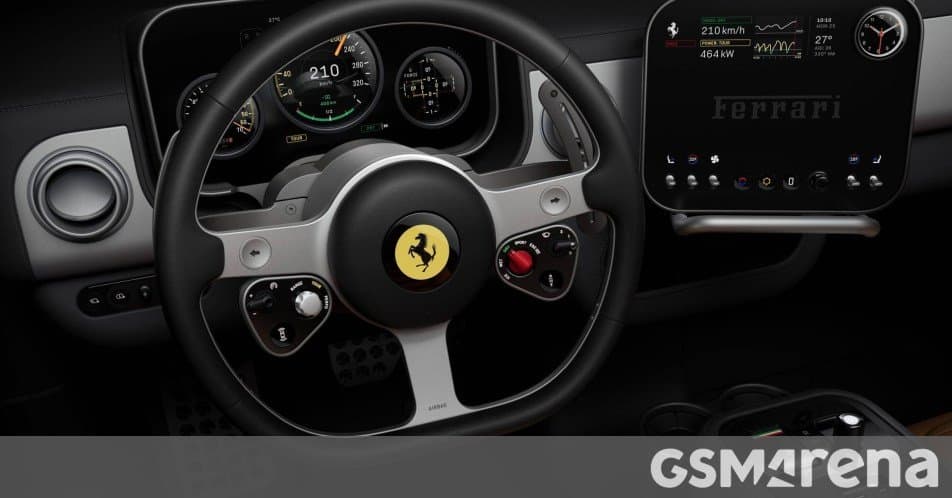
Ferrari’s limited‑edition Luce, styled by Jony Ive, will feature four Samsung‑made OLED screens – a dual‑layer instrument cluster with a 20 mm hole for a physical needle, a 10.1″ control panel with clock‑hand needles, and rear‑seat 6.3″ displays – showcasing how automotive UI is moving toward tactile, three‑dimensional visual experiences.
 )
)
Ferrari’s upcoming hyper‑luxury model, the Luche, is set to become a showcase for Samsung Display’s most experimental OLED technology. Designed by Sir Jony Ive’s studio LoveFrom, the car’s interior will host four Samsung‑made panels – 12.9 in, 12 in, 10.1 in and 6.3 in – each employing a mix of hole‑in‑active‑area (HIAA) tech and a stacked‑panel architecture that blurs the line between digital graphics and physical gauges.
What the displays actually do
1. Binnacle – a two‑layer instrument cluster
- Size: a 12 in OLED panel sits beneath a 12.9 in panel.
- Function: the lower layer renders static background elements such as gauge tick marks and ambient lighting effects. The upper layer shows the active read‑outs and contains three large circular cut‑outs.
- Physical needle: a traditional analog needle pierces the upper OLED through Samsung’s proprietary HIAA (Hole In Active Area) process. While smartphone cameras typically use 5 mm holes, the Luce’s needle requires a hole roughly 20 times larger – about 1 cm in diameter – demanding a new level of precision in panel manufacturing.
- Result: the stacked design creates a genuine three‑dimensional cockpit, giving the driver a tactile reference point that feels more like a classic sports car dashboard than a flat digital screen.
2. Central control panel – a digital clock with real hands
- Size: 10.1 in OLED.
- Features: configurable widgets for a clock, stopwatch, compass and vehicle‑status shortcuts.
- HIAA implementation: three slender physical hands (hour, minute, second) pass through the display, turning the panel into a functional analog clock that can be re‑programmed to act as a tachometer or range‑finder.
- Why it matters: drivers can glance at a familiar moving‑hand interface without the latency or visual clutter of purely software‑driven gauges.
3. Rear‑seat displays – 6.3 in OLEDs for passengers
- Placement: mounted on the back of the front seats.
- Content: climate‑control sliders, driving‑dynamics readouts, media playback, and a live view of the driver’s telemetry.
- Integration: Samsung’s panel driver stack synchronises all four displays over a high‑speed automotive‑grade UFS 3.1 link, ensuring frame‑perfect updates across the cockpit.
How Samsung makes a 20 mm hole in an OLED
Samsung’s HIAA process starts with a laser‑drilled micro‑perforation that removes the thin encapsulation layer without damaging the underlying organic emitters. The hole is then filled with a transparent, conductive polymer that maintains the panel’s electrical continuity while allowing a mechanical element (needle or hand) to pass through. For the Luce, the company had to scale the process from sub‑5 mm apertures to a ~10 mm diameter opening, requiring a new alignment system and tighter tolerances on the thin‑film transistor (TFT) backplane to avoid dead pixels around the cut‑out.
Ecosystem implications – lock‑in and future prospects
- Hardware‑software synergy: Ferrari’s R&D chief Ernesto Lasalandra emphasized that the display system “delivers an unprecedented cockpit experience, where Ferrari’s heritage and future‑oriented technology coexist in harmony.” This signals a deep integration between Samsung’s panel firmware and Ferrari’s infotainment stack, making it harder for third‑party suppliers to replace the displays without redesigning the UI.
- Potential spill‑over: The same HIAA and stacked‑panel techniques could appear in high‑end electric vehicles that want to retain analog cues (e.g., physical speedometers) while still offering full‑color, high‑refresh graphics. If the technology proves reliable, we may see it licensed to other luxury brands.
- Consumer lock‑in: Owners of the Luce will be tied to Samsung’s display ecosystem for any future software updates or aftermarket upgrades. This mirrors the smartphone world, where flagship phones often stay within a single display supplier’s roadmap for years.
What this says about the direction of automotive UI
The Luce’s cockpit illustrates a hybrid approach: instead of abandoning analog controls, manufacturers are using advanced OLED manufacturing to embed them directly into the screen. This offers the best of both worlds – the instant readability of a physical needle and the flexibility of a digital interface. It also pushes OLED suppliers to solve new engineering challenges, from large‑area hole drilling to multi‑panel synchronization, which could accelerate similar innovations in other sectors such as aviation or high‑end home entertainment.
For more on Samsung’s display tech, see the recent announcements on the privacy‑display that can measure heart rate and the new automotive‑grade UFS 3.1 storage.
 )
)
Comments
Please log in or register to join the discussion