
Despite Ford canceling its F-150 Lightning due to insufficient demand, sales data reveals it significantly outsold Tesla's Cybertruck in 2025—raising questions about Tesla's electric truck strategy.
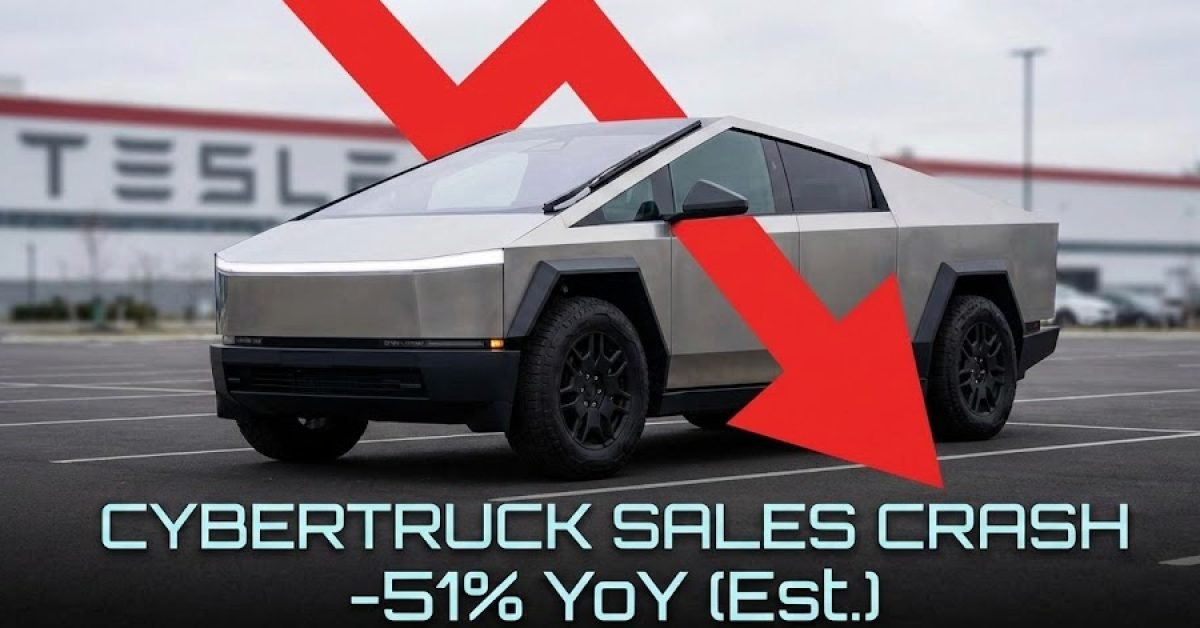
Tesla's Cybertruck production appears to be operating at approximately 10% of its planned capacity, with recent sales figures painting a troubling picture for Elon Musk's angular electric pickup. Meanwhile, Ford's F-150 Lightning—which outsold the Cybertruck throughout 2025—was abruptly discontinued last December for failing to meet sales targets. This ironic contrast highlights fundamental challenges in the electric truck market.
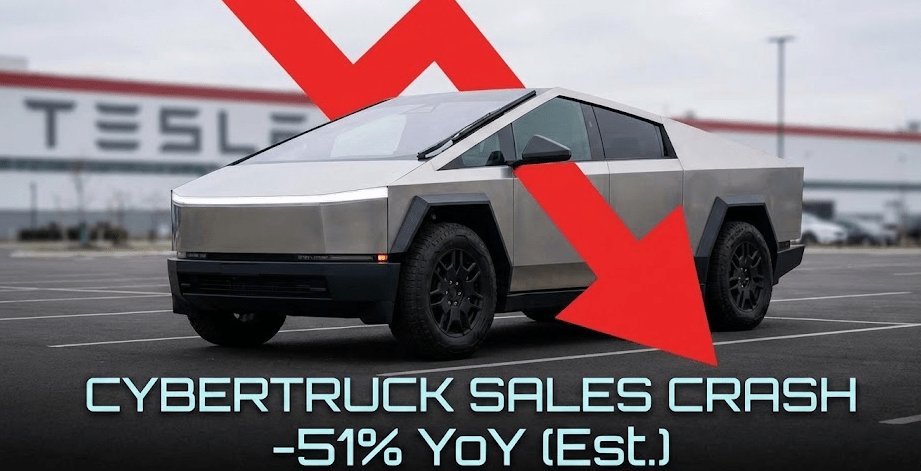
Tesla's opaque sales reporting complicates analysis. The company groups Cybertruck sales within its "Other Models" category alongside Model S, Model X, and Semi vehicles. Based on stable Model S/X sales (around 5,000-6,000 units quarterly) and negligible Semi volume, Q4 2025 Cybertruck deliveries likely totaled just 5,500 units globally. This represents a near 50% year-over-year decline despite Tesla implementing price cuts and introducing (then discontinuing) a cheaper trim.
Full-year 2025 estimates suggest Tesla sold approximately 21,500 Cybertrucks worldwide. By comparison, Ford delivered 27,300 F-150 Lightnings in the U.S. alone before announcing its cancellation. Notably, Ford achieved these numbers while publicly winding down the program, with sales dipping only 18% year-over-year.

Tesla has employed extraordinary measures to prop up Cybertruck demand:
- Released and quickly discontinued an entry-level variant
- Slashed prices across remaining trims
- Arranged for SpaceX to purchase over 1,000 units (representing 20% of Q4 sales)
These efforts failed to reverse the sales slump. Production constraints, pricing challenges, and range limitations—partly attributed to Tesla's proprietary 4680 battery cells—have hampered the Cybertruck's commercial viability. The truck's polarizing design and Elon Musk's increasingly controversial public persona have further complicated its market reception.

Industry analysts question how long Tesla can sustain production at 10% capacity. With SpaceX unable to indefinitely subsidize sales and no significant demand recovery in sight, the Cybertruck faces existential challenges. While legacy automakers would likely terminate such an underperforming program, Tesla's emotional investment in the vehicle—stemming from Musk's personal attachment to the design—creates unique strategic complications.
The F-150 Lightning's cancellation despite outperforming the Cybertruck underscores electric trucks' broader market challenges. Factors like high upfront costs, charging infrastructure limitations, and consumer preference for hybrid solutions appear to be impacting even established players. Ford has since pivoted to extended-range electric vehicles (EREVs), signaling a strategic retreat from pure-electric trucks in the near term.
For Tesla, potential paths forward include significant design compromises, abandoning the 4680 cell architecture to reduce costs, or repositioning the Cybertruck as a niche product. However, these options conflict with Musk's original vision and public promises. As the automotive industry watches Tesla's next moves, the Cybertruck dilemma illustrates how technological ambition and market reality often collide in the EV transition.
Comments
Please log in or register to join the discussion