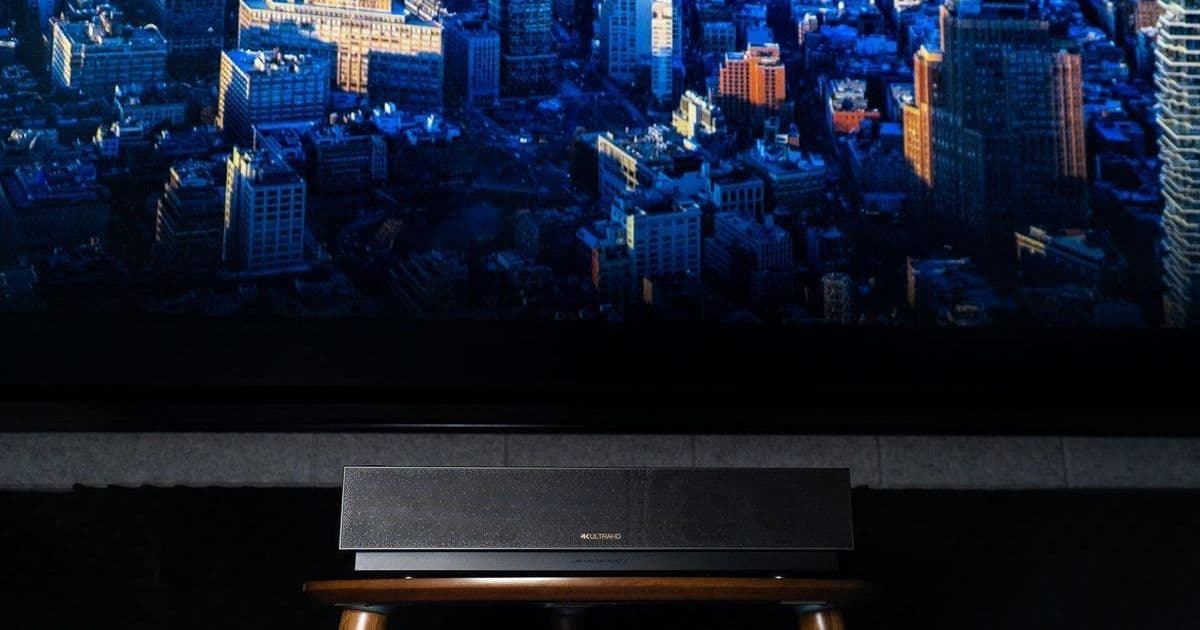
The Formovie Cinema Edge 4K UST projector challenges traditional TVs with its immersive 150-inch visuals and advanced laser technology, offering a cinematic experience at a fraction of high-end projector costs. Despite lacking Dolby Vision and requiring external audio, its color accuracy and easy setup make it a compelling upgrade for home theater enthusiasts.
For years, ultra-short-throw (UST) projectors promised a revolution in home entertainment, but often fell short with clunky designs and mediocre performance. The Formovie Cinema Edge, priced at $1,899, disrupts this narrative by delivering a visual experience that not only rivals but surpasses many high-end TVs—proving that projection technology has matured into a legitimate living room centerpiece. As developers and tech leaders increasingly integrate smart home ecosystems, devices like this highlight how laser projection and adaptive processing are redefining immersive media consumption.
The Design and Setup: Simplicity Meets Precision
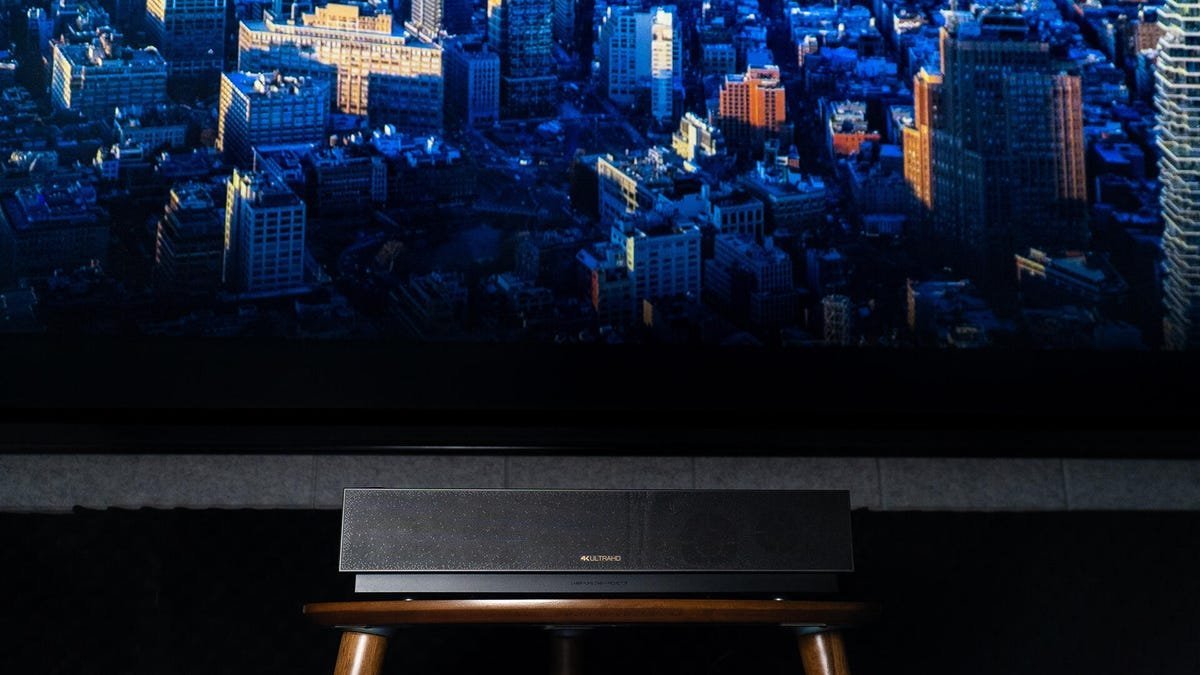
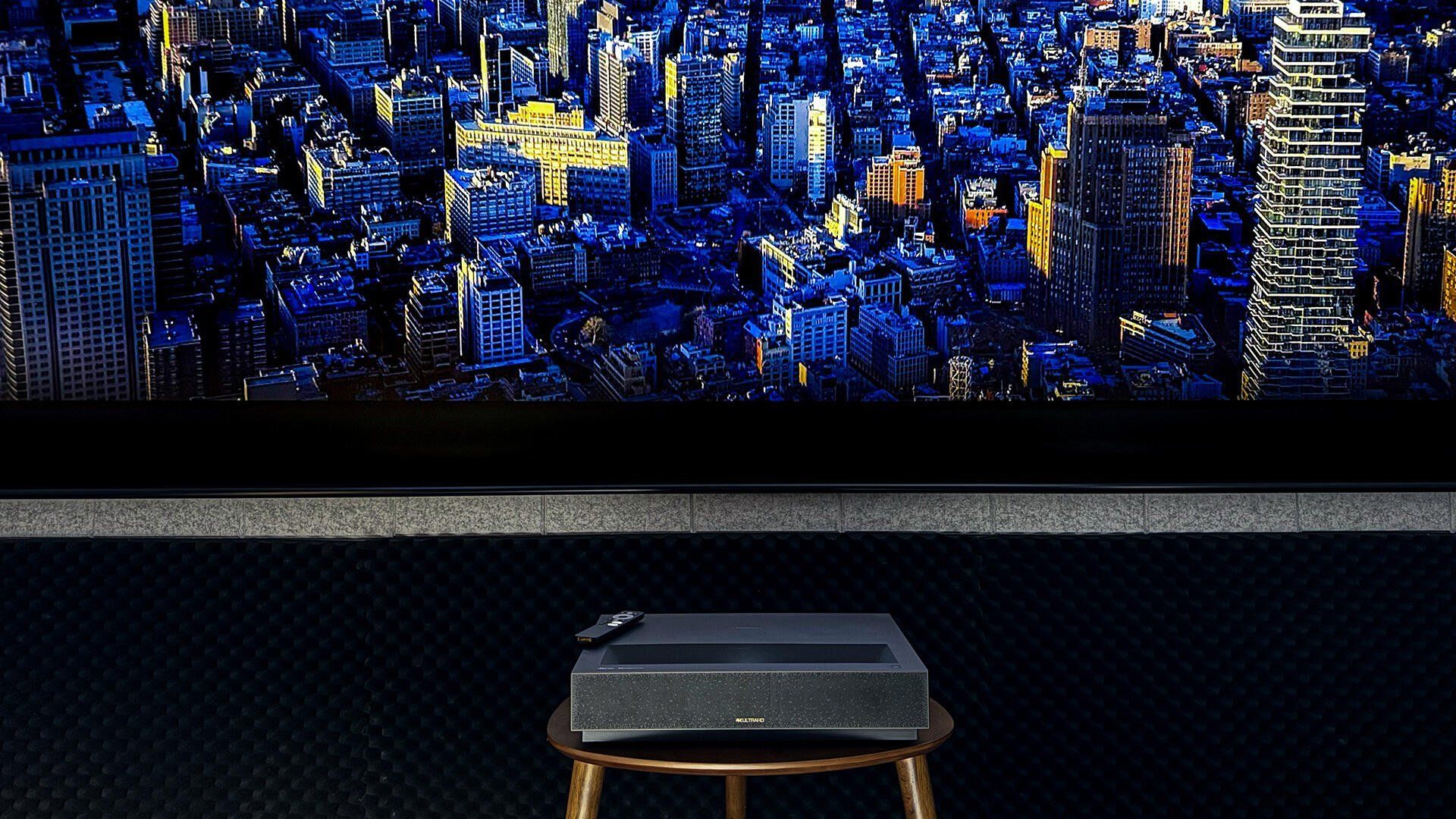
Weighing just over 15 pounds with a compact 18 x 12 x 3.6-inch footprint, the Cinema Edge avoids the bulk of early UST models while retaining robust construction. Its 0.23:1 throw ratio enables an 80-inch image from just 5.5 inches away—or a sprawling 150-inch display at 25 inches from the screen, as achieved in ZDNET's testing lab. Crucially, the projector required minimal keystone correction, maintaining edge-to-edge sharpness effortlessly. The included remote features dedicated Netflix and YouTube buttons but disappointingly omits batteries, leaning on Google TV for voice navigation.
Performance Deep Dive: Where Light and Color Shine
Powered by an ALPD (Advanced Laser Phosphor Display) light source and DLP (Digital Light Processing) chip with XPR pixel-shifting, the Cinema Edge outputs 4K resolution at 1,900 lumens (slightly below its 2,100-lumen claim). Testing revealed exceptional color vibrancy, covering 110% of the Rec.709 gamut, with HDR10 and HLG HDR support enhancing depth in nature documentaries and films. As noted in ZDNET's review:
'The clownfish swimming among the coral looked like they were on the other side of a huge glass aquarium... images on our 150-inch screen looked superb.'
However, the absence of Dolby Vision or HDR10+—reserved for Formovie's pricier Theater models—leaves room for improvement. The projector's 3000:1 contrast ratio delivered deep blacks, though shadow details benefited from tweaking the 'Adaptive Luma' setting. With abundant calibration options like motion judder cancellation, users can tailor visuals precisely, though the sheer number of sliders may overwhelm casual setups.
Audio and Connectivity: The Weak Link
While dual 15-watt speakers with Dolby Audio and DTS-HD suffice for quiet rooms, they falter in larger spaces, underscoring the need for a soundbar or external system—especially given the eARC HDMI port’s capability. Connectivity options are robust, including dual HDMI ports, USB inputs, Ethernet, and S/PDIF, facilitating seamless integration into modern AV setups. Gamers should note the 60Hz refresh rate limits high-frame-rate play, though ALLM (Auto Low Latency Mode) mitigates input lag.
The Verdict: A Calculated Trade-Off for Scale
At $1,799–$1,899, the Cinema Edge positions itself as a gateway to elite home cinema, undercutting triple-laser competitors like the $2,799 Formovie Theater Premium. Its limitations—no 3D support, VRR, or Dolby Vision—are deliberate cost-saving measures rather than oversights. For developers and tech-savvy users, this projector exemplifies how UST advancements are democratizing large-format viewing, blending affordability with the kind of optical innovation that once demanded premium prices. As living rooms evolve into hybrid entertainment hubs, the real win isn’t just bigger screens—it’s smarter, more accessible ways to make every pixel count.
Source: ZDNET
Comments
Please log in or register to join the discussion