
Salesforce’s new Headless 360 pushes implementation work onto customers, spawning a new “Pit Crew” role that translates generic AI capabilities into department‑specific workflows. The article breaks down the claim, the concrete changes, and the practical limits of this emerging model.
Forward‑Deployed “Pit Crew”: What Salesforce’s Headless 360 Really Means for Enterprise Workflows
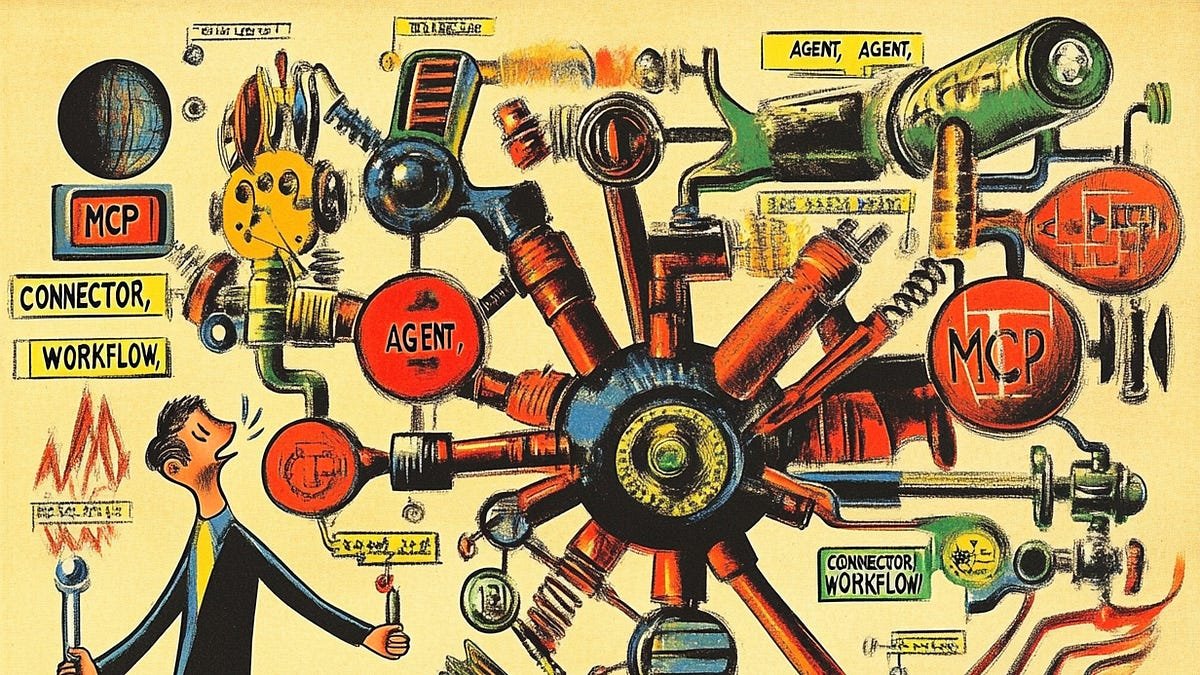
What’s claimed
In April 2026 Salesforce announced Headless 360, a platform that “exposes the API as the UI.” The marketing line – “No browser required. The API is the UI.” – suggests that the vendor will stop shipping any graphical configuration tools and hand over the entire implementation burden to the customer. Marc Benioff framed it as a shift from selling software to selling software substrates that customers assemble themselves.
The broader claim is that all major enterprise vendors will soon follow suit, delivering only raw APIs, data models, and AI primitives. The hidden assumption is that every functional team – marketing, finance, legal, recruiting – will be able to hire or train a specialist who can wire those primitives together on demand.
What’s actually new
- API‑first delivery at scale – Salesforce has removed the bulk of its Lightning‑based configuration screens. The product now ships a set of OpenAPI specifications, a low‑latency MCP (Model‑Control‑Plane) server, and a library of pre‑trained LLM agents that can be invoked via REST. The public repo on GitHub contains the headless‑core package and sample Terraform modules for provisioning the service.
- Explicit hand‑off to customer teams – The old “admin” role is being re‑skilled. Instead of clicking through point‑and‑click wizards, admins now write YAML workflow definitions that bind together:
- Salesforce‑native data objects (Account, Opportunity, etc.)
- External APIs (payment gateways, HRIS systems)
- LLM‑driven agents for tasks such as email drafting or contract clause extraction
- Emergence of a new functional‑tech hybrid role – Werner calls it the Pit Crew. In practice this is a blend of:
- Domain expertise (e.g., a marketer who knows campaign KPIs)
- Integration engineering (ability to author OpenAPI specs, write Glue scripts, manage MCP deployments)
- Prompt‑engineering for LLMs (crafting system prompts that respect compliance constraints)
Several early adopters have published case studies:
- Acme Finance used a Pit Crew to stitch together a nightly reconciliation agent that pulls transaction data from SAP, runs a GPT‑4‑based anomaly detector, and posts alerts to Slack. The workflow runs on a managed MCP instance costing roughly $0.12 per 1 000 API calls.
- BrightRecruit built a candidate‑research pipeline that queries LinkedIn, parses resumes with Claude‑2, and writes personalized outreach drafts. The whole pipeline was assembled in under two weeks by a senior recruiter plus a part‑time Pit Crew member.
Limitations and open questions
| Area | Limitation |
|---|---|
| Skill gap | The role demands both deep domain knowledge and software‑engineering fluency. Companies will need to invest heavily in training or hire hybrid talent, which is currently scarce. |
| Tooling maturity | MCP servers, prompt‑versioning systems, and the YAML workflow DSL are still in beta. Debugging a broken LLM‑agent often requires stepping through logs that are not yet user‑friendly. |
| Governance | With every department deploying its own AI‑driven agents, maintaining consistent data‑privacy, audit, and compliance policies becomes a distributed problem. Central IT may need a meta‑governance layer, but that re‑introduces coordination overhead. |
| Vendor lock‑in | Although the UI is gone, the underlying data model and proprietary extensions (e.g., Salesforce‑specific objects) remain. Migrating a Pit Crew‑built workflow to another CRM would still require substantial re‑engineering. |
| Performance variability | LLM inference latency can fluctuate based on model load and token length. Real‑time workflows (e.g., checkout fraud detection) may need fallback logic or on‑premise inference, adding complexity. |
Why the impact matters
The shift mirrors the historical pattern where a technology that reduces coordination costs (the internet) later reduces building costs (cloud platforms, low‑code). Headless 360 removes the “click‑through configuration” layer, turning implementation into a software‑development problem that can be solved by small, cross‑functional teams.
If companies treat the Pit Crew as a substitution – a cheaper way to do the same work – they risk under‑investing in the broader workflow ecosystem and will likely be out‑performed by firms that view the role as a multiplication catalyst, expanding the volume and variety of work they can automate.
Practical takeaways for leaders
- Audit your current admin stack – Identify which configuration screens are being retired and map them to the new API endpoints.
- Pilot a Pit Crew – Start with a low‑risk department (e.g., internal IT ticket routing) and measure time‑to‑value against the legacy admin process.
- Build governance scaffolding early – Define a central catalog of approved LLM prompts, data‑access policies, and monitoring dashboards before the number of department‑specific agents explodes.
- Invest in talent pipelines – Partner with bootcamps or internal up‑skilling programs that blend domain certifications (e.g., Google Analytics) with hands‑on API/LLM labs.
- Plan for composability – Encourage teams to publish their workflow definitions as reusable modules in an internal registry. This mitigates the risk of a million siloed agents that can’t be shared.
Bottom line
Salesforce’s Headless 360 is less a gimmick and more a concrete step toward API‑only enterprise platforms. The immediate effect is a redistribution of implementation labor from vendor‑staffed solution engineers to internal “Pit Crew” specialists. Whether this leads to a net reduction in headcount or a multiplication of capability depends on how organizations structure governance, talent development, and reuse.
For a deeper dive into the technical details of the MCP server and the YAML workflow DSL, see the official Headless 360 documentation and the open‑source headless‑core repository.
Comments
Please log in or register to join the discussion