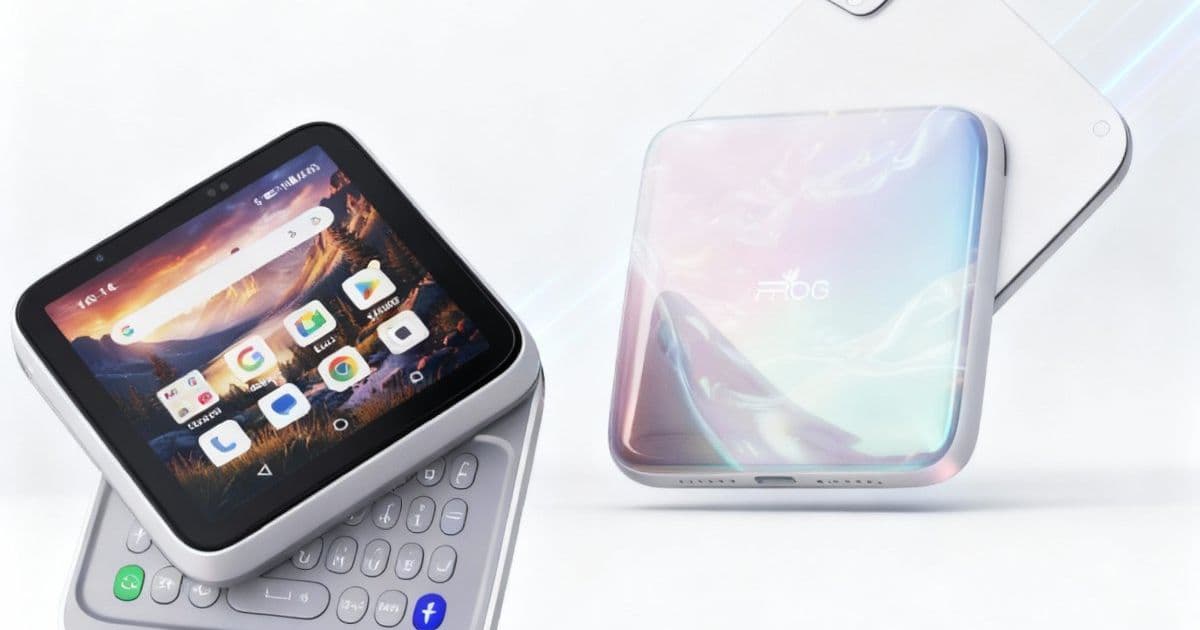
Chinese manufacturer FROG Technologies unveiled the Frog RS1, a square Android phone with a hidden keyboard or gamepad revealed by flipping the screen upward, reminiscent of Motorola's 2010 Flipout.
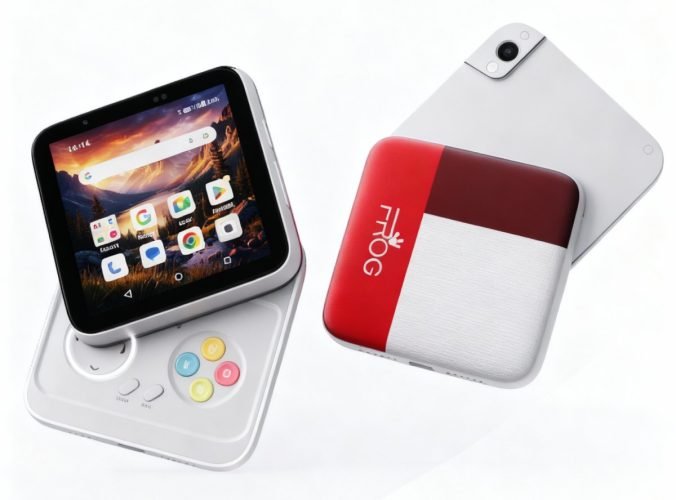
The Frog RS1 is an Android phone with a small 3.4 inch square touchscreen display, a MediaTek processor, and a design that lets you flip the screen upward so that it rotates 90 degrees and reveals a hidden keyboard… or gamepad. It's unclear if this particular phone will come to market anytime soon, but Chinese manufacturer FROG Technologies showed off the concept phone at Mobile World Congress earlier this month, and the company appears to be looking for customers interested in producing and selling phones based on the design.
Given that it bears a striking resemblance to an upcoming Anbernic handheld game console, it looks like the flip-out design could be a new trend… but it's also based on an older idea.
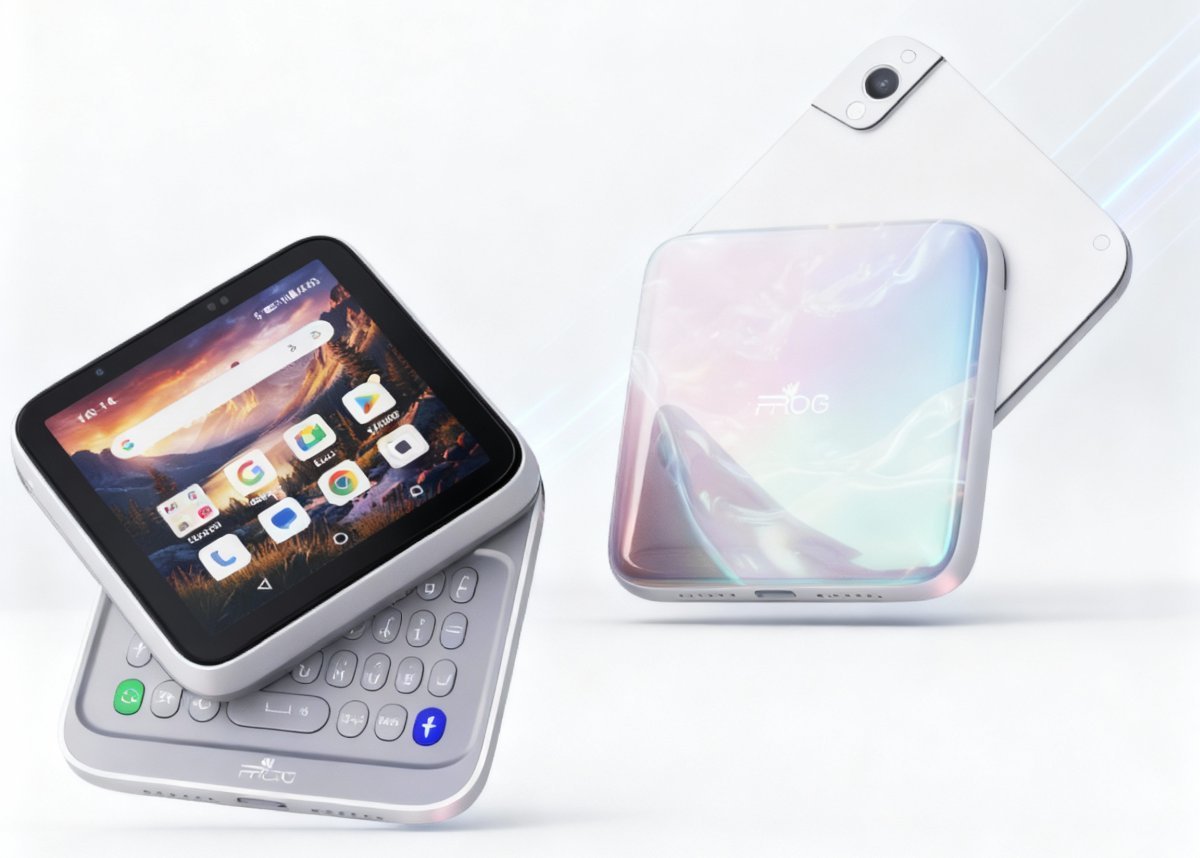
Motorola launched a phone with a similar design in 2010. Called the Motorola Flipout, it was a phone with a 2.8 inch 4:3 display that flipped upward to reveal a QWERTY keyboard. Detailed specs aren't available for the FROG RS1 yet, but smartphone tech has come a long way in the past fifteen years, so it seems like a safe bet that it'll have better hardware than the Motorola Flipout, which shipped with Android 2.1 and sported a 320 x 240 pixel screen, a single-core 720 MHz Arm Cortex-A8 processor, and just 512MB of RAM and 512MB of storage.
That said, even with better specs, it's unclear how much demand there is for a modern smartphone with a small, square display that's less than ideal for the ways many folks use mobile devices. While retro games would probably look pretty good on that screen, videos and modern apps and games designed for taller (or wider) screens would likely look a bit wonky.
For the right price, I could see there being some demand for a keyboard phone marketed as a mobile messaging device or for a model with a gamepad marketed at retro gamers. But mostly, it's just nice to see any smartphone design that breaks away from the usual glass rectangle that's become the dominant form these days.
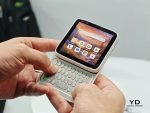
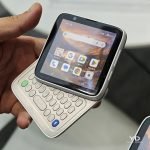
The Frog RS1 concept represents an interesting throwback to a time when smartphone manufacturers were more willing to experiment with unconventional form factors. The original Motorola Flipout, released in 2010, was part of a wave of devices that tried to differentiate themselves through unique physical designs rather than just incremental spec improvements.
Back then, the smartphone market was still relatively young, and there was more room for experimentation. Devices like the BlackBerry Passport with its square display, the LG Wing with its swiveling screen, and various phones with physical keyboards were all attempts to find new ways to interact with mobile devices.
The Frog RS1's dual-purpose design is particularly clever - it can serve as either a messaging device with a physical keyboard or a retro gaming handheld with a gamepad. This versatility could make it appealing to niche markets, though the small 3.4-inch square display (approximately 800x800 pixels if we assume modern standards) would certainly limit its appeal for mainstream consumers.
One of the biggest challenges for a device like this would be app compatibility. Most Android apps are designed for rectangular displays with aspect ratios ranging from 16:9 to 21:9. A square display would require developers to either accept significant letterboxing or redesign their interfaces to work in a square format.
For gaming, the situation is more promising. Many classic games from the pre-widescreen era would display perfectly on a square screen, and the physical controls would provide a more authentic experience than on-screen touch controls. This could make the Frog RS1 an attractive option for retro gaming enthusiasts, especially if it can run emulators for classic consoles.
The keyboard variant could find a niche among users who prefer physical keyboards for typing, though the small screen size would make it challenging to use for anything beyond basic messaging and email. The lack of a trackpad or trackball (features that were common on keyboard phones in the past) would also make navigation more cumbersome compared to modern touchscreen devices.
From a technical perspective, the use of a MediaTek processor suggests this would be positioned as a mid-range or budget device rather than a flagship. MediaTek has made significant strides in recent years, and their processors now offer competitive performance for many use cases, though they still lag behind Qualcomm in areas like GPU performance and AI capabilities.
The timing of this concept is interesting given the current state of the smartphone market. With innovation in mainstream smartphones becoming increasingly incremental, there seems to be more openness to experimental designs. The success of devices like the Nothing Phone with its transparent back and unique LED lighting shows that there's still appetite for phones that stand out from the crowd.
However, the smartphone market is also more competitive than ever, and breaking through with a niche device requires not just an interesting concept but also solid execution, competitive pricing, and effective marketing. FROG Technologies will need to find the right partners to bring this concept to market and convince consumers that a square phone with a flip-out keyboard or gamepad is worth considering alongside conventional smartphones.
Whether the Frog RS1 ever becomes a real product or remains just a concept, it serves as a reminder that the smartphone form factor we've become accustomed to isn't the only possible design. As mobile technology continues to evolve, we may see more experimentation with different shapes, sizes, and input methods as manufacturers search for the next big innovation in mobile computing.
Comments
Please log in or register to join the discussion