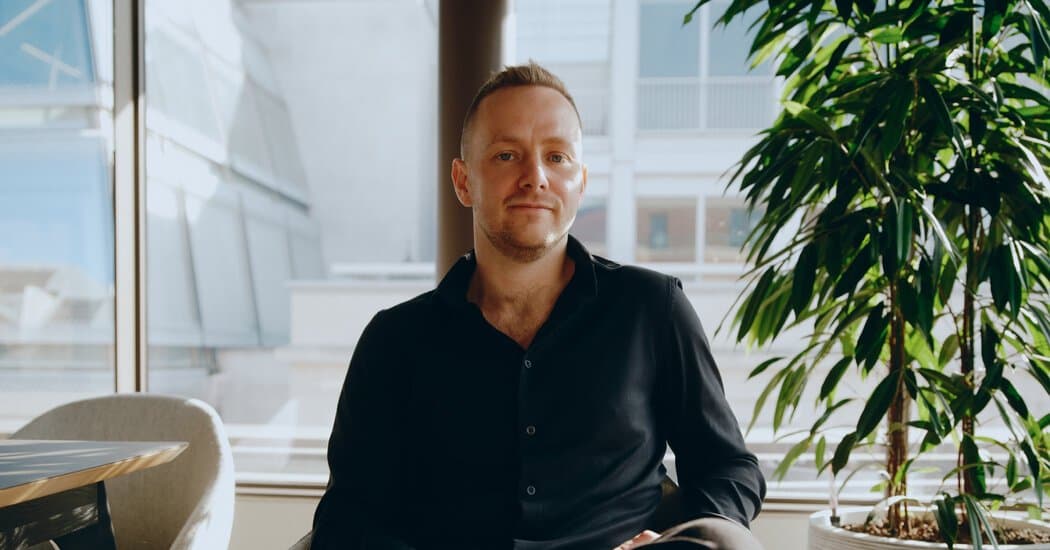
A profile of Josh Payne, the Australian former coal miner who founded UK data center developer Nscale in 2024 amid the AI boom, raising $2 billion at a $14.6 billion valuation.
The tech industry's latest unicorn has an origin story that defies Silicon Valley stereotypes. Josh Payne, founder of UK data center developer Nscale, spent his early career working in Australian coal mines before pivoting to build one of the hottest AI infrastructure companies in Europe.
Payne's journey from the industrial heartland of Australia to the center of London's tech scene represents a broader narrative about the AI boom's ability to create opportunities for those outside traditional tech circles. After leaving high school in an industrial area of Australia, Payne took an unlikely path to becoming the head of a company now valued at $14.6 billion.
The timing of Nscale's rise couldn't be more fortuitous. The company launched in 2024 amid surging demand for AI infrastructure, raising $2 billion in a Series C funding round led by Aker and 8090 Industries. The investment values Nscale at $14.6 billion, positioning it as a major player in the global race to build data centers capable of supporting artificial intelligence workloads.
Payne's background in industrial operations has proven surprisingly relevant to the data center business. The skills required to manage large-scale mining operations—logistics, infrastructure planning, and energy management—translate directly to building and operating AI data centers. This industrial experience may give Nscale an edge over competitors who come from purely software backgrounds.
The company's rapid ascent reflects the broader AI infrastructure boom. As tech giants and startups alike race to train ever-larger AI models, the demand for specialized data centers has skyrocketed. Traditional cloud providers are struggling to keep pace, creating opportunities for companies like Nscale that can build custom facilities optimized for AI workloads.
Nscale's success has also attracted high-profile talent to its board. The company recently added Sheryl Sandberg, former COO of Meta, and Nick Clegg, former UK Deputy Prime Minister and current President of Global Affairs at Meta, to its leadership team. Their involvement signals both the strategic importance of AI infrastructure and Nscale's ambitions to become a global player.
The company's focus on the UK and European markets positions it well as governments in those regions seek to reduce dependence on American tech giants for critical infrastructure. With data sovereignty and energy security becoming increasingly important political issues, Nscale's ability to build locally-controlled AI infrastructure could prove valuable.
Payne's story also highlights how the AI boom is creating opportunities far beyond the traditional tech hubs of Silicon Valley and Seattle. Companies like Nscale are emerging in unexpected places, bringing industrial expertise to the digital revolution. This geographic and professional diversity could prove crucial as the AI industry matures and faces challenges around energy consumption, environmental impact, and infrastructure resilience.
As Nscale continues to expand, Payne's journey from coal mines to data centers serves as a reminder that the AI revolution isn't just about algorithms and software—it's about building the physical infrastructure that will power the next generation of computing. And sometimes, that requires bringing in perspectives from outside the traditional tech world.
For Payne, the transition from mining to AI infrastructure represents more than just a career change. It's a testament to how rapidly the global economy is shifting and how skills from traditional industries can find new applications in the digital age. As AI continues to transform every sector of the economy, stories like Payne's may become increasingly common—former industrial workers finding new opportunities in the infrastructure that powers artificial intelligence.
The success of Nscale and founders like Payne suggests that the AI boom isn't just creating wealth in Silicon Valley—it's creating opportunities for entrepreneurs and workers from diverse backgrounds to participate in building the infrastructure of the future. Whether this trend will continue as the AI industry matures remains to be seen, but for now, Payne's unlikely journey from Australian coal mines to London's tech scene represents one of the more compelling stories of the AI era.
Comments
Please log in or register to join the discussion