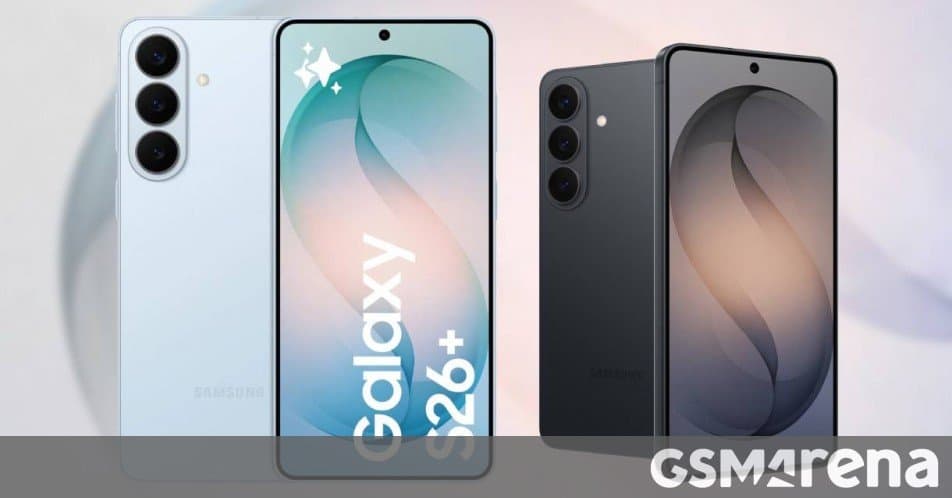
Samsung's Galaxy S26 series debuts with larger screens and AI enhancements, but hardware changes remain minimal outside the Ultra model.
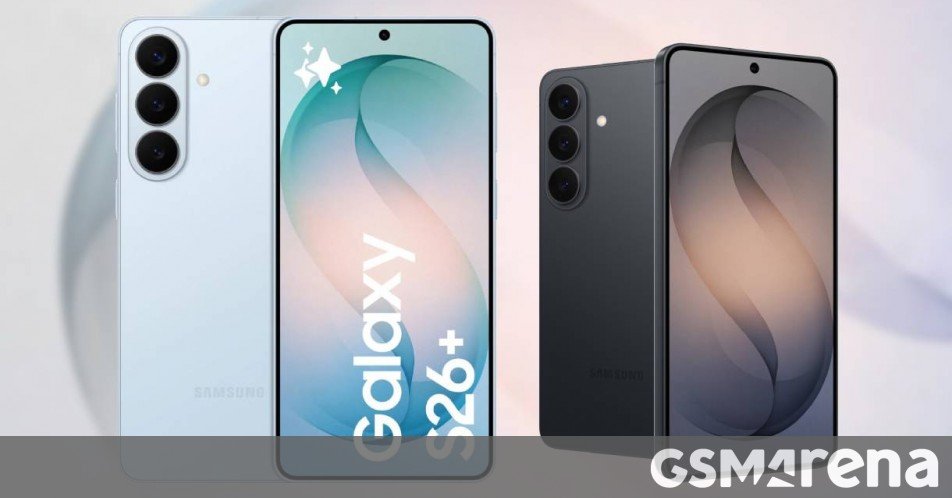
Samsung has unveiled the Galaxy S26 series, bringing modest hardware upgrades but significant AI-focused software improvements. The vanilla S26 gets a slightly larger 6.3" screen and bigger battery, while the S26+ remains unchanged in size. Both models feature the Exynos 2600 chipset globally, with Snapdragon variants limited to select regions.
Hardware Changes: Small Steps Forward
The Galaxy S26 sees incremental improvements over its predecessor. The screen grows from 6.2" to 6.3" while maintaining the same 1080p+ LTPO OLED panel with 1-120Hz refresh rate. More notably, the battery capacity increases from 4,000mAh to 4,300mAh, addressing one of the most common user complaints about the previous generation.
Physically, the S26 measures 149.6 x 71.7 x 7.2mm and weighs 167g - virtually identical to last year's model despite the larger battery. This suggests Samsung has improved internal component efficiency or packaging.
The Galaxy S26+ remains unchanged in its core specifications. It retains the 6.7" 1440p+ LTPO display, 4,900mAh battery, and identical dimensions and weight as the S25+. This consistency might disappoint users expecting meaningful upgrades to the plus model.
Storage and Memory Configuration
Samsung has made a significant change to the base storage configuration. The 128GB option has been eliminated entirely, with 256GB now serving as the entry-level storage. A 512GB option remains available for both models. RAM is locked at 12GB across the lineup, which should provide ample headroom for multitasking and AI operations.
Camera System Carries Over
Both the S26 and S26+ use the same triple-camera setup as their predecessors:
- 50MP main camera with 1.0µm pixels, f/1.8 lens, and OIS
- 10MP telephoto camera with 1.0µm pixels and 3x optical zoom
- 12MP ultra-wide camera with 1.4µm pixels and f/2.2 lens
This decision to maintain the camera hardware suggests Samsung is focusing on software and AI improvements rather than hardware upgrades for these models.
Charging Capabilities: Mixed Results
The charging situation reveals Samsung's prioritization within the lineup. The S26 Ultra receives significant upgrades to 60W wired and 25W wireless charging. The S26+ gets a modest bump to 20W wireless (from 15W), while wired charging remains at 45W.
However, the vanilla S26 receives no charging improvements whatsoever, sticking with the same 25W wired and 15W wireless capabilities as before. This could be a point of frustration for users who wanted faster charging in the base model.
Exynos Returns: Global Strategy Shift
A major development is the return of the Exynos 2600 chipset to global markets. Samsung has reverted to its previous strategy of using Exynos in most regions, with Snapdragon 8 Elite Gen 5 for Galaxy variants limited to North America, China, and Japan.
Samsung claims the Exynos 2600 delivers:
- 19% CPU performance boost
- 24% GPU performance increase
- 39% faster NPU for AI tasks
The company emphasizes that AI performance improvements are particularly significant, with voice commands processing twice as fast and AI features like the AI Eraser working in half the time.
AI Features: The Real Story
While hardware changes are modest, Samsung has packed the S26 series with AI capabilities that could meaningfully impact daily usage:
Now Brief and Personal Data Engine: This feature analyzes notifications, messages, and emails to automatically identify appointments and commitments, even when users don't manually add them to calendars. It represents a significant step toward proactive personal assistance.
Screenshot Organization: The new One UI automatically categorizes screenshots into eight categories: Shopping, Social media, Coupon, Boarding pass, Events, Locations, Barcode + QR code, and Chats. This addresses the common problem of screenshot clutter.
Enhanced Document Scanner: Beyond basic OCR, this feature preserves formatting and images, creating complete document copies rather than just text extractions.
Call Screening: Functions as a spam filter, answering calls, identifying callers and their purpose, and providing real-time transcriptions on-screen.
Audio Eraser: Now available to third-party apps including YouTube, Netflix, and Instagram, this feature isolates voices and reduces background noise - particularly useful for content with inconsistent audio levels.
Camera AI Features:
- Auto Framing: Crops 8K footage in real-time to produce perfectly framed 4K video
- Super Steady Video: Offers 360° horizontal lock, keeping horizons level regardless of phone orientation
- Enhanced AI ISP with Object-Aware Engine for improved selfies
Pricing and Availability
The Galaxy S26 series will be available from March 11, with pre-orders starting immediately. Pricing shows modest increases over the previous generation:
Galaxy S26: €1,000 (256GB) / €1,200 (512GB) Galaxy S26+: €1,250 (256GB) / €1,450 (512GB)
For comparison, the S25 series launched at €960 and €1,170 for the base models, representing approximately 4-7% price increases.
Market Position and Strategy
The S26 series appears to follow a conservative upgrade path, with most meaningful changes concentrated in the Ultra model. This strategy suggests Samsung is positioning the S26 and S26+ as iterative updates while saving significant innovations for the premium Ultra variant.
The strong emphasis on AI features indicates Samsung's belief that software intelligence will drive future smartphone differentiation more than hardware specifications. Features like automatic appointment detection, intelligent screenshot organization, and enhanced video processing could provide tangible daily benefits that users notice more than incremental hardware improvements.
For users of recent Samsung devices, the upgrade case is primarily about accessing the new AI capabilities rather than hardware improvements. Those with older devices or specific needs (like the Ultra's new features) may find more compelling reasons to upgrade.
The return of Exynos globally, combined with the Snapdragon exclusivity in key markets, suggests Samsung is confident in its in-house chipset capabilities while maintaining its premium positioning in competitive markets through Snapdragon variants.
The Galaxy S26 and S26+ represent Samsung's bet that AI-driven software experiences will matter more to consumers than traditional hardware upgrades, even as they maintain competitive specifications and build quality expected from flagship devices.
Comments
Please log in or register to join the discussion