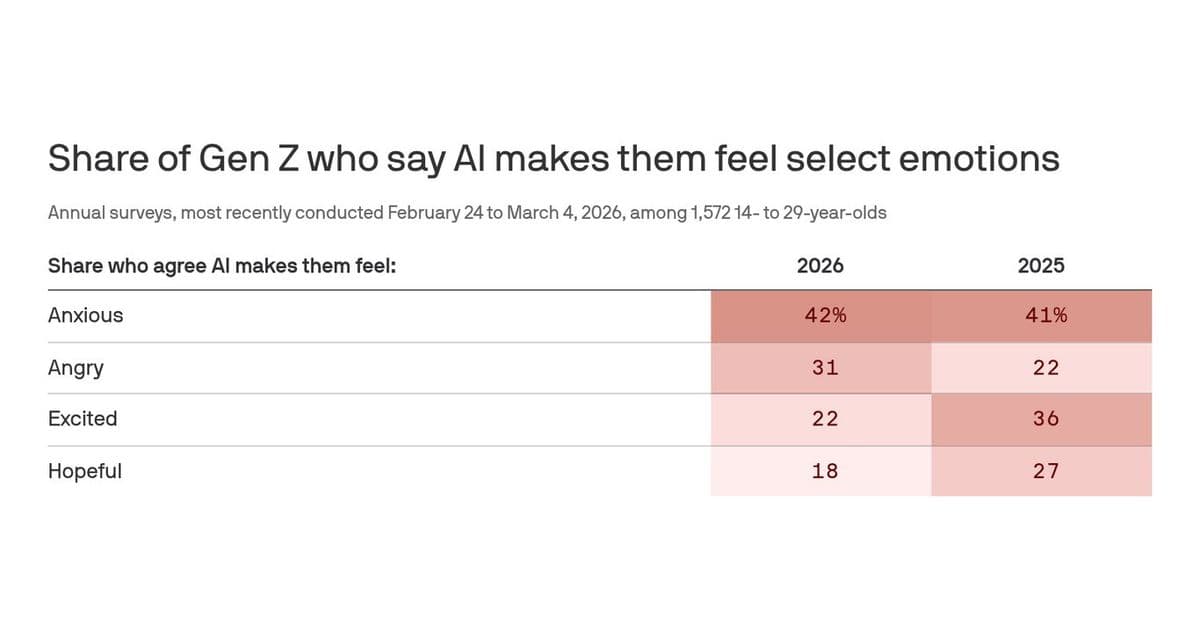
Gen Z's initial enthusiasm for AI is giving way to skepticism and frustration as the technology fails to deliver on promises and raises concerns about job displacement and authenticity.
Gen Z's initial enthusiasm for artificial intelligence is rapidly cooling, with younger workers increasingly expressing frustration and skepticism about the technology that was once heralded as their generation's greatest opportunity.
The AI Hype Cycle Reaches Gen Z
When ChatGPT burst onto the scene in late 2022, Gen Z users were among the earliest adopters. The generation that grew up with smartphones and social media saw AI as a natural evolution of the digital tools they'd always known. Young professionals and students alike embraced AI for everything from writing assistance to coding help to creative projects.
But what began as excitement has morphed into something more complex. Recent surveys and workplace studies indicate a significant shift in sentiment among 18-25 year olds, with many expressing growing concerns about AI's impact on their careers, creativity, and authenticity.
The Reality Gap Widens
The disillusionment stems largely from the gap between AI's marketing promises and its practical limitations. While tech companies have positioned AI as a revolutionary tool that would democratize creativity and boost productivity, many Gen Z users report experiencing the opposite.
"We were told AI would make our lives easier and open up new opportunities," says Maya Chen, a 22-year-old marketing coordinator. "But in reality, it's created more competition and made it harder to stand out. Everyone's using the same tools, so everything starts to sound the same."
This homogenization effect has become a particular pain point. As AI-generated content floods social media, job applications, and creative portfolios, Gen Z workers find themselves struggling to differentiate their authentic work from algorithmically-generated content.
Job Market Anxiety Intensifies
Perhaps the most significant driver of AI anger among Gen Z is job market anxiety. The generation entered the workforce during a period of economic uncertainty, and many now fear that AI will eliminate entry-level positions that traditionally served as career stepping stones.
Data from the Bureau of Labor Statistics shows that job openings for positions typically filled by recent graduates have declined by 15% in sectors most affected by AI automation. Meanwhile, companies increasingly expect new hires to be "AI-proficient," creating a catch-22 where young workers need experience with tools that may be replacing traditional entry-level roles.
"It's a double-edged sword," explains Jordan Rodriguez, a career counselor at a major university. "Students are being told they need AI skills to be competitive, but they're also seeing those same skills potentially making their desired roles obsolete."
The Authenticity Crisis
Gen Z's relationship with authenticity has been well-documented, with the generation placing high value on genuine expression and transparent communication. AI's rise has created tension with these values, as young people grapple with questions about what constitutes authentic work in an AI-assisted world.
This crisis of authenticity extends beyond individual concerns to broader cultural questions. As AI-generated content becomes increasingly sophisticated, Gen Z users report feeling overwhelmed by the difficulty of distinguishing between human and machine-created content.
The Backlash Takes Shape
The growing frustration is manifesting in various ways. Some Gen Z workers are actively seeking out AI-free zones in their professional lives, while others are pushing back against company mandates to use AI tools. There's also a growing movement toward "AI detox" periods, where young professionals deliberately disconnect from AI assistance to reconnect with their own creative processes.
Educational institutions are beginning to respond to these concerns. Several universities have implemented policies requiring disclosure of AI use in academic work, while others are developing courses specifically focused on the ethical and practical implications of AI in creative and professional contexts.
What Comes Next
The shift from AI enthusiasm to skepticism among Gen Z represents a significant moment in the technology's adoption curve. Unlike previous generations that may have been more willing to accept technological change at face value, Gen Z is approaching AI with a critical eye, demanding that the technology serve human needs rather than the other way around.
This critical stance could ultimately prove beneficial, pushing developers and companies to create AI tools that better align with human values and needs. The current backlash may be seen as a necessary correction in the AI hype cycle, forcing a more realistic assessment of what the technology can and should do.
As one 24-year-old software developer put it: "We're not anti-AI. We just want AI that works for us, not against us. The honeymoon period is over, and now we're figuring out what a real relationship with this technology looks like."
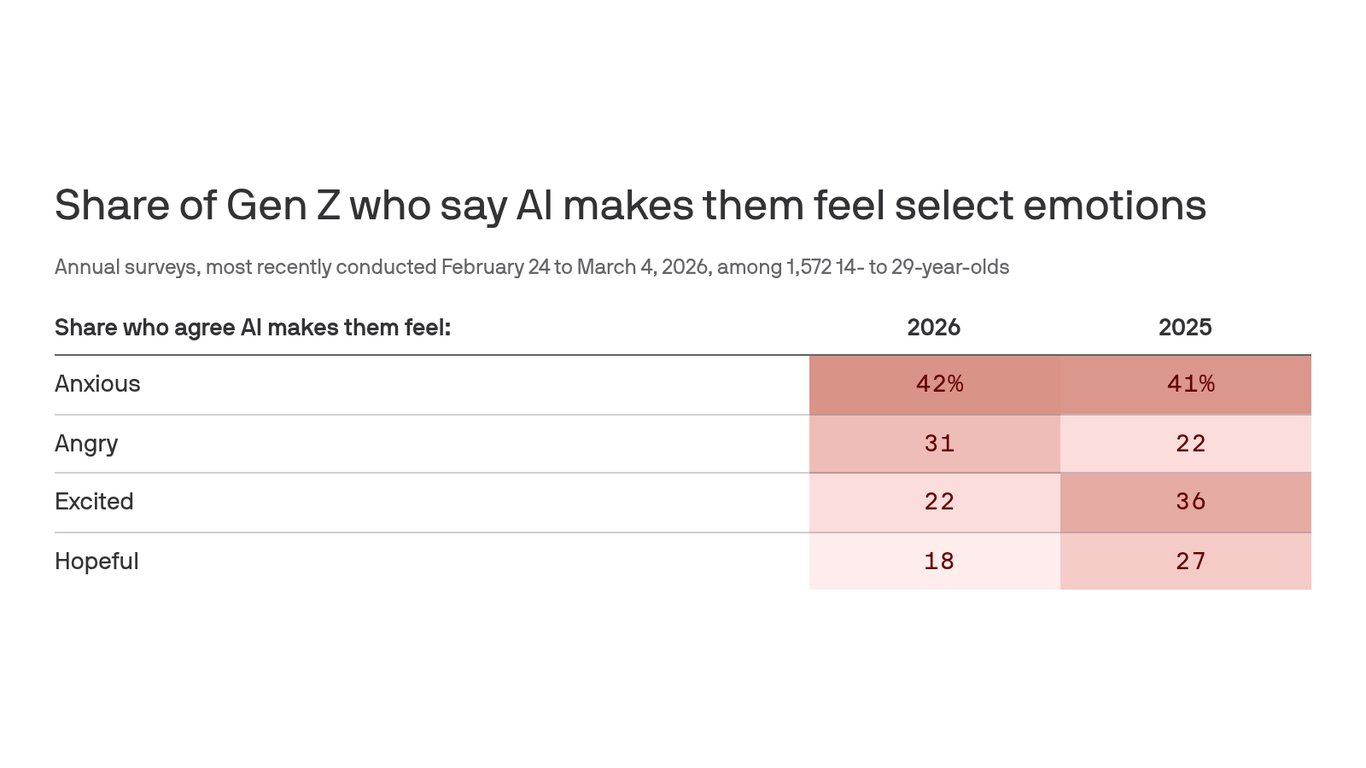
The evolution of Gen Z's relationship with AI reflects a broader pattern in technology adoption, where initial excitement gives way to critical evaluation and demands for more thoughtful implementation. As this generation continues to shape the future of work and creativity, their growing skepticism may ultimately lead to more human-centered approaches to artificial intelligence development and deployment.
Comments
Please log in or register to join the discussion