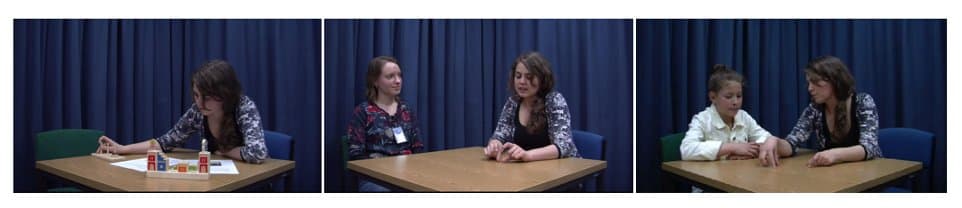
A cross‑cultural study shows that despite overall differences in gestural expressiveness, Italian and Dutch adults converge on the same hand‑gesture strategies when explaining new concepts to children, hinting at a universal, embodied pedagogy.
When a teacher lifts a hand to mimic the path of a moving object, the gesture often says as much as the words that accompany it. A recent paper from the Max Planck Institute for Psycholinguistics and the University of Catania adds a new layer to that intuition: adults from culturally distinct backgrounds instinctively reshape their gestures in similar ways when the audience is a child.
The observation: convergent gestural adaptation
The study, led by Emanuela Campisi, Anita Slominska, and Asli Ozyürek, asked 32 participants—half Italian, half Dutch—to demonstrate two novel logic puzzles for two audiences: a peer adult and a group of 9‑ to 10‑year‑old children. While Italians produced more representational gestures overall, both groups increased the proportion of two‑handed, visually rich gestures when the listeners were children. These gestures, which simultaneously depict shape, motion, and spatial relations, are thought to boost iconicity and make abstract information more concrete.
“Humans are natural teachers, and our bodies are part of the lesson,” Campisi notes.
The pattern held even for bracketed gestures—where one hand stays still while the other moves. Dutch speakers used them more often in adult‑to‑adult explanations, presumably to structure discourse, but the frequency converged when the audience shifted to children.
Evidence from the field
- Methodology: Participants interacted with physical puzzle toys in a semi‑naturalistic setting, allowing spontaneous gesturing rather than rehearsed classroom instruction.
- Quantitative findings: Italian participants averaged 1.8 × more gestures per minute than Dutch participants, yet the ratio of two‑handed to single‑handed gestures rose by roughly 35 % for both groups when addressing children.
- Interpretation: The authors argue that the shift reflects a shared “folk pedagogy” – an innate sense of what learners need to see, not just hear.
The paper appears in Royal Society Open Science (2026) and can be accessed via its DOI link.
Counter‑perspectives and open questions
While the convergence is striking, several scholars caution against over‑generalizing the results:
- Sample size and cultural granularity – With only 16 participants per language group, statistical power is limited. Critics suggest expanding to larger, more demographically diverse cohorts before claiming a universal instinct.
- Task specificity – The logic‑puzzle context may uniquely favour two‑handed gestures because the objects themselves are manipulable. Different teaching domains (e.g., abstract math or storytelling) could elicit other gestural patterns.
- Learning outcomes – The study measured gesture production, not learning gain. It remains an open question whether the increased two‑handed gestures actually improve children’s comprehension, or whether they simply reflect adult expectations.
- Cultural nuance – Although Italians are labeled “gesture‑rich,” the data show they did not simply add more gestures for children; they altered type. This nuance suggests that cultural stereotypes about expressiveness may mask more sophisticated, task‑dependent adjustments.
Where the conversation heads next
Future research could address these gaps by:
- Conducting longitudinal experiments that track children’s retention after gesturally varied explanations.
- Including non‑Western cultures to test whether the observed pattern holds beyond European contexts.
- Using motion‑capture technology to quantify gesture kinematics, offering a finer‑grained view of how gesture dynamics correlate with learner engagement.
If subsequent work confirms that two‑handed, iconic gestures consistently aid comprehension, educators might incorporate brief gestural training into teacher‑preparation programs, emphasizing how to gesture rather than how often.
A broader implication for cultural transmission
The findings dovetail with theories of cultural evolution that view multimodal scaffolding—the combination of speech, gesture, gaze, and posture—as a flexible toolkit for transmitting knowledge across generations. Even when societies differ in baseline expressivity, the shape of that toolkit appears to converge when the goal is to make a concept accessible to a novice mind.
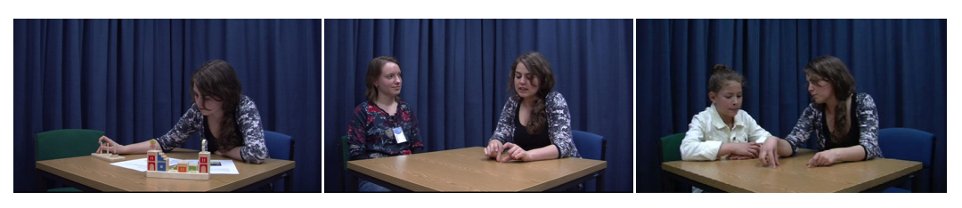
The photograph captures a speaker using both hands to illustrate a concept, a visual echo of the two‑handed gestures discussed above.
In short, the study adds a compelling piece to the puzzle of how we teach each other. It suggests that beneath the surface of cultural variation lies a shared, embodied strategy: when the learner is young, we instinctively reach out with both hands.
Comments
Please log in or register to join the discussion