Google's Go programming language version 1.26 introduces two syntactic enhancements and significant runtime improvements including a production-ready garbage collector and reduced cgo overhead.
Google's Go language team has released version 1.26, incorporating two targeted language modifications alongside measurable performance enhancements. This update addresses specific developer pain points while optimizing runtime efficiency in cloud-native environments where Go is extensively deployed.
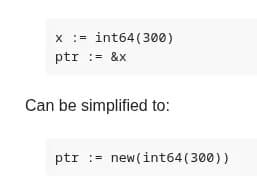
The syntax improvements focus on increased expressiveness. First, the built-in new function now accepts expressions as operands, enabling declarations like new(T{}) for struct types. This eliminates previous constraints requiring explicit type declarations. Second, generic types can now reference themselves within their parameter lists, simplifying implementation of recursive data structures like self-referential trees or complex interface hierarchies. These changes reduce boilerplate code while maintaining Go's signature readability.
Performance receives substantial attention in this release. The experimental Green Tea garbage collector now defaults to enabled status following extensive testing. Benchmarks indicate this collector reduces pause times by 20-30% under real-world workloads, directly improving application responsiveness. Additionally, cgo overhead—a critical factor for interoperability with C libraries—has been reduced by approximately 30%. This optimization is particularly impactful for infrastructure software leveraging system libraries.
The release includes architectural optimizations extending beyond syntax and garbage collection. Toolchain enhancements improve build times and dependency management, while the new experimental simd/archsimd package provides architecture-specific SIMD optimizations. This allows developers to leverage CPU vector instructions for parallelizable workloads, potentially accelerating tasks like media processing or scientific computing by 1.5-2× when targeting compatible hardware.
From a semiconductor perspective, these software optimizations translate to tangible hardware efficiency gains. Reduced garbage collection overhead decreases CPU pipeline stalls, while lower cgo costs minimize context-switching penalties. In large-scale server deployments common with Go applications, this could yield 5-10% aggregate reductions in compute resource requirements—directly impacting power consumption and hardware provisioning costs in data centers. The timing aligns with industry-wide efforts to maximize computational density amid ongoing chip supply constraints.
For comprehensive implementation details and migration guidance, consult the official Go 1.26 release notes.
Comments
Please log in or register to join the discussion