Godot Engine's 4.7 development branch introduces foundational Vulkan ray-tracing support, narrowing the feature gap with commercial game engines while enhancing cross-platform capabilities.
The Godot Engine development team has integrated initial Vulkan ray-tracing support in the newly released Godot 4.7 Dev 1, marking a significant leap for the open-source game engine. This foundational implementation, contributed by developer Antonio Caggiano (GitHub PR #99119), establishes the rendering architecture needed for hardware-accelerated ray-tracing through Vulkan's cross-platform API.
Ray-tracing implementation complexity increases exponentially compared to rasterization due to physics simulation requirements and data structure management. Caggiano's groundwork enables dynamic light interactions through ray-traced shadows, reflections, and global illumination. A demonstration project showcases these capabilities via GDScript, validating the initial implementation.
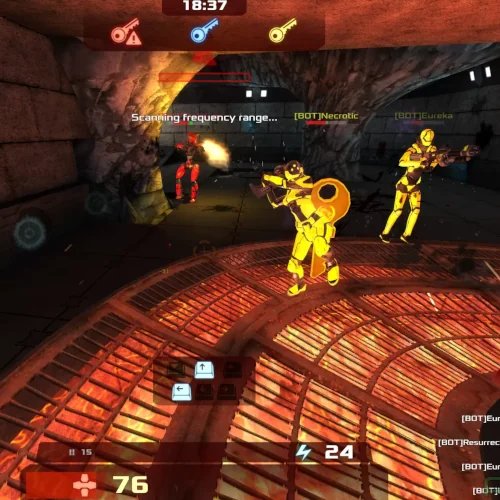
This positions Godot closer to commercial engines like Unreal Engine 5 and Unity, which adopted ray-tracing earlier. As ray-traced visuals become standard in AAA titles, Godot's open-source implementation could accelerate adoption among indie studios seeking high-fidelity rendering without licensing costs. The timing coincides with increased ray-tracing support in AMD RDNA 3, Intel Arc, and NVIDIA RTX hardware, expanding the accessible user base.
Beyond ray-tracing, Godot 4.7 Dev 1 incorporates multiple cross-platform enhancements:
- Native file dialogs across Windows, macOS, Linux and mobile
- Updated Vulkan SDK alignment with latest specifications
- Windows HDR output support
- Editor usability improvements including script editor upgrades
With Vulkan adoption growing across desktop (73% Steam survey share) and mobile platforms, Godot's architectural shift positions it for broader industry relevance. The engine's permissive MIT license and lack of royalty requirements present a cost-efficient alternative as development complexity increases. Further ray-tracing optimizations and feature expansion are expected before the stable 4.7 release.
Comments
Please log in or register to join the discussion