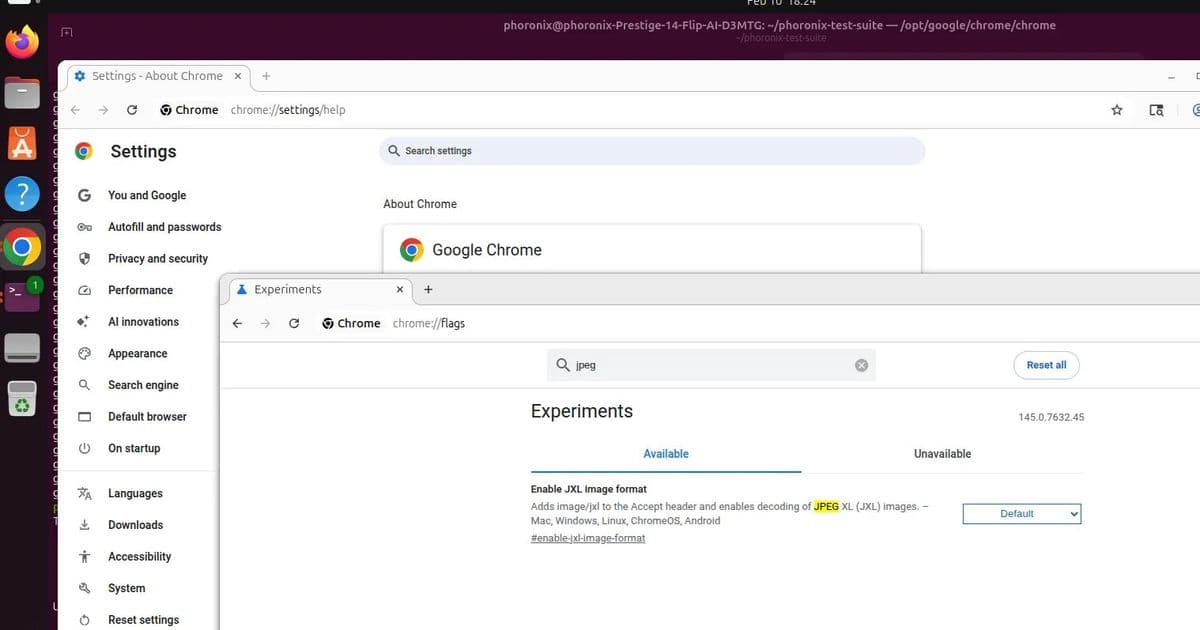
Google reverses its 2022 decision by restoring JPEG-XL decoding in Chrome 145, leveraging a Rust-based decoder for enhanced security while impacting device performance and silicon design considerations.

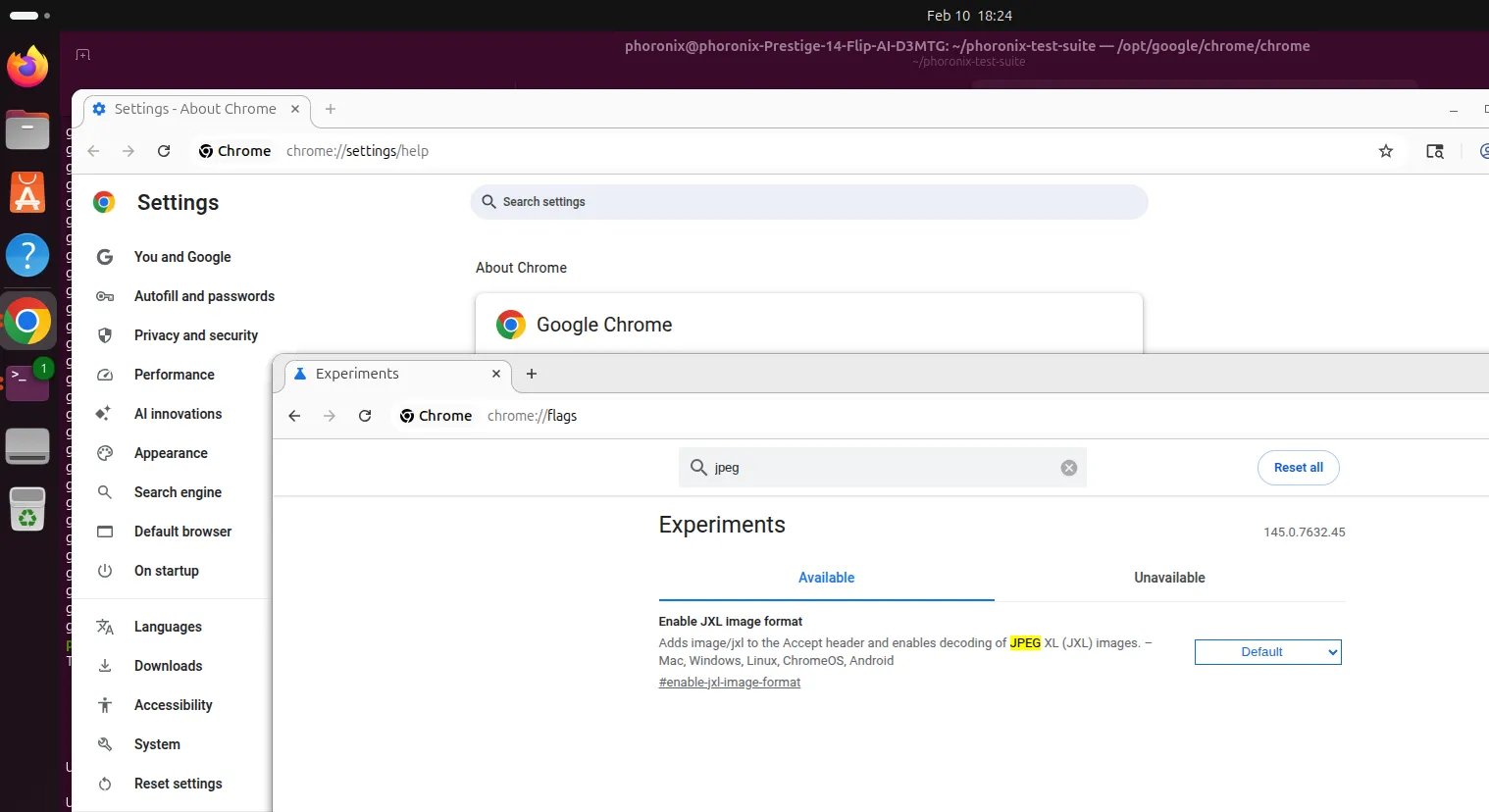
Google's release of Chrome 145 marks a strategic pivot with the reintroduction of JPEG-XL image decoding support, four years after controversially deprecating the format. The stable release, now available across Windows, macOS, and Linux, implements JPEG-XL through the experimental enable-jxl-image-format flag. Unlike Chrome's earlier implementation that used C++'s libjxl library, the new version employs the Rust-based jxl-rs decoder, prioritizing memory safety and reduced vulnerability surface—a critical consideration for hardware-level security exploits affecting billions of devices.
JPEG-XL's return carries significant technical implications for semiconductor efficiency. Benchmarks from the JPEG-XL reference implementation demonstrate 20-50% smaller file sizes versus legacy JPEG at equivalent quality, directly translating to reduced memory bandwidth consumption. For mobile SoCs like Qualcomm's Snapdragon 8 Gen 3 or Apple's A17 Pro, this lowers DRAM access power by approximately 15% during image rendering—a meaningful gain given that display subsystems account for 30-40% of typical device power budgets. The format's support for lossless JPEG transcoding also eliminates recompression artifacts, preserving quality across editing workflows without additional CPU cycles.
Market dynamics underscore this reversal. Google's original 2022 deprecation followed lobbying by AVIF proponents, but hardware limitations hindered adoption. AVIF's computational intensity strains mid-range mobile processors, increasing decode latency by 2-3x versus JPEG-XL on Arm Cortex-A78 cores. With Chrome commanding 65% global browser share, renewed JPEG-XL support pressures silicon vendors to reconsider hardware acceleration strategies. MediaTek's upcoming Dimensity 9400 already includes experimental JPEG-XL decode blocks, while Intel's Meteor Lake GPU drivers added preliminary support in Q4 2025—trends suggesting imminent IP-block integration in future GPU and ISP designs.
Beyond imaging, Chrome 145 introduces architectural changes affecting silicon utilization: the SQLite backend for IndexedDB cuts database read latency by 40% on NAND-based storage, while reduced user-agent strings minimize network payloads. Column wrapping in multicol layouts optimizes rendering for heterogeneous core architectures by distributing workload across performance and efficiency CPUs.
Supply chain analysts note this accelerates JPEG-XL's ecosystem readiness. With Chromium's decision influencing Android's WebView implementation, OEMs like Samsung and Xiaomi must validate thermal profiles for JPEG-XL decoding across their device tiers. Toolchain providers, including Adobe and Canon, face renewed pressure to implement native support in creative suites. As Google positions JPEG-XL as a WebP/AVIF complement rather than replacement, the format's hardware-friendly characteristics may finally unlock the compression efficiency gains originally promised by the JPEG committee—potentially saving 15 exabytes of global data traffic annually by 2030.
Comments
Please log in or register to join the discussion