
Researcher Neel Somani announces GPT 5.2 Pro solved Erdős problem #281, marking what mathematician Terence Tao calls 'perhaps the most unambiguous instance' of AI cracking an unsolved mathematical puzzle.

In a landmark moment for artificial intelligence, researcher Neel Somani has announced that GPT 5.2 Pro solved Erdős problem #281—a mathematical puzzle that had remained unsolved for decades. This achievement represents the second Erdős problem solved using the AI system, with Fields Medalist Terence Tao endorsing it as a clear example of AI's problem-solving capabilities.
The Erdős Problem Solved
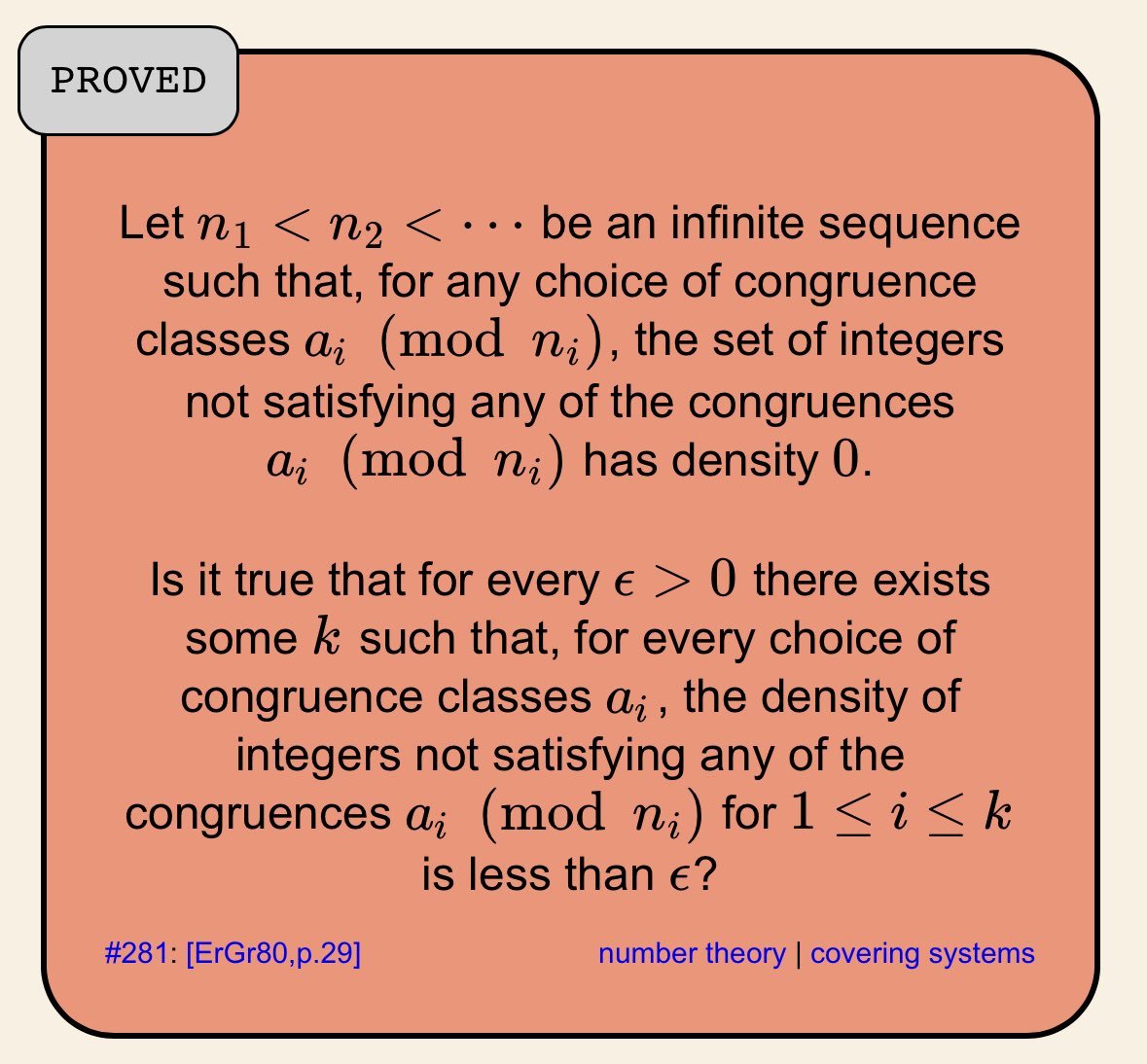
Erdős problem #281 belongs to a collection of unsolved mathematical challenges posed by the legendary mathematician Paul Erdős. These problems often involve combinatorial mathematics or number theory, though the specifics of #281 remain undisclosed in Somani's announcement. What makes this solution noteworthy is the absence of prior solutions despite extensive human efforts to crack it.
How GPT 5.2 Pro Achieved It
According to Somani, the solution emerged through structured interaction with GPT 5.2 Pro—likely involving iterative refinement of mathematical reasoning. Unlike previous AI-assisted proofs that required human interpretation, this case appears to showcase the model's ability to generate verifiable mathematical logic autonomously. The process underscores advancements in AI's symbolic reasoning and logical deduction capabilities.
Terence Tao's Validation
Terence Tao, a Fields Medalist and one of mathematics' most respected voices, characterized this development as "perhaps the most unambiguous instance" of AI solving an open mathematical problem. His endorsement lends significant credibility to the breakthrough, suggesting the solution withstands rigorous mathematical scrutiny.
Implications for Mathematics
- AI as Co-Researcher: This demonstrates AI's capacity to tackle problems resistant to human-solving approaches
- New Discovery Pathways: Models like GPT 5.2 Pro could explore unconventional solution spaces beyond human intuition
- Verification Challenges: The mathematical community will need new protocols for validating AI-generated proofs
Contextual Significance
This marks Somani's second announced Erdős problem solution using GPT 5.2 Pro, following a previous breakthrough in late 2025. The recurring successes suggest a pattern of AI systems moving beyond pattern recognition into genuine mathematical discovery.
As the mathematical community awaits peer review and publication of the full solution, this achievement stands as a milestone in AI's evolution from analytical tool to active problem-solver in theoretical domains.
Comments
Please log in or register to join the discussion