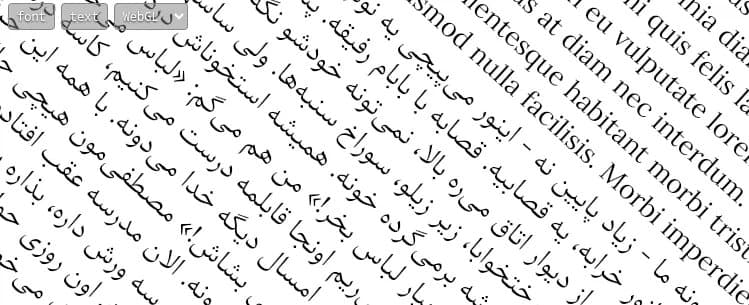
HarfBuzz 14.0 brings a major performance boost with its new libharfbuzz-gpu library, offloading text rasterization to the GPU for smoother rendering in applications like GNOME, KDE, and Chromium.
HarfBuzz 14.0 Released With New GPU Accelerated Text Rendering Library
Written by Michael Larabel in Free Software on 1 April 2026 at 11:19 AM EDT
HarfBuzz, the open-source text shaping engine that originated from the FreeType project, has reached version 14.0 with a groundbreaking addition: GPU-accelerated text rendering. This widely-used library powers text rendering across GNOME, KDE, Java, Flutter, Godot, Chromium, LibreOffice, and countless other applications.
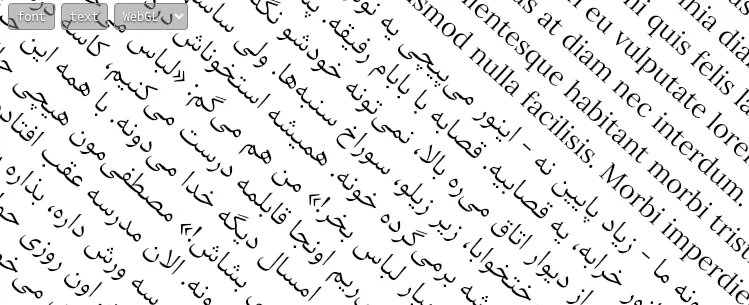
The headline feature of HarfBuzz 14.0 is the new libharfbuzz-gpu library, which implements GPU-based text rasterization using the Slug algorithm. By shifting the decoding and rasterization workload directly to the fragment shader, this approach promises significant performance improvements for text-heavy applications.
Broad Shader Support
The GPU library supports multiple shader languages to ensure compatibility across different platforms and hardware:
- GLSL (OpenGL Shading Language)
- WGSL (WebGPU Shading Language)
- Metal MSL (Metal Shading Language)
- HLSL (High-Level Shading Language)
This multi-language support means the GPU acceleration can work across desktop environments, mobile platforms, and web browsers without requiring developers to rewrite their text rendering pipelines.
Developer Tools and Demos
HarfBuzz 14.0 includes several new tools to help developers explore and implement the GPU acceleration:
hb-gpuutility: A command-line tool demonstrating interactive GPU text rendering- Web demo: An interactive live web demo showcasing GPU-accelerated text rendering using either WebGPU or WebGL
These tools allow developers to experiment with the new capabilities before integrating them into their applications, lowering the barrier to adoption.
Performance Implications
While the release announcement doesn't include specific benchmark data, GPU-accelerated text rendering typically offers several advantages:
- Reduced CPU load: Offloading rasterization to the GPU frees up CPU cycles for other tasks
- Faster rendering: Modern GPUs can process text fragments in parallel more efficiently than CPU-based approaches
- Smoother animations: GPU acceleration benefits text animations and transitions in UI frameworks
- Better power efficiency: On mobile devices, GPU-based rendering can be more power-efficient for complex text layouts
The impact will likely be most noticeable in applications that render large amounts of text or perform complex text operations, such as web browsers, office suites, and development environments.
Availability
HarfBuzz 14.0 is available for download on GitHub, where developers can find the full release notes, source code, and documentation for the new GPU-accelerated features.
This release represents a significant evolution for HarfBuzz, bringing modern GPU capabilities to one of the most fundamental components of graphical user interfaces. As applications increasingly demand smooth, high-performance text rendering across diverse platforms, GPU acceleration could become a standard feature in text shaping engines.
For developers working with text-heavy applications, the new HarfBuzz 14.0 offers an opportunity to significantly improve rendering performance with minimal code changes, thanks to the library's backward compatibility and comprehensive shader support.
Comments
Please log in or register to join the discussion