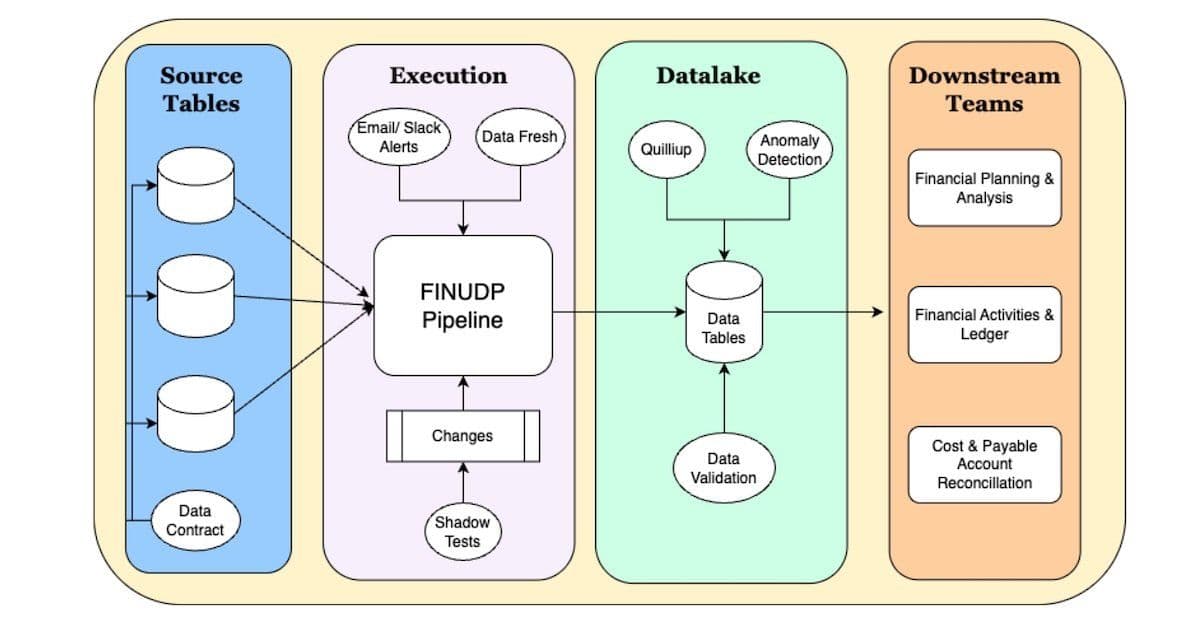
Agoda consolidated fragmented financial data pipelines into a centralized Apache Spark platform called FINUDP, implementing automated validations, ML anomaly detection, and data contracts to ensure consistency across critical financial reporting.
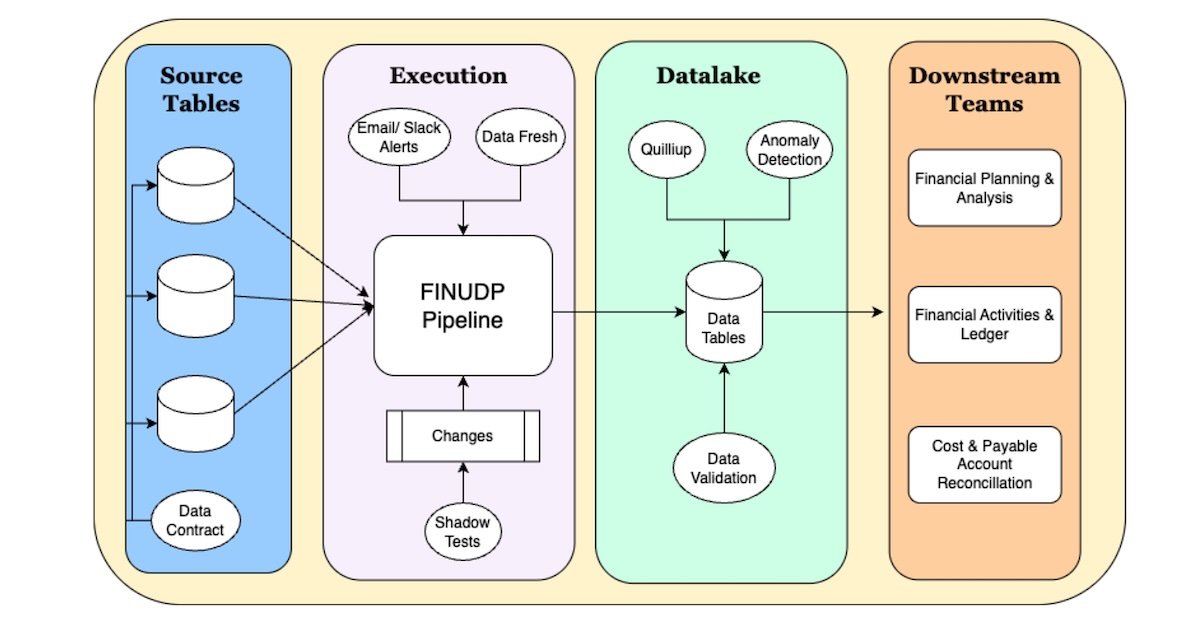
Agoda recently tackled a fundamental challenge facing many data-driven enterprises: fragmented data pipelines creating inconsistent financial reporting. The online travel platform consolidated multiple independent pipelines into a centralized Financial Unified Data Pipeline (FINUDP), establishing a single source of truth for critical financial metrics including sales, cost, revenue, and margin calculations.
The Fragmentation Problem
Previously, separate teams including Data Engineering, Business Intelligence, and Data Analysis maintained independent financial data pipelines with custom logic and definitions. While this distributed approach simplified initial ownership, it inevitably led to metric discrepancies across the organization. Warot Jongboondee from Agoda's engineering team emphasized the business impact: "These discrepancies could potentially impact Agoda's financial statements," creating risks for reporting accuracy and strategic planning.
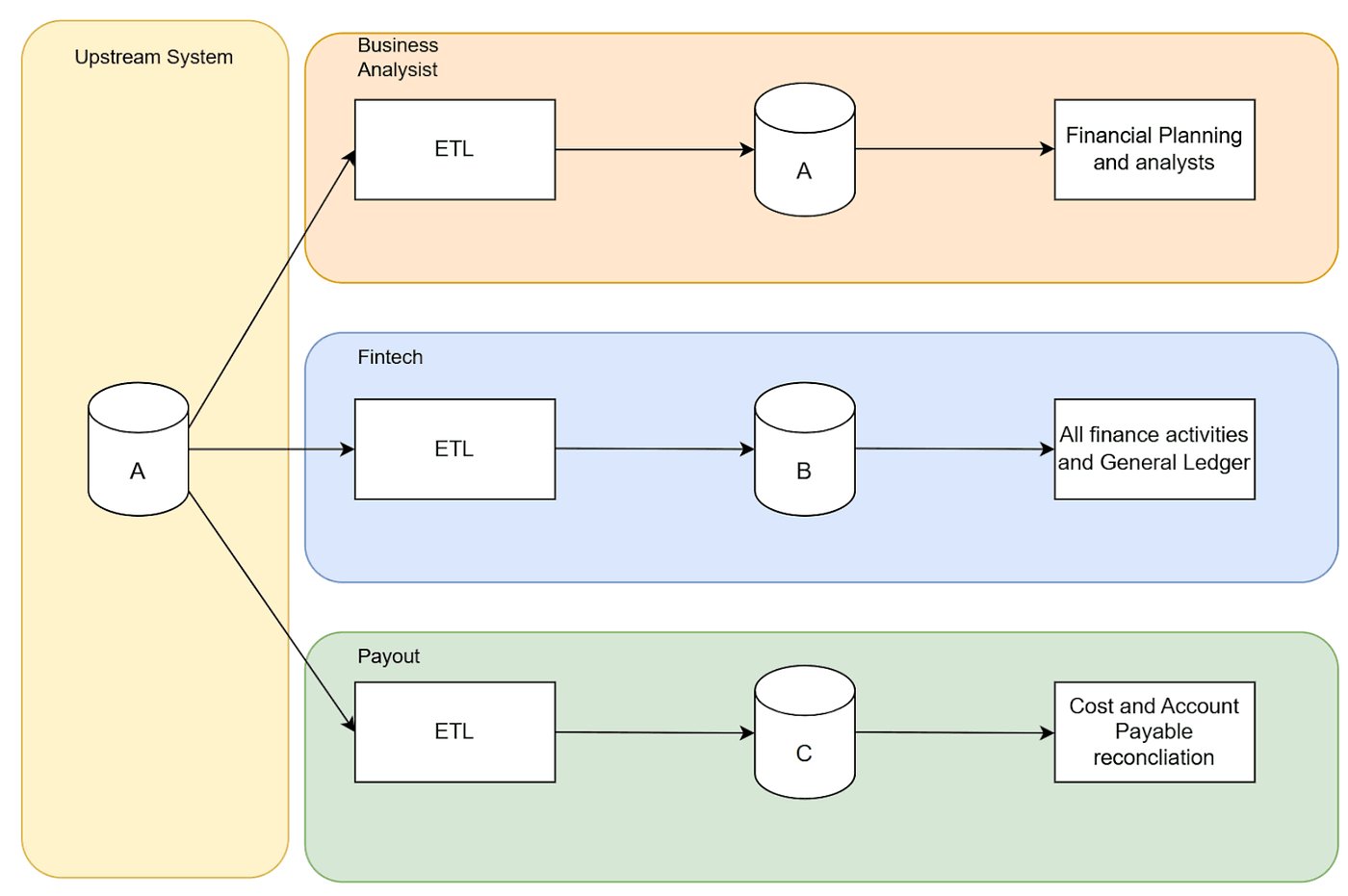 Separate financial data pipelines before consolidation (Source: Agoda)
Each pipeline processed millions of daily booking transactions redundantly. This duplication wasted computational resources and, more critically, produced inconsistent results when teams calculated identical financial KPIs using different methodologies.
Architectural Consolidation with Apache Spark
The solution centered on FINUDP – a unified pipeline built on Apache Spark. This platform became the authoritative source for all downstream financial reporting and planning systems, delivering updated results hourly. Key architectural decisions included:
- Spark Core: Leveraged for distributed processing scalability
- Hourly Updates: Balanced freshness with computational feasibility
- Centralized Logic: Single implementation for core financial calculations
Consolidation required significant cross-functional alignment. Product, finance, and engineering teams collaborated extensively to define unified data semantics. Initial pipeline runtime reached five hours, necessitating optimizations through Spark query tuning and infrastructure adjustments to achieve the target runtime of approximately 30 minutes.
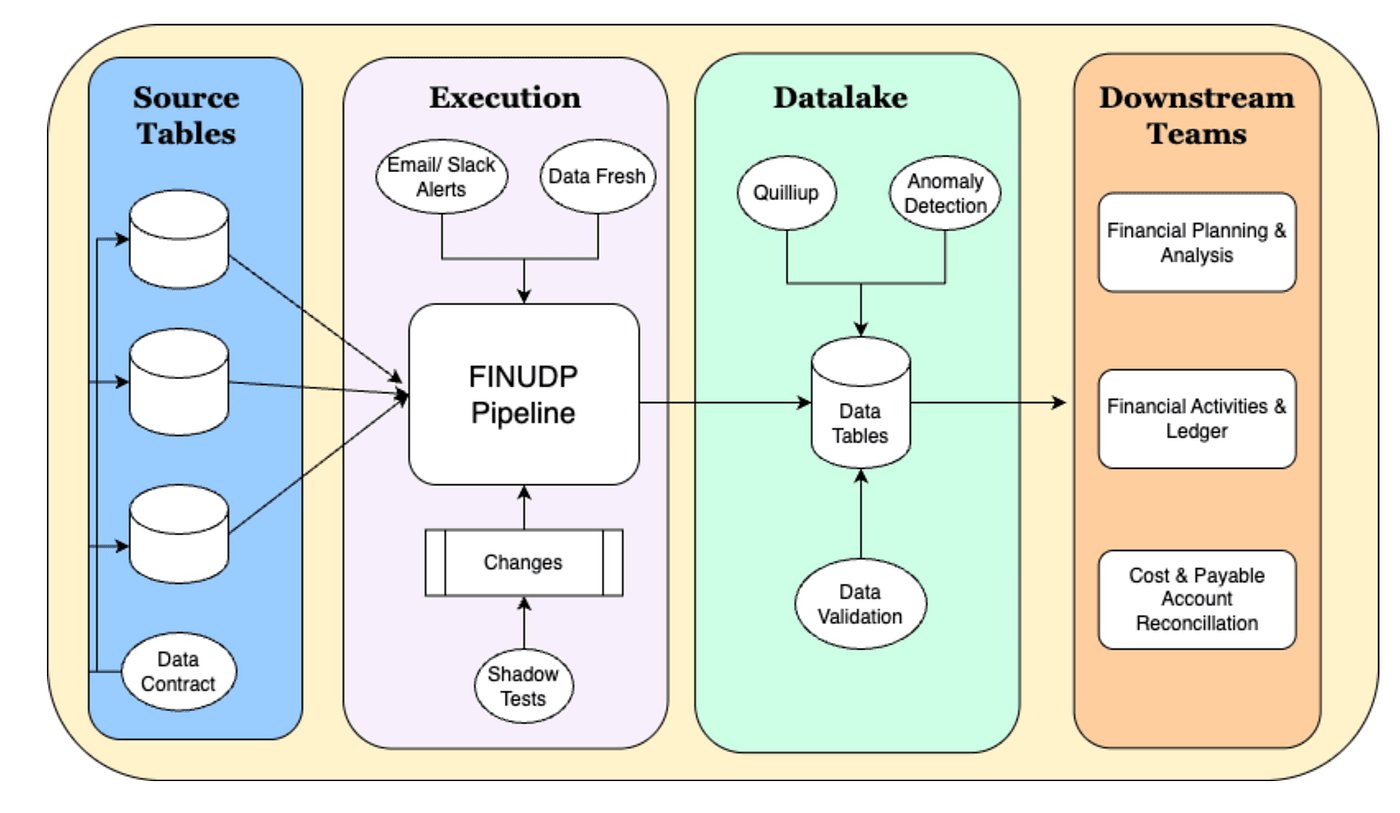 Unified Financial Data Pipeline (FINUDP) architecture (Source: Agoda)
Multi-Layered Quality Framework
FINUDP incorporates a sophisticated defense-in-depth approach to data quality:
Automated Validations: Schema checks, null value detection, range constraints, and referential integrity rules run during ingestion. Business-critical failures trigger pipeline halts to prevent corrupt data propagation.
Machine Learning Anomaly Detection: Models continuously monitor data patterns, identifying deviations from expected behaviors that might indicate deeper issues.
Data Contracts: Formal agreements with upstream teams define required data characteristics using Quilliup for validation. Violations generate immediate alerts.
Escalating Alerting: A three-tier system progresses from email/Slack notifications to escalation via Agoda's 24/7 Network Operations Center for unresolved issues.
Strategic Trade-offs and Governance
The consolidation introduced deliberate trade-offs aligned with financial data's critical nature:
- Development Velocity: Changes require full pipeline testing, slowing iteration
- Data Dependencies: Pipeline progress depends on all upstream datasets
- Coordination Overhead: Tight change management protocols ensure stability
These constraints were counterbalanced by rigorous processes:
- Shadow Testing: Proposed changes run parallel to production logic with results compared pre-deployment
- Staging Environment: Full production mirror for safe testing
- Documentation: Comprehensive specifications maintain alignment
Jongboondee noted: "Centralization demands tighter coordination and careful change management at every step." The system currently achieves 95.6% uptime with a 99.5% availability target.
Industry Context and Relevance
Agoda's approach reflects broader data management trends:
- Data Contracts: Gartner identifies these as "an increasingly popular way to manage, deliver, and govern data products"
- Quality Focus: 64% of organizations cite poor data quality as their primary challenge (industry research)
- Architectural Enforcement: Moving beyond ad-hoc checks toward systemic reliability
FINUDP demonstrates how enterprises handling mission-critical data prioritize consistency, auditability, and architectural enforcement over development speed. As financial data increasingly feeds regulatory reporting, machine learning models, and executive decision-making, such holistic approaches become essential. The solution provides a reference pattern for organizations facing similar fragmentation challenges.
For technical details on Apache Spark implementations, refer to the official Spark documentation.
Comments
Please log in or register to join the discussion