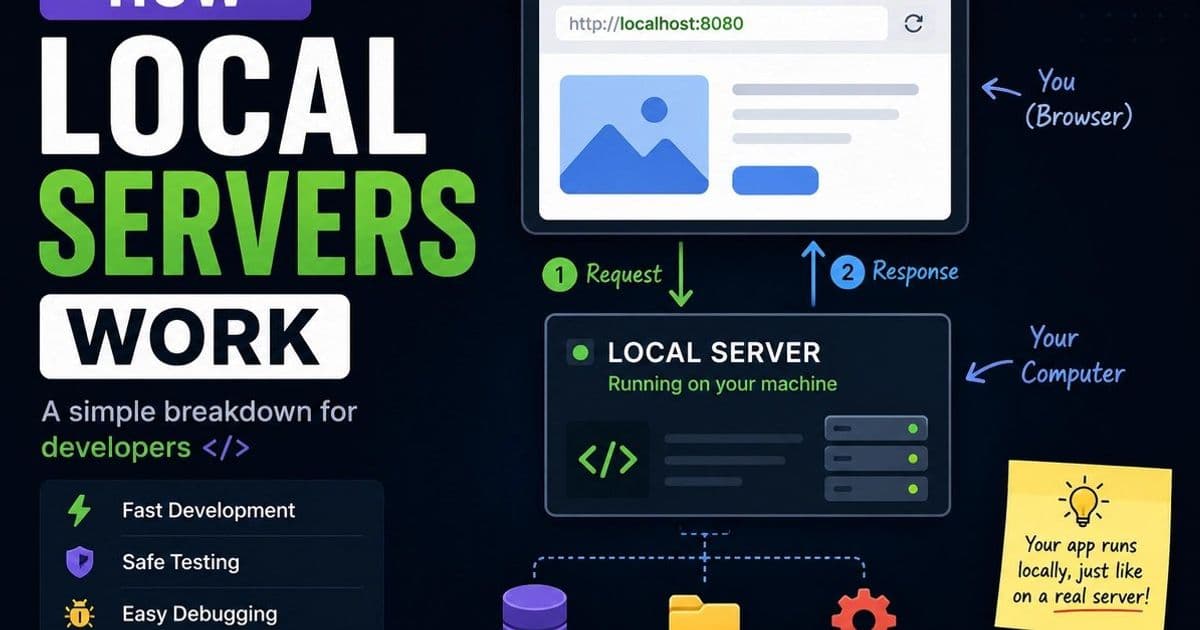
Your computer can run a web server. Running one teaches you how the web actually works.

Your computer can run a web server. You don't need to deploy to the internet to test a web app. A local server runs on your machine and handles requests the same way a remote server does.
You start a local server with tools like Node.js, Spring Boot, or Go. The server binds to a port, usually 3000 or 8080, and listens for connections.
Open http://localhost:3000 in a browser. Your browser sends a request to that port. The server receives the request, processes it, and sends back a response: HTML, JSON, or other data.
Everything happens on your machine. No internet required.
This setup speeds development. You skip deployment cycles. You test in a controlled environment. You debug without affecting other people. You simulate real backend behavior, database queries, and API responses.
Local servers give you a sandbox for building and testing before you ship to production.
Comments
Please log in or register to join the discussion