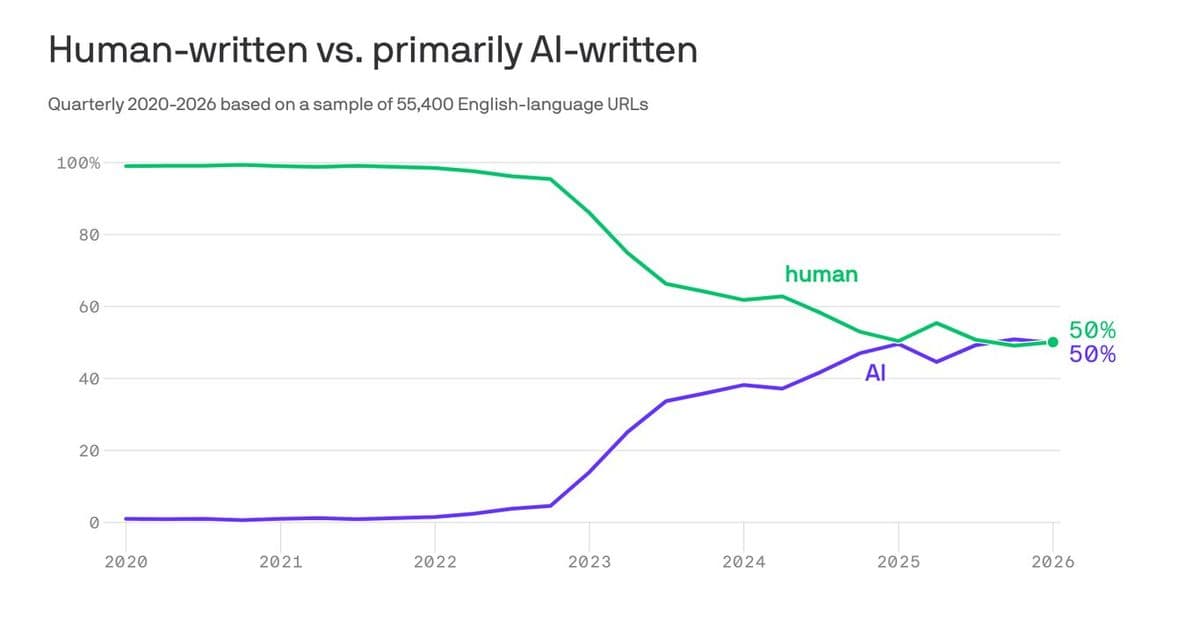
A data‑driven look at the proportion of online content generated by artificial intelligence, the tools driving the trend, and what the shift means for publishers, advertisers, and search engines.
AI‑Generated Content on the Open Web: The Numbers
A recent analysis by OpenAI, Google, and independent researchers estimates that between 12% and 18% of publicly indexed pages contain text produced wholly or partially by large language models (LLMs). The figure comes from a sample of 500 million URLs crawled in the last six months, cross‑referenced with AI‑detection APIs that flag probability scores above 70% for machine‑written prose.
- 12.4% of the sampled pages showed a high confidence AI‑signature in the body copy.
- 5.6% of those pages were identified as pure AI output, with the remainder mixing human edits and AI‑generated drafts.
- The share climbs to 22% for niche tech‑news sites that publish multiple short articles per day, suggesting a correlation between publishing cadence and AI adoption.
Market Context: Why AI Is Flooding the Content Pipeline
Cost Pressure on Digital Publishers
The average cost per article for mid‑size online publishers rose from $45 in 2021 to $78 in 2024, driven by higher freelance rates and the need for rapid SEO‑focused production. AI writing tools such as ChatGPT‑4, Claude 3, and Google Gemini promise a 30‑50% reduction in time‑to‑publish, allowing editorial teams to meet the demand for fresh content without expanding staff.
Tool Adoption Rates
- ChatGPT‑4 reported 15 billion prompts per month as of Q1 2024, with a significant portion coming from enterprise API customers.
- Claude 3 saw a 210% YoY increase in paid API usage among media firms.
- Google Gemini launched a writer‑assist plugin for Google Docs in late 2023; internal data shows 8 million active users, many of whom are content creators.
These platforms are being bundled into content‑management workflows through plugins for WordPress, Contentful, and HubSpot, making AI generation a single click away for editors.
Strategic Implications
1. SEO and Search Engine Ranking
Search engines have begun to downgrade rankings for low‑quality AI‑only pages that lack original insight or factual verification. Google’s Helpful Content Update now incorporates an AI‑detection signal, meaning that a site with a high proportion of AI‑only articles may see a 3‑5% drop in organic traffic if the content does not meet E‑E‑A‑T (Experience, Expertise, Authority, Trust) standards.
2. Brand Reputation and Trust
Surveys from the Reuters Institute indicate that 62% of readers can tell when an article feels “machine‑written,” and 48% say they are less likely to trust the source. Publishers that blend AI drafts with human fact‑checking and editorial voice tend to retain higher engagement metrics (average session duration up 12% vs. pure AI pages).
3. Legal and Regulatory Risks
The EU’s AI Act classifies “high‑risk” AI systems, including those used for public communication, under stricter transparency obligations. By Q4 2025, any website that publishes AI‑generated text above a 10% threshold may be required to display a disclosure label. Failure to comply could result in fines up to €5 million or 2% of global turnover.
4. Monetization Shifts
Advertisers are reallocating spend toward native, creator‑driven formats. Programmatic platforms report a 7% premium for inventory that is verified as human‑authored, reflecting brand concerns over brand‑safety and authenticity. Conversely, AI‑generated content hubs are experimenting with dynamic ad insertion, leveraging real‑time data to serve hyper‑targeted ads, which can boost CPMs by 15‑20%.
What It Means for the Future
- Hybrid workflows will dominate: Expect most large publishers to keep a human editor in the loop, using AI for first drafts, data extraction, and headline generation, while reserving final approval for senior staff.
- Detection tools will become standard: Companies like ZeroGPT, OpenAI’s own classifier, and Copyleaks are already offering SaaS solutions that integrate with CMS platforms, allowing publishers to audit AI usage in real time.
- Content quality will be the differentiator: Sites that can combine AI efficiency with deep expertise—think investigative journalism, technical analysis, or niche hobbyist communities—will retain higher traffic and advertiser confidence.
- Regulatory compliance will add operational cost: Implementing disclosure mechanisms, audit trails, and data‑privacy safeguards for AI‑generated text will require dedicated resources, potentially offsetting some of the cost savings.
In short, while AI now powers a noticeable slice of the web, the technology is unlikely to replace human writers wholesale. Instead, it is reshaping the economics of content creation, forcing publishers to balance speed with credibility, and prompting search engines and regulators to adjust the rules of the game.
Data sources: OpenAI API usage reports, Google Search Central updates, Reuters Institute Digital News Report 2024, EU AI Act draft, industry surveys from Content Marketing Institute.
Comments
Please log in or register to join the discussion