A deep dive into the technical wizardry behind Grand Theft Auto III's revolutionary streaming system that enabled a massive open world on extremely limited hardware.
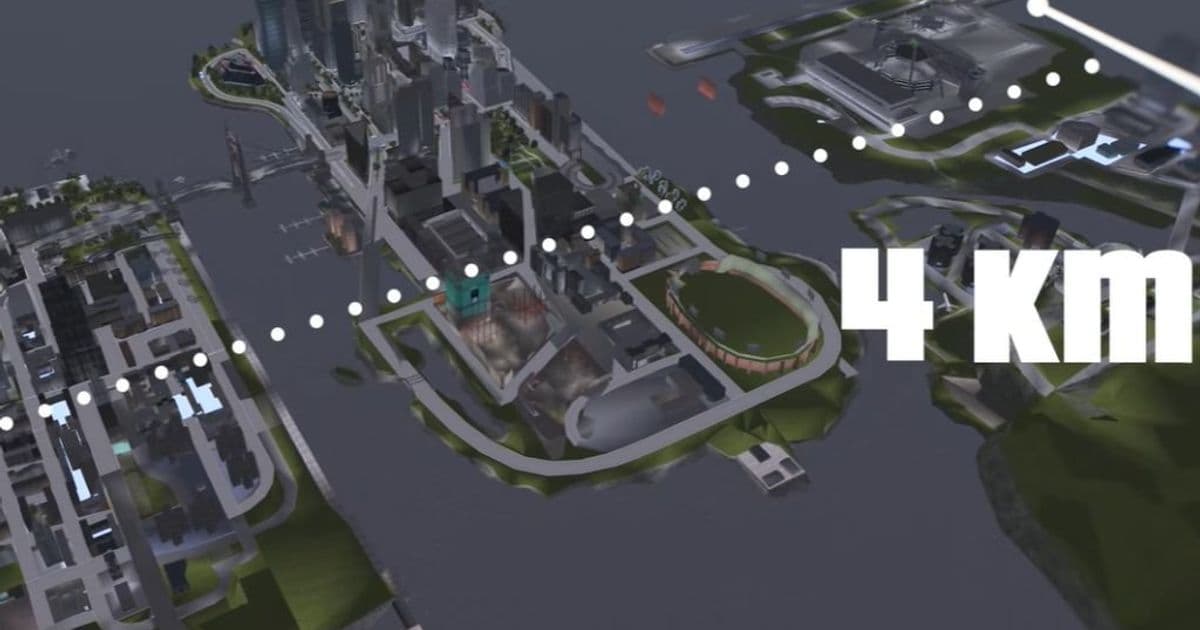
When Grand Theft Auto III launched in 2001, it fundamentally changed the open-world gaming landscape. What made this achievement even more remarkable was that Rockstar Games managed to create a 4-kilometer-wide open world—complete with pedestrians, dozens of unique vehicles, and three explorable islands—on the PlayStation 2, which had a mere 32MB of RDRAM to work with. This technical challenge seemed nearly impossible, yet Rockstar not only succeeded but created a blueprint for open-world design that still influences games today.
The scale of this technical feat becomes even more impressive when you consider that the game's assets alone totaled approximately 130MB—nearly four times what the PS2 could hold in memory at any given moment. So how did Rockstar pull off this seemingly impossible task? Thanks to Mark Brown from Game Maker's Toolkit, we now have a detailed breakdown of the techniques that made it possible.
The Revolutionary Streaming System
In his recent YouTube video, Brown obtained GTA III's source code and created a modded executable that reveals the game's hidden streaming mechanisms. His analysis shows that Rockstar implemented what he calls a "moving window" approach to memory management.
"Now, you can see the trick: how Grand Theft Auto 3 loads and unloads a small number of assets into memory as you move around Liberty City," Brown explains. "It secretly builds the world in front of you, and it silently deletes the world behind your back. Basically, instead of trying to fit a whole city into memory, Rockstar instead built a moving window that shows just enough of the city to make the illusion work."
Brown's modded version allows players to visually observe how chunks of the city dynamically pop in and out of existence in real-time, depending on where protagonist Claude stands. This streaming system was so sophisticated that players rarely noticed the transitions, maintaining the illusion of a seamless world.
Strategic World Division
Rockstar's approach involved breaking Liberty City into manageable components. The first major division was the three distinct islands: Portland, Staunton Island, and Shoreside Vale. Each island would load separately, reducing the immediate memory requirements.
However, even Portland alone accounted for 40-50MB of assets—still exceeding the PS2's memory capacity. This led to the next layer of division: each island was broken down into thousands of tiny sectors. The game maintained only the sectors directly in the player's field of view in memory, constantly swapping chunks of assets in and out of the limited RDRAM as players drove and explored.
This approach had interesting gameplay implications. For instance, the game could display a limited number of unique cars on roads at any given time. This explains why players might spot an EC Cheetah casually cruising after obtaining one—the game prioritizes showing vehicles the player has interacted with.
Overcoming Hardware Limitations
The PS2's DVD drive added another layer of complexity. With read speeds significantly slower than modern storage solutions, Rockstar had to be extremely strategic about when to pull data to prevent game freezes or loading screens.
Former GTA III programmer Obbe Vermeij detailed these challenges in a separate interview: "There was no way we could fit the whole map of GTA 3 in the PS2's memory. Streaming involves loading models from the DVD as the player moves around. This was the hardest technical challenge during the development of GTA 3, and it was coded by Adam Fowler."
Rockstar implemented numerous workarounds beyond the sector-based streaming system. They used aggressive asset compression, reduced draw distances for non-essential objects, and implemented sophisticated LOD (Level of Detail) systems that simplified models based on distance from the player.
Legacy and Influence
The techniques developed for GTA III set a precedent for open-world game design. The concept of streaming worlds rather than loading them entirely became standard in the industry, influencing everything from Bethesda's Elder Scrolls series to Rockstar's own later titles like Grand Theft Auto IV and V.
Modern open-world games have vastly more resources at their disposal—current consoles have hundreds of times more RAM than the PS2—but the fundamental principles of efficient memory management remain relevant. As game worlds continue to expand, the techniques pioneered by Rockstar nearly 25 years ago still offer valuable insights.
For those interested in seeing these streaming techniques firsthand, Brown's modded GTA III executable provides a fascinating window into how this revolutionary game functioned under extreme hardware constraints. The video, available on Game Maker's Toolkit YouTube channel, demonstrates the elegant simplicity of Rockstar's solution to what seemed like an insurmountable problem.
The story of GTA III's development serves as a reminder that technical innovation often arises not from unlimited resources, but from creative problem-solving within strict limitations. In an era of increasingly powerful hardware, Rockstar's achievement on the PS2 stands as a testament to the power of clever design and elegant engineering.
Comments
Please log in or register to join the discussion