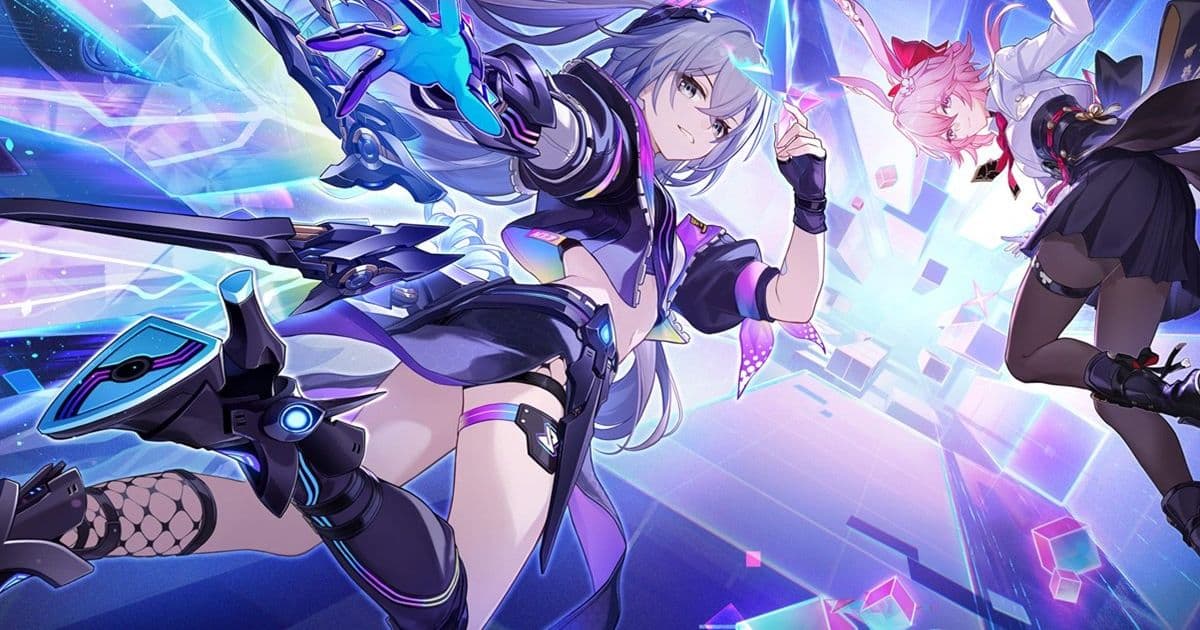
Shanghai publisher HoYoverse is bypassing third-party LLMs entirely, building proprietary GPU clusters and custom model frameworks for live-service games starting with Petit Planet.
The global mobile gaming industry is watching Shanghai this week as Pocket Gamer Connects Barcelona kicks off, and HoYoverse just dropped a number that rewires the economics of live-service development. The Genshin Impact and Honkai: Star Rail publisher plans to invest $14.6 billion into internal generative artificial intelligence infrastructure over the next three years, according to official reports via the media.
The strategy, outlined by HoYoverse co-founder Liu Wei during a private presentation in Beijing, focuses entirely on vertical integration. Instead of licensing third-party large language models from commercial tech providers like OpenAI or Anthropic, the studio is establishing a self-contained computing ecosystem. This means building proprietary graphics processing unit clusters and developing custom model-training frameworks specifically designed for active live-service games.
What HoYoverse Is Actually Building
The technical roadmap is ambitious by any standard. HoYoverse plans to deploy proprietary natural language processing models directly into game logic, allowing non-player characters to engage in unscripted, dynamic conversations. Traditional life simulation games rely on hardcoded dialogue trees that loop once exhausted. HoYoverse wants to eliminate that limitation entirely.
The first public test for this pipeline is Petit Planet, the company's upcoming cozy life simulation title that recently concluded its Stardrift closed beta phase on mobile platforms and PC. Digital villagers in Petit Planet will analyze player choices and environmental changes on each planetoid, adapting their routines and verbal responses on the fly. No more exhausting dialogue options after ten hours of gameplay.
The publisher will also use this framework to automate coding pipelines and deliver real-time content personalization across their existing portfolio, including Genshin Impact, Honkai: Star Rail, and Wuthering Waves.
How This Compares to Competitor Approaches
Most gaming studios adopting generative AI focus on back-end efficiency. Ubisoft, EA, and Activision Blizzard have all experimented with AI tools for asset generation, procedural content creation, and playtesting automation. These are cost-reduction plays designed to shorten development cycles.
HoYoverse's approach is fundamentally different. The $14.6 billion commitment targets player-facing experiences directly. Dynamic NPC conversations, personalized questlines, and adaptive difficulty scaling represent a product-level investment rather than a production pipeline optimization.
The scale also dwarfs comparable commitments. Ubisoft's NEO NPC project operates on a fraction of this budget. Inworld AI, which partners with multiple AAA studios for AI-driven NPC interactions, raised $50 million in its last funding round. HoYoverse is spending nearly 300 times that amount on internal infrastructure alone.
The Technical Risks Are Real
Building proprietary GPU clusters during a global semiconductor supply crunch introduces significant hardware procurement challenges. NVIDIA's H100 and upcoming B200 datacenter GPUs remain allocation-constrained, and HoYoverse will need thousands of units to train models at the scale required for live-service deployment.
Liu Wei acknowledged the risks directly, telling doctoral students that if the pipeline fails to achieve its goals, the studio will view the capital loss as "an elaborate fireworks display." That's an unusually candid assessment from a studio executive, and it suggests HoYoverse understands this is a high-variance bet.
The vertical integration strategy also means HoYoverse cannot rely on external vendors if model performance disappoints. When your NPC dialogue system is running on proprietary hardware trained with proprietary frameworks, there is no fallback option. Every failure becomes a first-party problem.
Who This Investment Is Actually For
Live-service games live and die on player retention. Genshin Impact has maintained relevance for four years through regular content updates, character releases, and seasonal events. But even successful live-service titles face content fatigue. Players eventually exhaust available dialogue, questlines, and environmental interactions.
HoYoverse is betting that dynamically generated NPC interactions will extend session times and improve daily active user metrics. If villagers in Petit Planet remember your previous conversations and adapt their behavior based on your play patterns, the incentive to return daily increases measurably.
For competitors, this investment sets a new baseline. Live-service backend spending just jumped from tens of millions to tens of billions, at least for studios willing to follow HoYoverse's vertical integration model. Mid-tier publishers without the capital reserves to build proprietary AI infrastructure may find themselves locked out of the next generation of player experiences.
The Broader Hardware Implications
HoYoverse's GPU procurement needs will ripple through the datacenter hardware market. A $14.6 billion commitment over three years implies annual hardware spending approaching $5 billion, which would make HoYoverse one of the largest single buyers of AI training hardware globally. That kind of demand affects pricing and availability for every other company in the AI space.
For gaming hardware reviewers, the practical question is whether these AI-driven features will eventually demand more from consumer GPUs and mobile processors. Real-time NPC conversation generation running client-side would require significantly more neural processing unit headroom than current mobile chipsets provide. If HoYoverse deploys these models server-side, latency becomes the primary concern.
As PGC Barcelona begins, the sheer scale of this investment sets a new baseline for live-service backend spending. HoYoverse's massive backend investment underscores a widening gap in how next-generation titles scale across platforms.
Source: Gameworldobserver.com, Hoyoverse.com/Petite Planet, Pgconnects.com
Comments
Please log in or register to join the discussion