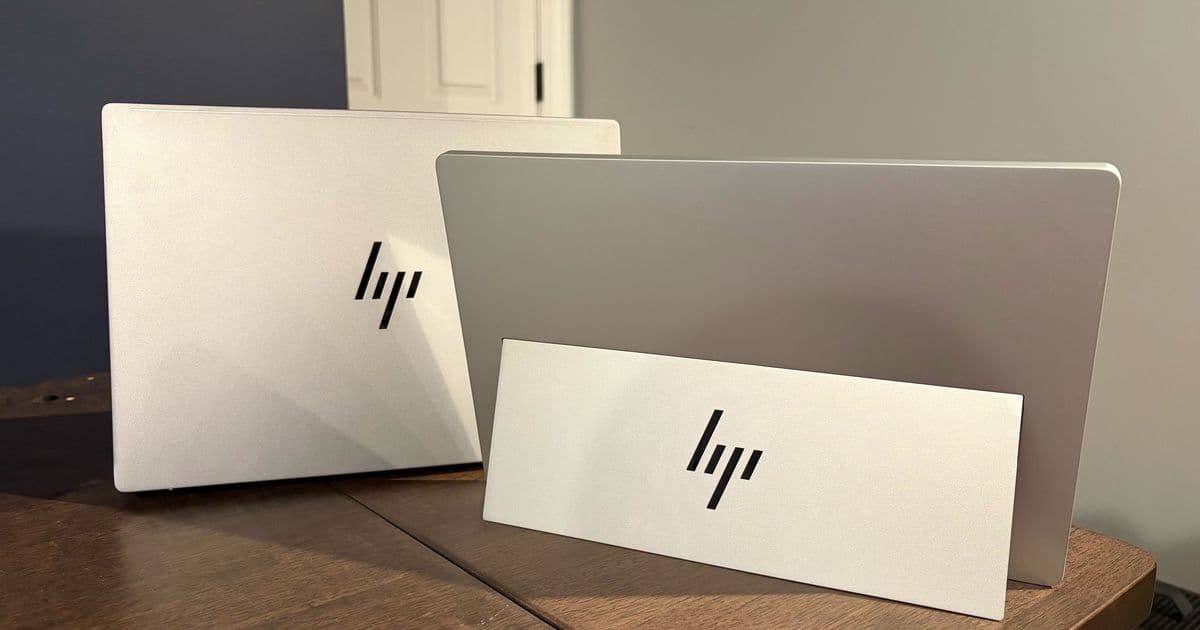
HP is reportedly qualifying Chinese memory suppliers as the AI-driven HBM shortage forces PC makers to look beyond the big three DRAM manufacturers. Analysts say memory chips are commodities that can be easily replaced, opening the door for Chinese firms like CXMT and YMTC to capture market share despite U.S. export restrictions and technology theft allegations.
HP is exploring Chinese memory suppliers to address the ongoing DRAM shortage, according to a tech analyst who revealed the PC maker's discussions with Bank of America about qualifying additional suppliers in China. This move signals a potential shift in the global memory supply chain as the AI infrastructure build-out creates unprecedented demand for high-bandwidth memory (HBM) while constraining consumer DRAM production.
The Shortage Crisis: Why HP is Looking East
The current memory shortage stems from a fundamental reallocation of manufacturing capacity toward HBM, the specialized memory required for AI accelerators like NVIDIA's GPUs. Memory manufacturers are prioritizing HBM production because it commands significantly higher margins than standard DDR5 memory used in PCs and laptops. This has created a severe constraint on consumer DRAM supply, affecting PC makers like HP who need memory modules for their systems.
According to Tae Kim's X post, HP told Bank of America it is "qualifying additional suppliers (China)" for products destined for Asia and Europe. The company is taking initial steps to diversify beyond the memory oligopoly of Micron, Samsung, and SK hynix, which collectively control the vast majority of global DRAM production.
Memory as a Commodity: The Strategic Implications
Unlike proprietary AI chips that require specific architectures and software ecosystems, memory chips function as standardized commodities. As Kim explains, "Unlike the proprietary AI chips made by Nvidia, memory chips are commodities, meaning they can be easily replaced. There is a higher degree of disruption risk."
This commoditization creates both opportunity and vulnerability. On one hand, PC manufacturers can source memory from alternative suppliers without significant engineering changes. On the other hand, it means memory manufacturers face intense price pressure and must constantly innovate to maintain margins.
The analyst further notes that "It may be a year from now or later, but there is a real potential for Chinese companies to expand aggressively into the memory chip and flash memory space." This prediction is already materializing as Chinese manufacturers seize the market opportunity created by the shortage.
Chinese Memory Makers Capitalize on the Shortage
Several Chinese memory manufacturers are positioning themselves to fill the supply gap:
CXMT (ChangXin Memory Technologies)
Based in Hefei, Anhui Province, CXMT has already launched DDR5-8000 and LPDDR5X-10667 memory chips despite facing U.S. export restrictions. The company is reportedly preparing for a massive IPO, timing its public offering to capitalize on the tight global memory market. CXMT's rapid advancement is particularly notable given allegations that the company stole technology from Samsung to build its initial DDR5 chips.
YMTC (Yangtze Memory Technologies Corp.)
Located in Wuhan, YMTC is primarily known for NAND flash memory production but is now preparing to enter DRAM fabrication. The company is reportedly seeking a partnership with CXMT to begin HBM production, potentially challenging the big three manufacturers in the high-margin AI memory market.
The Supply Chain Reality: Why Companies May Overlook Quality Concerns
The memory market's natural boom-and-bust cycle has created a unique situation. Major manufacturers like Micron, Samsung, and SK hynix are hesitant to increase production capacity despite the shortage. Their caution stems from the memory market's historical pattern: when demand eventually cools, excess capacity leads to price crashes and financial losses.
Even if these companies committed to building new fabs today, it would take 3-4 years for these facilities to come online. By that time, the current AI-driven shortage may have resolved, leaving manufacturers with underutilized expensive facilities. This creates a window of opportunity for Chinese manufacturers who are willing to take the risk.
For PC makers like HP, the calculus is straightforward. When systems are shipping to markets where brand reputation for memory modules matters less than availability and price, sourcing from Chinese suppliers becomes viable. As the article notes, "most end users wouldn't care where the memory chips in their laptops and pre-built PCs come from, as long as they perform well and are competitively priced."
Market Implications and Future Outlook
The potential entry of Chinese memory manufacturers into the mainstream supply chain represents a significant shift. For decades, the DRAM market has been an oligopoly with high barriers to entry. The combination of U.S. export restrictions, technology theft allegations, and the capital-intensive nature of semiconductor manufacturing has kept new entrants at bay.
However, the current shortage creates a perfect storm. PC manufacturers need memory now, the big three are capacity-constrained and risk-averse, and Chinese manufacturers have both the capacity and the motivation to capture market share. If HP successfully qualifies Chinese suppliers for its Asian and European markets, it could legitimize these suppliers and encourage other PC makers to follow suit.
This could have long-term consequences for the memory market structure. A viable fourth and fifth player in DRAM production would introduce more competition, potentially lowering prices and reducing the boom-and-bust volatility that has plagued the industry. It would also represent a significant geopolitical shift in semiconductor manufacturing, with China gaining a foothold in a critical component of the global technology supply chain.
The shortage timeline suggests this situation may persist for 12-24 months, giving Chinese manufacturers a crucial window to prove their capabilities and establish supply relationships. If they succeed, the memory market that emerges from this shortage may look fundamentally different from the one that entered it.
Comments
Please log in or register to join the discussion