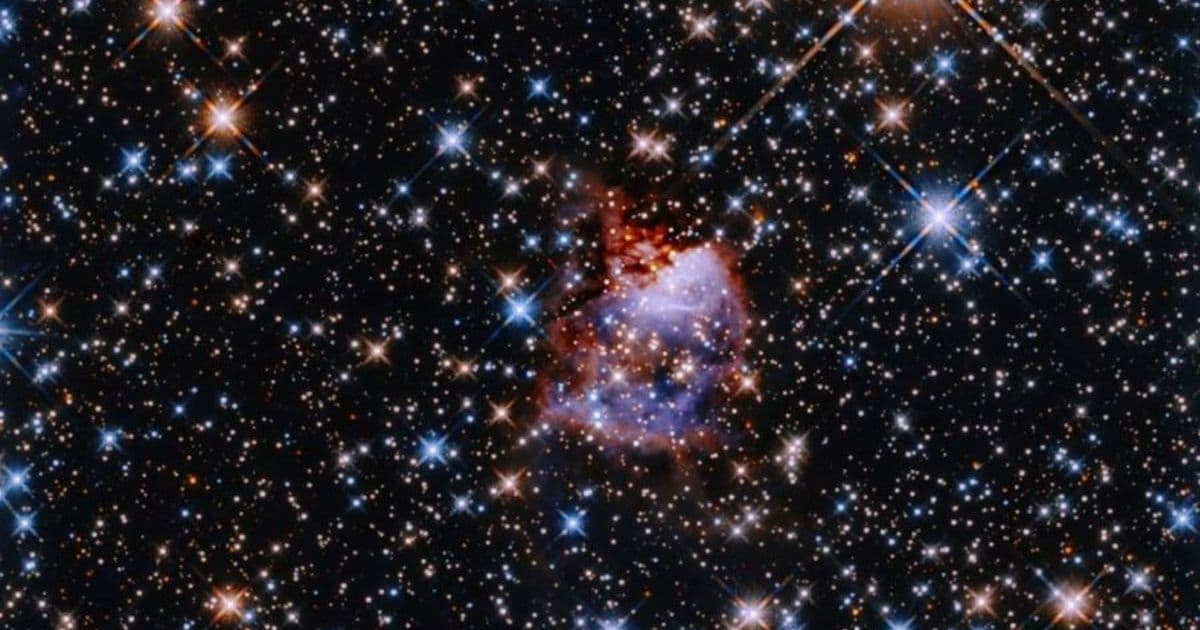
NASA's Hubble Space Telescope has captured stunning new images of protostars hidden within thick dust clouds, revealing the violent early stages of star formation in regions like Cepheus A and GAL-305.20+00.21. These observations, part of the SOFIA Massive (SOMA) Star Formation Survey, provide critical insights into how massive stars more than eight times the mass of our Sun develop, using near-infrared light to peer through obscuring dust that blocks visible light.
NASA's Hubble Space Telescope has released a series of images that pierce through the thick dust shrouding some of the galaxy's youngest stars. These protostars, still in their formative years, are notoriously difficult to observe because they form within dense clouds of gas and dust that block visible light. Hubble's ability to detect near-infrared emissions, however, allows it to see through these obscuring layers, revealing the violent birth processes of stars.
The telescope targeted several key regions, including the high-mass star-forming region Cepheus A, located approximately 2,400 light-years away in the constellation Cepheus. This region is a hotbed of stellar birth, hosting several baby stars. The image reveals that about half of the region's total brightness comes from a single large protostar. The pink and white nebulae visible in the image tell a story of stellar activity. The pink areas are HII regions, formed when ultraviolet radiation from nearby stars ionizes surrounding hydrogen gas, causing it to glow. While most of the stars remain hidden, their light breaks out through channels known as outflow cavities—tunnels carved by powerful jets of gas and dust erupting from the protostars.
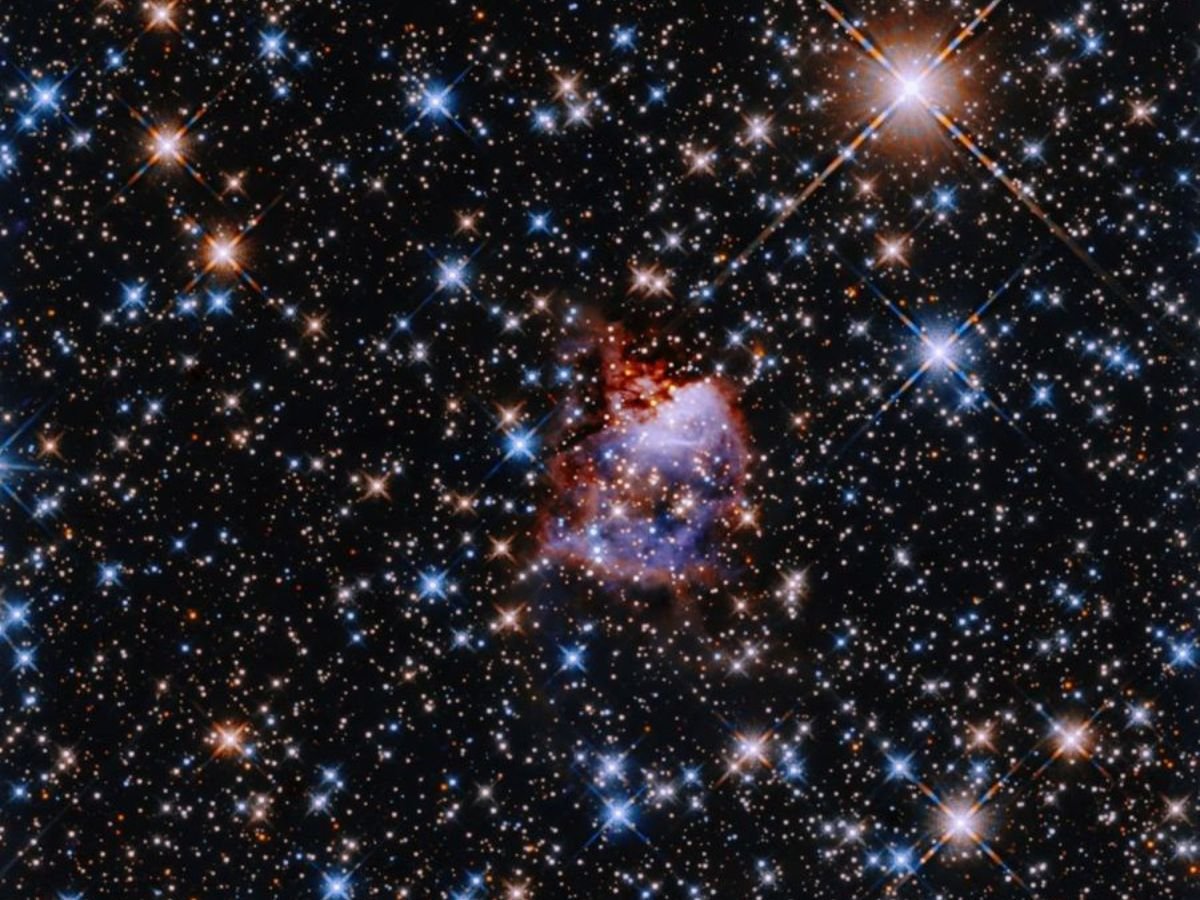
The region depicted in this image is formally designated G033.91+0.11, located within our own Milky Way galaxy. A glowing patch at the center is a reflection nebula, a region that scatters and reflects light from a hidden star. Just to the right of the center, the image captures something different: an emission nebula. This nebula is formed when light from a protostar directly ionizes the surrounding gas, causing it to glow from within. This specific region is GAL-305.20+00.21.
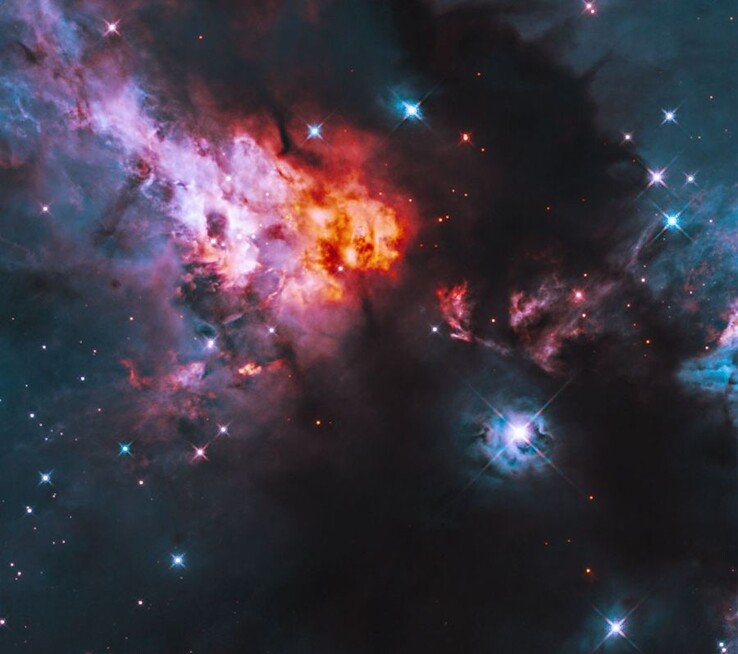
The final image in this collection focuses on the massive protostar IRAS 20126+4104. This is a B-type protostar, meaning it is destined to become a hot, massive star. It lies in another high-mass star-forming region about 5,300 light-years away in the constellation Cygnus. Observing such massive protostars is particularly challenging due to their extreme environments and the vast amounts of material they accrete.
These observations are part of the SOFIA Massive (SOMA) Star Formation Survey. The survey's primary target is massive stars—those more than eight times the mass of our Sun. Understanding how these giants form is a major puzzle in astrophysics. Unlike lower-mass stars like our Sun, which form relatively quietly, massive stars form in chaotic, violent environments. They generate intense radiation and powerful stellar winds that can disrupt the very cloud from which they are forming, potentially halting the birth of nearby stars. The SOMA survey aims to piece together the timeline and mechanisms of this process by studying protostars at various stages of development.
The ability to see through dust using near-infrared light is crucial. Visible light photons are easily absorbed or scattered by dust grains, making dense star-forming regions appear as dark, impenetrable clouds in optical telescopes. Infrared photons, with their longer wavelengths, can pass through these clouds with less interference. Hubble's instruments, combined with its position above Earth's distorting atmosphere, provide a clarity that ground-based telescopes struggle to match for these specific observations.
The implications of this research extend beyond cataloging beautiful images. By understanding how massive stars form, astronomers can better model the lifecycle of galaxies. Massive stars are the primary factories for heavy elements like carbon, oxygen, and iron, which are forged in their cores and dispersed into space when they die in supernova explosions. These elements are the building blocks for planets, and ultimately, for life itself. The violent feedback from massive stars also regulates star formation in entire galactic regions, determining how many stars a galaxy produces over its lifetime.
The Hubble Space Telescope, a collaboration between NASA and the European Space Agency (ESA), has been a cornerstone of modern astronomy since its launch in 1990. Its ongoing operations continue to yield groundbreaking data, even as newer telescopes like the James Webb Space Telescope (JWST) come online. While JWST excels in the mid- to far-infrared, Hubble's strengths in the near-infrared and visible light provide complementary data that is vital for a complete picture of cosmic phenomena.
For those interested in exploring the night sky, while Hubble operates from orbit, amateur astronomers can still observe star-forming regions like the Orion Nebula or the Eagle Nebula from their backyards. Beginner-friendly equipment, such as the Gskyer Astronomical Refracting telescope, can provide a starting point for visual astronomy, though capturing the intricate details seen in Hubble's images requires more advanced equipment and processing.
The images released by NASA are the result of extensive processing. The raw data from Hubble's instruments is combined and enhanced by scientists to bring out the faint structures and color information. This processing, led by teams like Gladys Kober at NASA/Catholic University of America, transforms the raw scientific data into the stunning visualizations that communicate the beauty and complexity of the universe to the public.
As the SOFIA Massive Star Formation Survey continues, astronomers will analyze these and future Hubble observations to build a more comprehensive model of massive star birth. Each new image adds a piece to the puzzle, helping to explain how the most powerful engines in the universe ignite and shape the cosmos around them.
Comments
Please log in or register to join the discussion