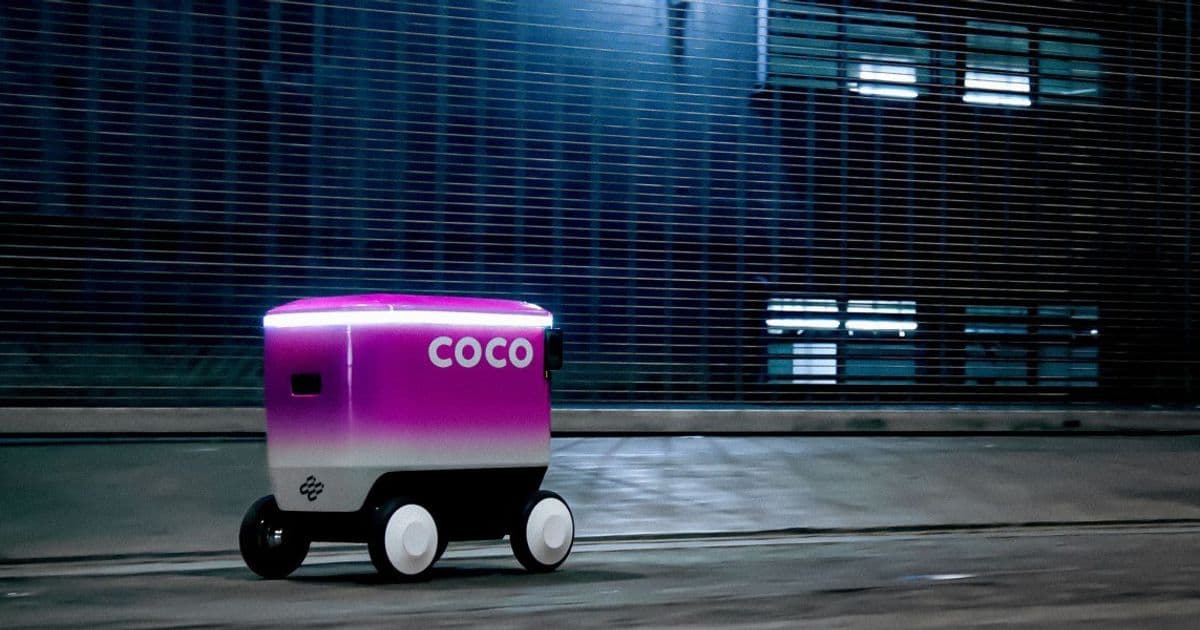
Niantic Spatial partners with Coco Robotics to integrate a visual positioning system trained on data from Pokemon Go and Ingress into a fleet of delivery robots
Niantic, the company behind Pokémon Go and Ingress, is expanding beyond gaming into robotics through a partnership with Coco Robotics. The collaboration will integrate Niantic's visual positioning system (VPS) into a fleet of delivery robots, marking a significant pivot for the augmented reality pioneer.
The VPS technology, which was trained on the massive datasets collected from millions of Pokémon Go and Ingress players over the years, provides precise location awareness by recognizing visual landmarks and spatial features. This allows robots to navigate complex urban environments with greater accuracy than traditional GPS-based systems.
Coco Robotics, a California-based autonomous delivery company, will deploy the technology across its robot fleet. The VPS integration aims to improve navigation reliability in dense urban areas where GPS signals often struggle due to tall buildings and other interference.
This move represents a practical application of Niantic's spatial mapping technology beyond entertainment. The company has been developing its Lightship platform, which includes the VPS capabilities, as a potential revenue stream outside of its gaming portfolio.
Industry analysts note that Niantic's extensive geographic data collection from its AR games provides a competitive advantage in spatial computing applications. The company's mapping of public spaces, landmarks, and urban features creates a foundation that few competitors can match.
The partnership highlights how gaming data can find unexpected commercial applications. Pokémon Go players, often unaware they were contributing to a spatial database, have effectively crowdsourced detailed environmental mapping that now powers autonomous delivery systems.
Delivery robots face significant challenges in urban navigation, including dealing with dynamic obstacles, varying lighting conditions, and complex pedestrian interactions. Niantic's VPS technology, refined through years of AR gameplay, offers sophisticated visual recognition capabilities that could address these challenges.
For Niantic, this represents a diversification strategy as the AR gaming market matures. The company has been exploring various commercial applications for its spatial technology, including potential uses in autonomous vehicles, smart cities, and industrial robotics.
The collaboration with Coco Robotics may be the first of several partnerships as Niantic seeks to monetize its spatial intelligence platform. The success of this integration could open doors to other robotics applications where precise visual positioning is critical.
Privacy advocates have raised questions about the original data collection practices that made this technology possible. Niantic's games required extensive camera access and location permissions, creating detailed maps of public and private spaces without explicit consent for commercial applications beyond gaming.
As delivery robots become more common in urban environments, the underlying navigation technology will play a crucial role in their adoption and effectiveness. Niantic's entry into this space demonstrates how entertainment technologies can evolve into practical infrastructure solutions.
The partnership also reflects broader trends in the robotics industry, where companies are increasingly leveraging existing data assets and AI capabilities from other sectors to accelerate development and improve performance.
For Coco Robotics, the integration of Niantic's VPS technology could provide a competitive edge in the crowded autonomous delivery market. More reliable navigation in challenging urban environments could translate to faster delivery times and reduced operational costs.
This development underscores the growing convergence between gaming, spatial computing, and robotics. Technologies initially developed for entertainment are finding practical applications in logistics, transportation, and other industries.
The success of this partnership could influence how other gaming companies approach their data assets and potential commercial applications. It also raises questions about data ownership and the long-term value of user-generated content in digital platforms.
As autonomous delivery systems continue to evolve, the quality of their navigation technology will remain a critical factor in their widespread adoption. Niantic's visual positioning system represents one approach to addressing the complex challenges of urban robotics navigation.
The collaboration between Niantic and Coco Robotics exemplifies how companies can find innovative applications for existing technologies, potentially creating new revenue streams and market opportunities in adjacent industries.
Comments
Please log in or register to join the discussion