
A 2026 startup topped Product Hunt by promising to collapse the dozen-tool stack that cross-border merchants assemble by hand. The pitch is consolidation plus embedded "AI Skills." What is actually verifiable so far is one named customer and a ranking badge.
StoreClaw, an AI startup founded in 2026, has earned Product Hunt's Daily #1 and Weekly #1 placements for a platform that wants to be the single console for cross-border e-commerce operations. The product targets a real and well-documented problem, then wraps it in language that deserves the usual scrutiny.
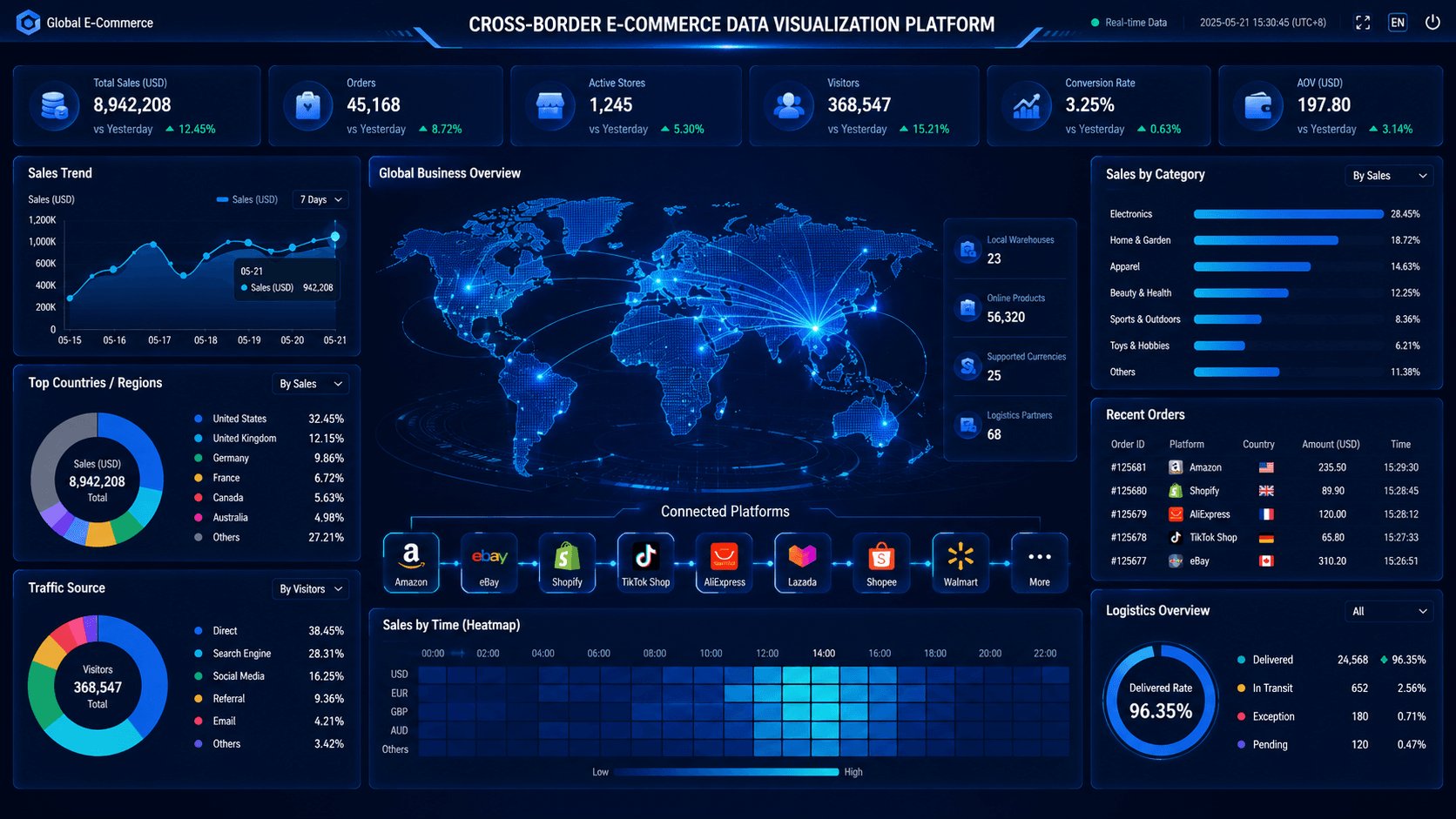
What's claimed
The core claim is consolidation. Mid-to-large export sellers run storefronts on Shopify, Amazon, and TikTok Shop at the same time, and they stitch together a separate tool for each task along the way. StoreClaw cites research putting the average cross-border merchant at more than 3.5 point tools, with independent-store sellers often past five. The familiar stack looks like ChatGPT for product copy, Midjourney for product imagery, plus assorted translation and customer-service utilities, each demanding its own prompts and its own copy-paste handoffs.
StoreClaw says it replaces that with one AI platform connected to the major marketplaces through API connectors. It coordinates high-frequency work across channels: product selection, listing optimization, advertising analysis, inventory monitoring, and customer communication. Scheduled jobs run in the background without a human kicking them off each time.
The headline feature is what the company calls "AI Skills." Per StoreClaw, these are not prompt templates but packaged operational expertise that bakes in category-specific conversion data, platform search-algorithm adaptation logic, and competitor pricing ranges. Activate a skill and you supposedly get a proven playbook instead of a blank prompt box.
What's actually new
Strip away the framing and the genuinely interesting idea is the one StoreClaw is least specific about: the data layer. A prompt template is trivial to build and trivial to copy. A maintained dataset of category conversion rates, current marketplace ranking behavior, and live competitor pricing is the hard part, and it is the only part that would make "AI Skills" defensible. The company asserts these data sources exist and are embedded. It does not publish where the conversion-rate benchmarks come from, how often the search-algorithm logic is refreshed, or how competitor pricing is sourced, which on Amazon in particular runs into both scraping limits and rate constraints.
The orchestration story is more mundane than the marketing suggests. "Cross-platform coordination through API connectors" describes what middleware and a workflow scheduler do. Tools like marketplace-management suites and listing optimizers have offered multi-channel sync for years. The new wrapper is an LLM sitting on top of those connectors, turning natural-language intent into API calls and writing the copy at the end. That is a reasonable architecture. It is not a category nobody has attempted.
The single named result is Emitever, an LED decorative-lighting brand and Amazon best-seller that integrated StoreClaw into its backend. StoreClaw says its system read Amazon's recent search trends and listing structures and automatically optimized the brand's multi-channel presence. There are no before-and-after numbers attached: no conversion lift, no ranking movement, no revenue delta. "Optimized the listing" with a best-selling brand as the subject tells you very little about causation, since best-sellers tend to keep selling regardless of which tool touched the page last.
Limitations
A few things temper the pitch. A Product Hunt #1 measures launch-day enthusiasm and community mobilization, not retention, accuracy, or unit economics. Plenty of #1 products are gone within a year.
The deeper risk is platform dependency. Amazon, Shopify, and TikTok Shop each control their own APIs, rate limits, and terms of service, and each has a history of restricting third-party automation when it competes with first-party tooling or strains their systems. Amazon already ships its own AI listing and advertising features. A platform whose value rests on broad write access to three marketplaces it does not control is building on borrowed ground, and any one of those providers can narrow that access without warning.
There is also the accuracy question that every "AI does your operations" product has to answer eventually. Listing optimization and ad-budget decisions have direct revenue consequences. An LLM that confidently rewrites a high-traffic listing using stale ranking logic can lose real money fast, and background scheduling means mistakes can compound before a human notices. StoreClaw's materials describe automation breadth but not the guardrails, approval gates, or rollback behavior that would make automating money-moving tasks safe.
None of this means the product fails to deliver value. Consolidating five tools into one credible interface is worth real money to an overloaded seller, and the embedded-data angle is a sound bet if the data is actually good and actually current. The honest read for now is a promising consolidation play with one anecdotal customer, an unverified data moat, and a dependency on three platforms that have every incentive to keep automation on a short leash. Sellers evaluating it should ask for the numbers behind the Emitever case and test the AI Skills against a listing they can afford to get wrong before handing over the ones they can't.
Comments
Please log in or register to join the discussion