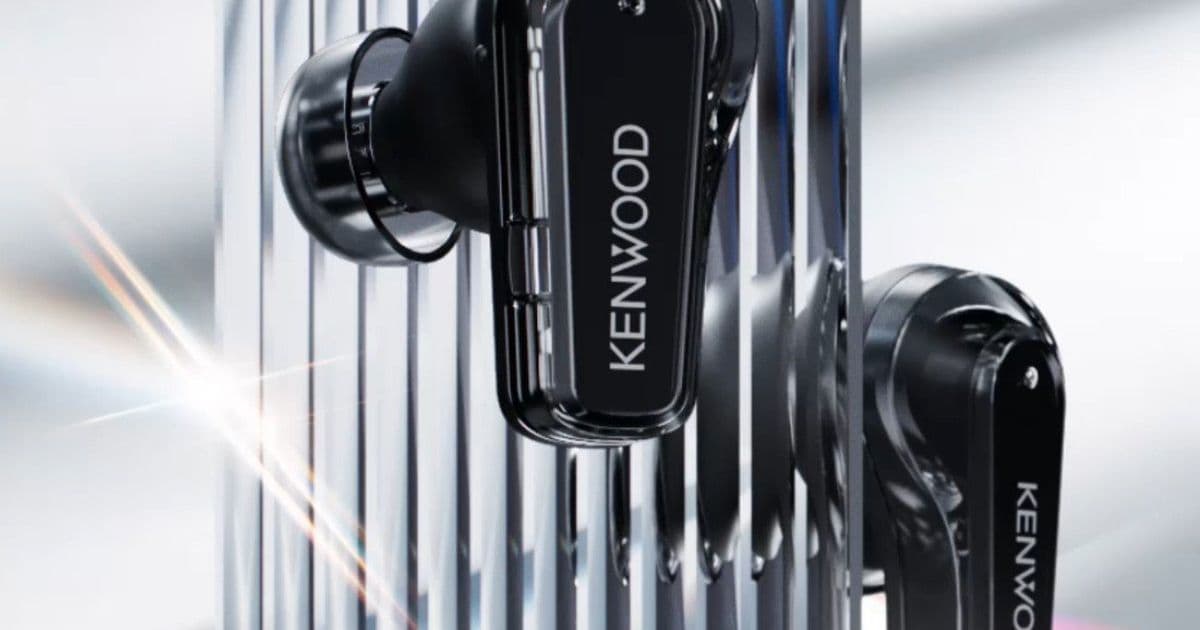
Kenwood is marking its 80th anniversary with two ANC earbuds built around 10 mm glass diaphragms, and the Pro model stacks a MEMS tweeter, Exofield spatial audio, and K2 upscaling on top. At 27,800 and 49,900 yen, they aim squarely at the premium tier dominated by Sony and Sennheiser.
Kenwood has rarely been the first name in true wireless earbuds, but the company is using its 80th anniversary to make a case for itself in the premium tier. The new Glass Core series swaps the usual plastic and composite drivers for glass diaphragms, a material choice meant to push transient response and clarity in a direction most rivals chase with beryllium coatings or ceramic. There are two models: the Glass Core (KH-CRZ90T) at 27,800 yen (roughly $170) and the Glass Core Pro (KH-CRZ100T) at 49,900 yen (roughly $300). Both ship from Kenwood Japan in late June 2026.
What's new
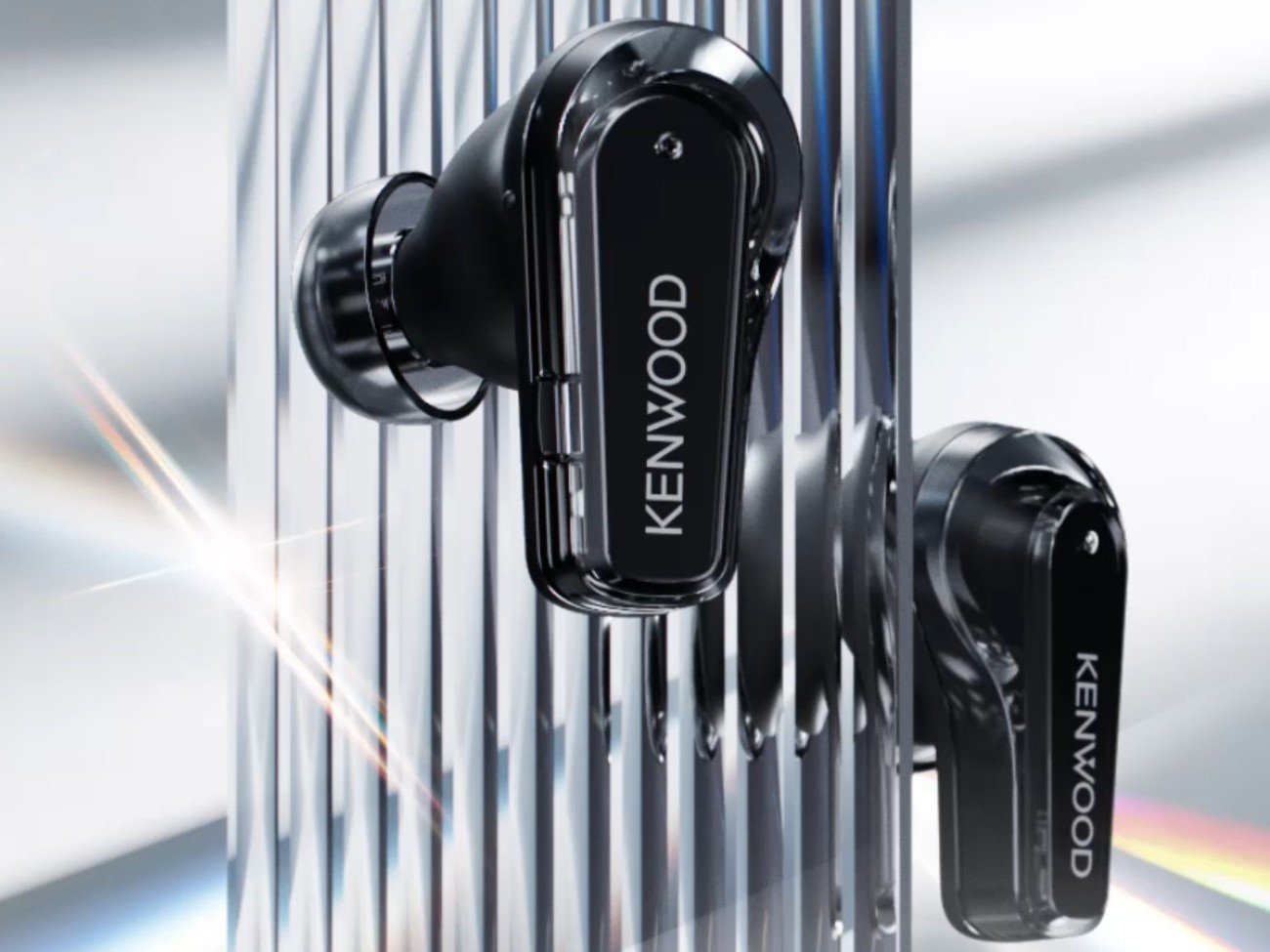
The headline is the diaphragm. Both models use a 10 mm glass diaphragm, and Kenwood's pitch is the usual one for stiff, low-mass driver materials: glass resists unwanted flexing, so the cone moves as a single piston instead of breaking up at higher frequencies. In practice that tends to translate to cleaner treble and tighter decay on percussive material. Whether glass meaningfully outperforms the metal-coated polymer drivers in this price bracket is something testing will settle, but the physics argument is sound.
The Pro model goes further by adding a MEMS driver dedicated to high frequencies, turning it into a hybrid two-way design. MEMS drivers, the same silicon-based tweeters Sonion and xMEMS have been pushing into earbuds over the last two years, are fast and consistent unit to unit, which makes them a logical partner for a glass woofer handling the low and mid range.
{{IMAGE:2}}
Both models cover the codec basics, SBC and AAC, and add LDAC for high-resolution streaming over Bluetooth. That puts them in line with Sony's high-end earbuds and ahead of anything locked to AAC. Sealing comes from newly developed liquid silicone eartips that Kenwood says improve the fit in the ear canal, which matters as much for bass response and ANC performance as it does for comfort.
How it compares
Active noise cancellation is where the two models separate. The standard Glass Core gets ANC with wind noise reduction and AI-assisted background noise suppression for calls, a feature set that maps cleanly to what you'd expect around the $170 mark. The Pro steps up to Kenwood's most advanced adaptive ANC, the kind that adjusts filtering to the seal and ambient conditions in real time rather than running a fixed profile.
{{IMAGE:3}}
The Pro also pulls in two technologies Kenwood has carried over from its car and home audio work. Exofield is a spatial processing system that simulates how sound localizes and spreads when it comes from room speakers rather than from inside your head, an alternative approach to the head-tracked spatial audio Apple and Sony favor. K2 Technology handles upscaling, reconstructing high-frequency content that lossy compression strips out of streaming and stored music. For listeners who live on Spotify or YouTube rather than lossless libraries, that restoration is arguably more useful day to day than LDAC's headroom.
Against the obvious competition, Sony's WF-1000XM5 and the Sennheiser Momentum True Wireless line, the Glass Core Pro is priced at the top of the category and asks buyers to trust an unconventional driver story. The non-Pro Glass Core is the more conventional value proposition, undercutting the flagships while still offering LDAC and credible ANC.
Who it's for
The standard Glass Core fits the listener who wants high-res codec support and solid noise cancellation without paying flagship money, and who is curious whether glass diaphragms deliver the clarity Kenwood is promising. The Glass Core Pro is a harder sell at 49,900 yen, aimed at people who want the hybrid driver, adaptive ANC, and the Exofield and K2 processing, and who already lean on compressed sources where upscaling earns its keep. Both are launching in Japan first through Kenwood's own storefront, so anyone outside the region will be watching to see whether a wider release follows the anniversary push.
Comments
Please log in or register to join the discussion