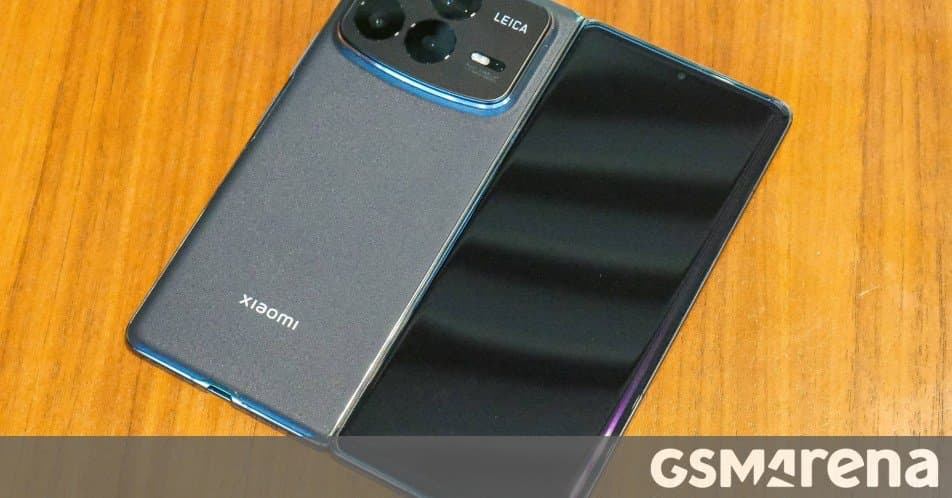
A fresh leak from a reliable tipster lays out the Xiaomi Mix Fold 5's spec sheet, and it reads like a statement of intent: a custom in-house chipset, a 200MP camera, full water resistance, and a near-creaseless 7.6-inch fold, all aimed at landing around CNY 10,000.
Xiaomi's book-style foldable line is getting a sequel, and the early details suggest the company is pushing harder on the parts that have historically held Android foldables back: durability, crease visibility, and silicon independence. A new leak covering the device expected to be called the Mix Fold 5 (or possibly the Xiaomi 17 Fold) sketches out a phone that wants to compete at the very top of the foldable market.
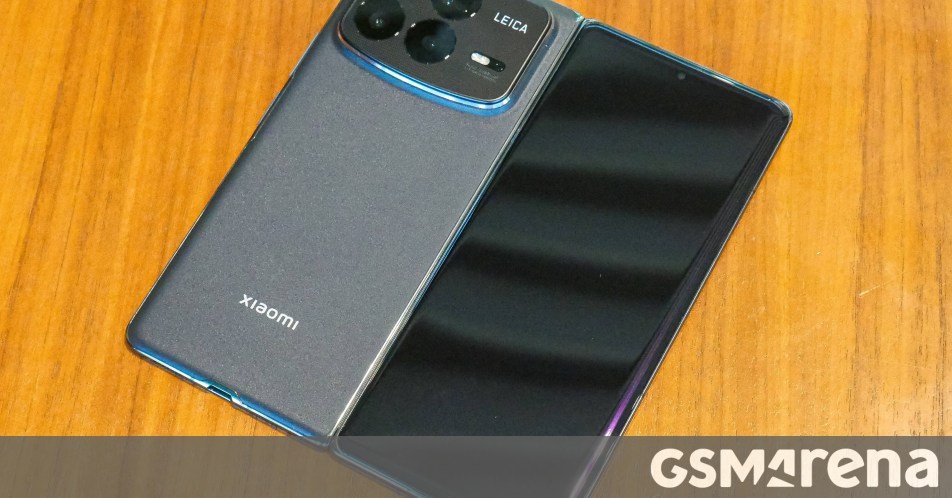
The report comes from Digital Chat Station, a tipster on Weibo with a long track record on Chinese hardware, and it follows an earlier sighting of the device in Xiaomi's own Mi Code database. That database appearance is usually a sign that a launch is moving from rumor into the testing and certification pipeline, so the timing lines up with Xiaomi's pattern of releasing foldables in the back half of the year.
What the leak says
The headline detail is the display. The prototype reportedly carries a flexible inner screen measuring between 7.5 and 7.6 inches, paired with what the tipster describes as a 'seamless-crease' technology. Every foldable maker is chasing the same goal here, which is hiding the visible and tactile valley that forms where the panel folds. The crease is the single feature most casual buyers notice first when they pick up a foldable, so any meaningful reduction is a practical selling point rather than a spec-sheet footnote.
Power is the other standout. The Mix Fold 5 is said to pack a battery of around 6,000mAh, which would be large for a foldable of this size. Foldables traditionally trade battery capacity for thinness, since two halves of a folding chassis leave less room for cells than a slab phone of equivalent footprint. Getting to 6,000mAh likely points to Xiaomi using a higher-density silicon-carbon battery, the same chemistry that has let recent Chinese flagships push past the old 5,000mAh ceiling without growing thicker. Wireless charging is also on the list, which is not a given on foldables because the hinge and dual-panel layout complicate coil placement.
On imaging, the leak mentions a 200MP camera, presumably the main sensor. Xiaomi has leaned on high-resolution main cameras across its flagship lineup, and pixel-binning a 200MP sensor down to a 12.5MP or 50MP output is how these phones balance detail in good light against low-light performance.
Two durability items round out the leak: a full water-resistance rating and a side-mounted fingerprint scanner. A full IP rating on a foldable is harder to engineer than on a sealed slab because the hinge is a moving mechanical joint, so seeing it called out specifically matters. The side-mounted fingerprint reader, embedded in the power button, is the typical choice for foldables because an under-display sensor would have to work across a folding panel.
The in-house chipset question
The most interesting line in the leak is that Xiaomi is reportedly developing a custom in-house Xring chipset for the device. Xiaomi introduced its Xring O1 application processor earlier in this cycle, marking its return to building its own high-end silicon after years of relying entirely on Qualcomm and MediaTek. Putting a homegrown chip inside a halo foldable, rather than a mainstream phone, would be a confidence signal. Foldables are low-volume, high-margin devices where buyers tolerate experimentation, which makes them a reasonable proving ground for first-party silicon.
This is the same strategic playbook Apple ran with Apple Silicon and Google has pursued with its Tensor chips: owning the processor lets a company tune performance, power efficiency, and camera processing to its own software instead of waiting on a third-party roadmap. For Xiaomi, it also reduces exposure to Qualcomm's pricing on the most expensive components in the phone. You can read more about Xiaomi's broader hardware lineup on the official Xiaomi global site.
Ecosystem and pricing context
The tipster pegs the price at around CNY 10,000, which converts to roughly $1,400. That would position the Mix Fold 5 below Samsung's Galaxy Z Fold pricing in the West while sitting comfortably in flagship-foldable territory in China. Worth keeping in mind: Xiaomi's Mix Fold series has historically been a China-first product, with limited or no official availability in the US and only selective European releases. Buyers outside China should treat that price as a domestic figure rather than a guaranteed global one.
The ecosystem angle is where the calculus gets more involved for prospective buyers. A Xiaomi foldable running HyperOS slots into Xiaomi's growing web of phones, tablets, wearables, and smart-home hardware, and that integration is strongest when you stay inside the brand. The same is true of any vertically integrated platform, but it is the practical reality of buying high-end Android hardware from a manufacturer that increasingly wants you using its accessories and services. If Xiaomi does ship a first-party Xring chip, expect more of the device's standout features, particularly camera processing and on-device AI, to be tied to Xiaomi's own software stack rather than portable across the wider Android world.
None of this is official yet. These specs come from a single leak, and prototype hardware can change before a phone reaches retail. The shape of the device is clear enough, though: a thinner-crease foldable with a big battery, a 200MP camera, full water resistance, and possibly Xiaomi's own silicon at its core, aimed at the premium tier without quite matching Samsung's top-end pricing. If the in-house chip materializes, the Mix Fold 5 becomes more than a yearly spec bump and starts to look like a test of how far Xiaomi can take its silicon ambitions.
Comments
Please log in or register to join the discussion