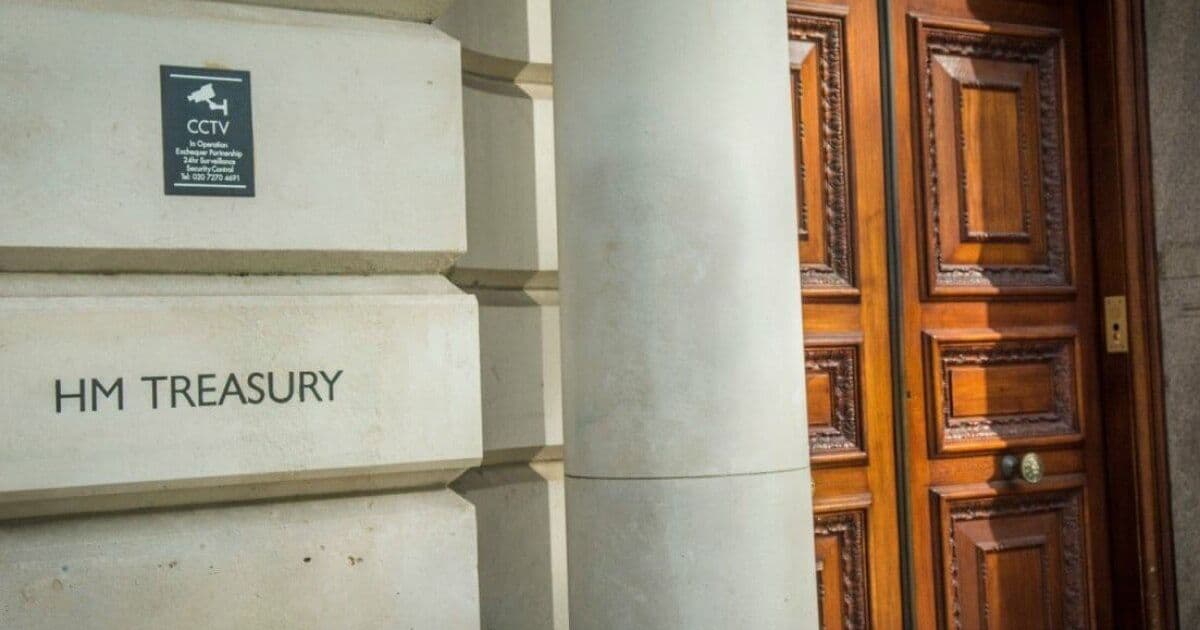
Britain's Treasury has bankrolled the government's shared-services strategy to the tune of £1.15 billion, yet two years after the Workday contract was signed it remains undecided about whether to migrate off its own Oracle system. The standoff exposes a pattern that anyone who has watched large public-sector IT programs will recognize.
There is a particular kind of awkwardness that surfaces when the organization writing the checks for a transformation program is also the one refusing to commit to using it. That is roughly where His Majesty's Treasury finds itself with the UK government's £1.7 billion finance and HR shared-services strategy, and the situation says something broader about how big ERP consolidation efforts actually play out once the contracts are signed.
What's actually happening
The Treasury (HMT) has helped fund the government's shared-services push with around £1.15 billion since 2021. The strategy groups Whitehall departments into five clusters, each meant to converge onto common cloud-based finance and HR platforms. HMT sits inside the so-called Matrix cluster, led by the Department for Science, Innovation and Technology, alongside the Cabinet Office, the Department for Education, the Department of Health and Social Care, and several others.
In 2024 the Matrix cluster awarded Workday a SaaS finance and HR contract, paired with a system-integration deal handed to Cognizant, together worth £144.3 million. The plan: departments move onto a shared Workday footprint and the government books the savings.
The catch is that HMT currently runs a heavily customized version of Oracle Fusion, and it has not committed to leaving it. In a letter to the Public Accounts Committee, Jerome Glass, director general for the Future Civil Service at the Cabinet Office, confirmed that HMT's decision on whether to join has slipped to December 2026, blamed on delays elsewhere in the Matrix rollout that held up the documents HMT needs to make its call. Departments already on modern ERP systems, namely the Treasury and the Department for Education, were always scheduled to onboard later than the rest. But "later" has now quietly become "undecided."
Why a funder hesitates to participate
The usual reading would be bureaucratic foot-dragging. The evidence points somewhere more specific. According to the National Audit Office, both HMT and DfE have already poured significant money into existing finance, HR, and commercial systems that are, in the NAO's words, "highly configured to accommodate their requirements." Moving onto the shared Workday service would "mean loss of some functionality" as they converge on standardized data and processes, and both would have to absorb an "unnecessary cost" to rebuild workflows they already have.
That is the recurring tension in every shared-services consolidation: the departments with the most mature, most tailored systems have the least to gain and the most to lose. Standardization extracts its savings by flattening the very customizations that sophisticated users built deliberately. HMT, which is good at scrutinizing value for money because that is partly its job, is now applying that scrutiny to a program it co-funded. Glass's letter leans on exactly this language, noting HMT's accounting officers "must be satisfied that the proposal meets the standards set out in Managing Public Money," including value for money "for the Exchequer as a whole."
The numbers under dispute
The financial stakes make the hesitation more than a procedural curiosity. The Matrix business case bakes in participation from both DfE and HMT. The NAO ran a sensitivity analysis showing that if those two departments stay out, the cluster's expected benefits fall from £185 million to £109 million. HMT, notably, disputed those calculations.
That dispute is the most telling detail in the whole episode. When the body funding a program also challenges the arithmetic used to justify it, you are no longer looking at a delivery delay. You are looking at a disagreement about whether the premise holds.
Zoom out and the headline figures are genuinely large. Across all five clusters, signed contracts total roughly £1.7 billion, and Glass's letter projects benefits of £4.37 billion over 15 years, split into £1.4 billion of cashable savings and £2.98 billion of non-cashable benefits. If those forecasts land, it is a good deal for taxpayers. The phrase "if those forecasts land" is carrying considerable weight, and the £2.98 billion of non-cashable benefits, the kind that never show up as money returned to the Exchequer, is the sort of line that watchdogs tend to circle.
The counter-case
It would be easy to frame this as the Treasury undermining a government strategy, and the Cabinet Office has effectively said participation is not optional. The NAO recorded the Cabinet Office's position that departments "cannot make the decision to move or leave a cluster without assessing value for money across government." Prime Minister Keir Starmer has told departments to join their allocated clusters. From the center's perspective, individual departments opting out for local reasons is precisely how shared-services programs unravel: the business case depends on everyone showing up, and each defection makes the remaining math worse for those left in.
There is a reasonable argument on that side. Consolidation only delivers if it reaches critical mass, and allowing the most capable departments to keep their bespoke systems sets a precedent that hollows out the program. If HMT walks, why should anyone else with a decent ERP stay?
The opposing argument is just as coherent. Forcing a department off a modern, well-fitted platform onto a standardized one it considers a downgrade, at additional cost, to hit a government-wide target, is the kind of decision that produces the troubled public-sector IT programs the NAO spends its time investigating. The Matrix go-live has already slipped from 2028 to 2029 for some elements. Adding reluctant migrants to a program that is already behind is not obviously the path to the projected savings.
What to watch
Glass said HMT expects the bulk of the documentation needed to assess feasibility and cost by the end of summer 2026, with an "evidence-based decision" from both HMT and DfE by December, assuming no further slippage. That assumption has not held well so far.
The wider pattern here is worth holding onto. Government shared-services strategies are sold on aggregate savings that depend on near-universal participation, then run into the reality that the strongest participants have rational reasons to stay out. The Treasury's indecision is not an aberration in that model. It is the model working exactly as the incentives predict. The interesting question is whether the Cabinet Office's insistence that joining is non-optional survives contact with HMT's own value-for-money analysis, because for once the department doing the cost-benefit math is the one that controls the budget.
Comments
Please log in or register to join the discussion