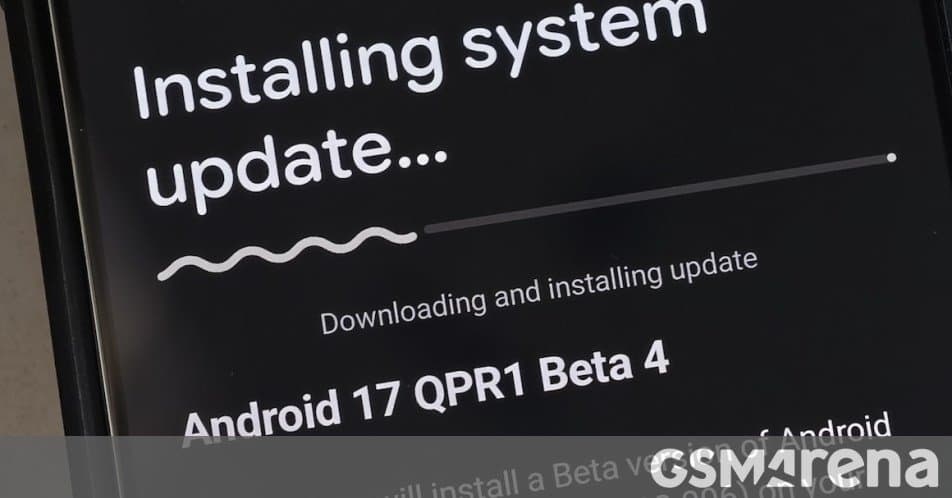
Google's latest quarterly beta lands on most supported Pixels with fixes for external display cursors, silent-mode screenshots, and video stabilization. The Pixel 6 and 6 Pro sit this one out, hinting their beta run may be winding down before the stable Android 17 ships.
Google has begun pushing Android 17 QPR1 Beta 4 to eligible Pixel phones, the latest step in the quarterly platform release cycle that runs alongside the main Android version. The update arrives roughly three weeks after Beta 3, which itself dropped shortly after The Android Show: I/O Edition 2026. For anyone running the beta track on a Pixel, this build is mostly about polish rather than new features.
The rollout starts with the Pixel 6a and extends across most of the supported lineup. There is one notable absence: the Pixel 6 and Pixel 6 Pro are not on the release list and have not received the new build. That detail matters more than it might first appear. The Pixel 6 series launched in October 2021 and is approaching the tail end of its guaranteed update window, so seeing it skipped on a late-stage beta is a reasonable signal that Google may be quietly winding down its beta participation ahead of the stable launch.
What QPR actually means
If you are not deep in the Pixel update cycle, the QPR labeling can be confusing. QPR stands for Quarterly Platform Release. Google ships one major Android version per year, but it layers feature drops and refinements on top through these quarterly updates. QPR1 is the first of those for the Android 17 cycle. Each QPR runs its own beta program with several builds before the changes graduate to a stable release for everyone. So Beta 4 here is the fourth checkpoint in refining QPR1, not a beta of Android 17 itself, which has already been finalized as a platform.
This structure is part of why Pixel phones tend to receive meaningful changes between the big annual releases while many other Android devices wait. The trade-off is complexity: keeping track of which build maps to which device requires reading the firmware strings closely.
The firmware split
The build numbers diverge depending on the hardware. The Pixel 6a, Pixel 7, and Pixel 7 Pro are receiving build CP31.260522.006.A1, while every other eligible Pixel gets CP31.260522.006. The slightly different suffix on the older Tensor and Tensor G2 devices is typical. Google often ships device-specific variants to account for differences in modem firmware, camera tuning, or chipset behavior across generations. The Pixel 6a and Pixel 7 family share an earlier Tensor lineage, so a separate build addressing hardware-specific quirks tracks with past behavior.
The fixes in this build
Google's official changelog leans into bug fixes. A few stand out because they target genuinely annoying everyday problems.
The first addresses the mouse pointer disappearing when using an external display. As Pixel phones lean further into desktop-style and connected-display use cases, pointer reliability on a second screen becomes a real usability concern rather than an edge case. If you have ever plugged a phone into a monitor and lost track of the cursor, you know how disruptive that is.
The second fix targets the screenshot shutter sound playing even when the device was set to silent. That is a privacy and etiquette issue as much as a bug. A phone that audibly announces a screenshot in a quiet room despite being muted defeats the point of silent mode.
The third notable fix tackles frame drops and jittery footage when recording video at 5x zoom while panning. Stabilization at high zoom levels is one of the harder problems in mobile videography, since small hand movements get magnified dramatically. Cleaning up panning behavior at 5x suggests Google is still tuning the computational stabilization pipeline that handles digital and optical zoom handoff. Google notes additional fixes beyond these three in the full changelog.
Where this leaves the stable release
The broader takeaway is timing. A late-stage QPR1 beta arriving with a fix-focused changelog, combined with older hardware dropping off the release list, points toward the stable Android 17 update landing very soon. That is the pattern Google has followed in prior cycles: the betas stop adding features, start consolidating fixes, and then the public build ships.
For Pixel owners on the stable channel, none of this requires action yet. For those running the beta, Beta 4 is a low-risk update that should make the day-to-day experience smoother while the platform finishes baking. Anyone curious about enrolling or checking eligibility can find details through the Android Beta Program, and the full set of release notes lives in Google's developer documentation.
Comments
Please log in or register to join the discussion