Two of China's largest hardware makers are signaling July price increases, pinning the blame on rising component costs. The underlying story is less about any single vendor and more about how memory, advanced packaging, and foundry capacity have tightened across the entire chip supply chain.
Huawei and Lenovo are preparing to raise prices on parts of their hardware lineups starting in July, citing sustained increases in chip and component costs. The move follows months of pressure across the semiconductor supply chain, where memory pricing, foundry capacity, and advanced packaging have all moved in the wrong direction for anyone assembling finished devices.
What's claimed
The headline claim is straightforward: two of the largest hardware vendors in the Chinese market intend to pass higher input costs on to buyers. For Lenovo, that pressure lands most visibly on PCs, laptops, and servers, categories where margins are thin and bill-of-materials swings show up quickly in retail pricing. For Huawei, the exposure spans smartphones, networking gear, and its growing server and AI-accelerator business, where domestic component sourcing adds another layer of cost sensitivity.
When vendors announce price increases, they usually frame them as unavoidable responses to costs outside their control. That framing is partly accurate and partly strategic. Component costs are genuinely rising. But announced increases also test how much pricing power a brand holds before demand softens, and they give distributors a reason to clear existing inventory ahead of the change.
What's actually new
The more useful question is which costs are actually moving, because not all chip price pressure is the same.
The clearest driver is memory. DRAM and NAND flash pricing has climbed as suppliers like Samsung, SK Hynix, and Micron redirected capacity toward high-bandwidth memory (HBM) for AI accelerators. HBM commands far better margins than commodity DRAM, so every wafer that goes toward stacking memory for a GPU is a wafer that does not go toward the DDR5 modules in a laptop or the memory in a mid-range phone. The result is a supply squeeze on conventional memory that has nothing to do with any single device maker and everything to do with where the AI buildout is pulling silicon.
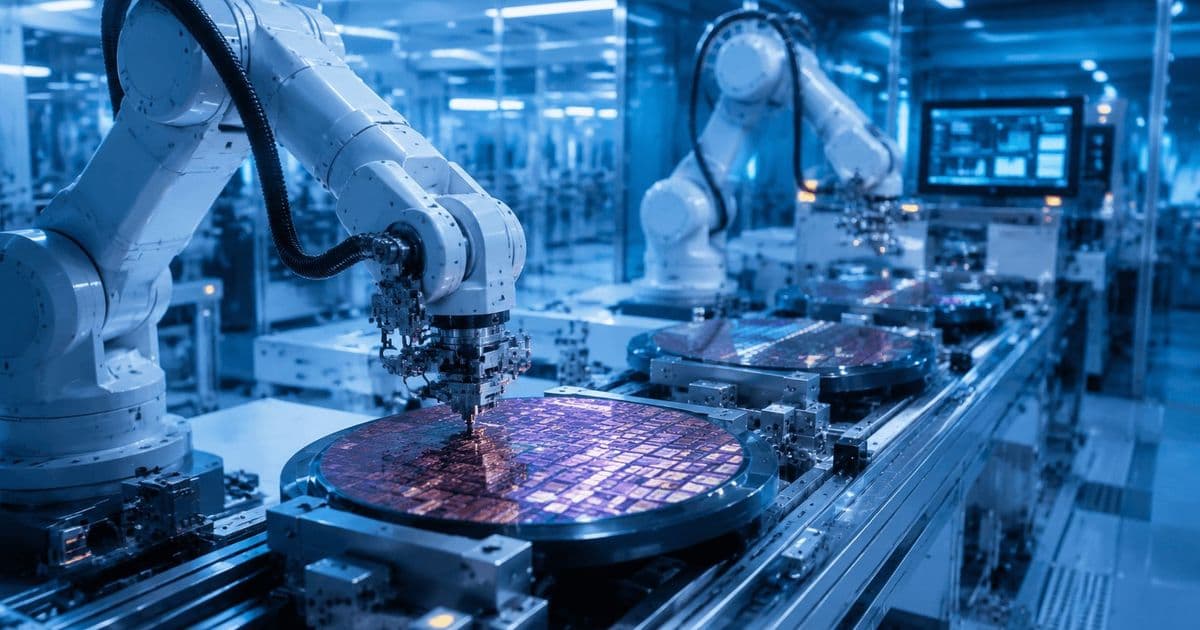
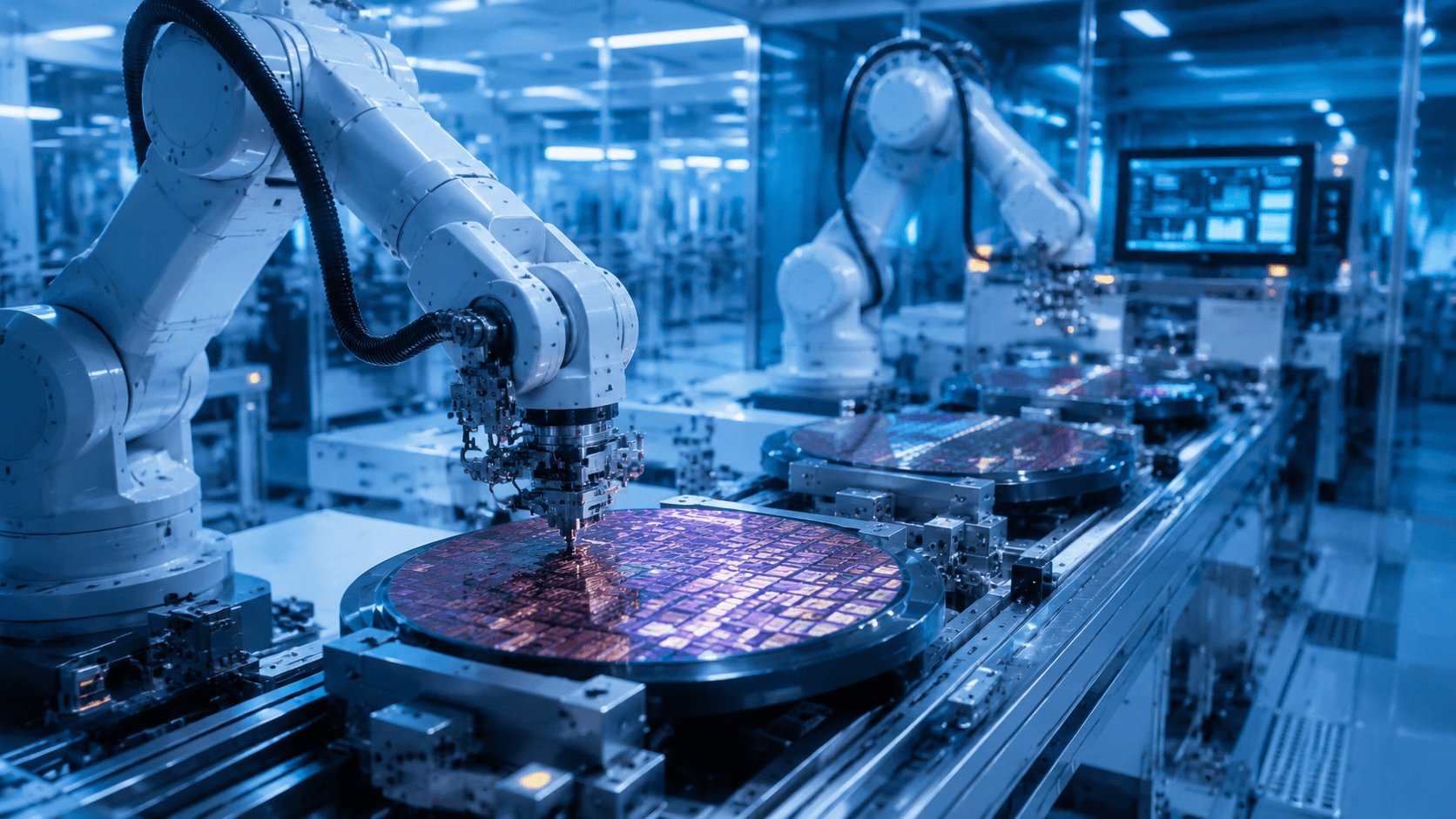
Advanced packaging is the second pressure point. Techniques like TSMC's CoWoS, used to stitch together logic dies and HBM stacks, remain capacity-constrained. That bottleneck primarily affects datacenter accelerators, but it ripples outward by keeping leading-edge foundry attention focused on the highest-value products and leaving less slack for everything else.
For Huawei specifically, there is an additional variable that Lenovo does not share to the same degree: export controls and reliance on domestic fabrication. Producing competitive chips through SMIC and stockpiling components ahead of restrictions raises effective costs in ways that are hard to separate from the broader market trend. When Huawei cites chip cost pressure, some of that figure reflects the premium of building a constrained domestic supply chain rather than the global spot price of memory.
Why it matters beyond two vendors
The AI boom is often discussed in terms of model capabilities and benchmark scores, but it has a physical footprint. Training and serving large models consumes enormous quantities of HBM, advanced packaging capacity, and leading-edge wafers. That demand does not stay contained inside the datacenter. It competes directly with the components that go into consumer and enterprise hardware.
This is the part the marketing rarely mentions. When a company ships a frontier model, the downstream effect includes tighter memory supply and higher prices for laptops and phones months later. The cost of the AI infrastructure buildout is being partially absorbed by buyers who have nothing to do with training runs. Huawei and Lenovo raising prices in July is one visible symptom of that redistribution.
For enterprise buyers, the practical takeaway is that server and storage refresh cycles planned for the second half of 2026 may come in over budget. Memory-heavy configurations, which describes most machines built for virtualization, databases, or local model inference, will feel the increase most. Anyone speccing hardware with large DRAM footprints should expect the memory line item to be the volatile one.
Limitations and what to watch
A few things are worth keeping in perspective. First, announced price increases are not always uniform increases. Vendors tend to raise list prices selectively while protecting volume in competitive segments through discounts and bundles, so the headline percentage rarely reflects what large buyers actually pay. Second, memory pricing is cyclical. The current tightness is real, but DRAM and NAND have a long history of sharp corrections once capacity catches up with demand, and several fabs are adding output. A price increase in July does not mean a permanent reset.
Third, the specifics of how much and on which products remain thin at this stage. Treat any single percentage figure with caution until it shows up in actual distributor pricing rather than vendor statements. The direction of travel is well supported by the memory market; the exact magnitude is not yet.
The broader pattern is the one to track. As long as AI accelerator demand keeps pulling HBM, packaging capacity, and leading-edge wafers toward the datacenter, the components in ordinary devices will stay relatively scarce and relatively expensive. Huawei and Lenovo are early to announce, but they are unlikely to be the last. Other PC and smartphone makers facing the same bill-of-materials math will either follow with their own increases or quietly absorb the cost by trimming specifications. Either way, the price of the AI infrastructure race is showing up in places far removed from the model leaderboards.
Comments
Please log in or register to join the discussion