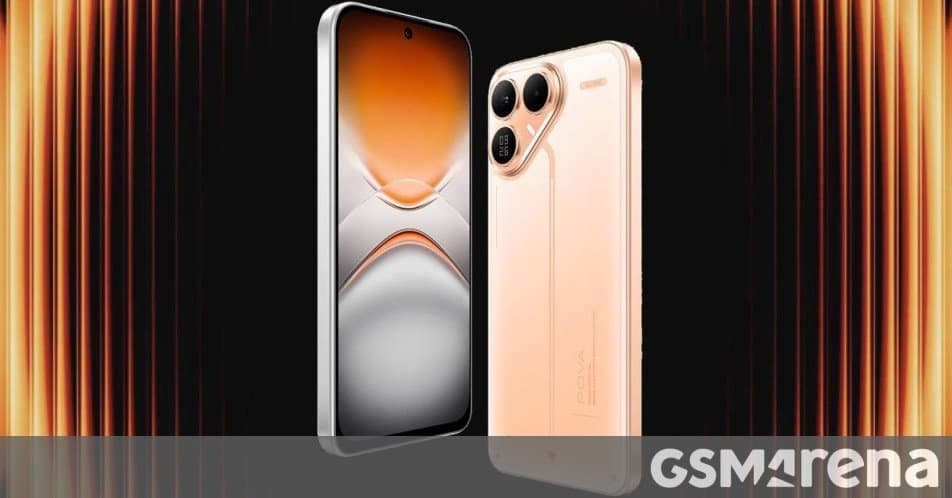
Tecno's latest budget powerhouse swaps the Pova 7's light strip for a tiny rear screen and packs a two-day, 8,000mAh battery, but a few quiet downgrades come along for the ride.
Tecno has officially pulled the wraps off the Pova 8, and the headline number is hard to miss: an 8,000mAh battery stuffed into a phone that still wants to be affordable. The previous model, the Pova 7, leaned on a 6,000mAh cell and a flashy triangular light strip called the Delta Light Interface. The Pova 8 keeps the showmanship but moves it in a new direction, trading blinking LEDs for an actual miniature display embedded in the camera island.
A second screen hiding in the camera bump
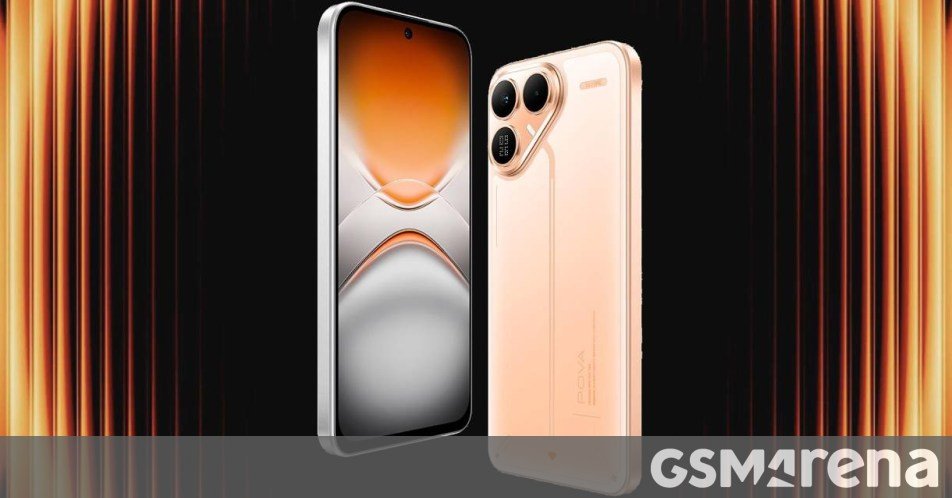
The most attention-grabbing change is the Alive Matrix Display. Look at the back of the Pova 8 and you will see what appears to be a three-lens camera setup. In reality only one of those circles is a working camera. One of the others houses this small dot-matrix screen, a low-resolution panel that can show notifications, charging status, animations, and other glanceable bits without waking the main display.
If this sounds familiar, it should. Nothing popularized the idea of turning the back of a phone into an expressive surface with its Glyph lighting, and the Pova 7 already borrowed that concept. The Pova 8 pushes the idea a step further by making the rear element a genuine display rather than a cluster of lights. It is a fun differentiator in a price bracket where most phones look interchangeable from behind.
Two days of battery, six years of life
The battery is where the Pova 8 makes its strongest practical case. The 8,000mAh capacity is large even by today's endurance-focused standards, and TÜV SÜD certification backs up Tecno's claim of two full days on a single charge. More interesting is the longevity rating. Tecno says the cell is built to survive more than 2,000 charge cycles while retaining at least 80 percent of its original capacity, which the company translates to roughly six years of use. That is a meaningful promise for a budget phone, since battery degradation is usually what makes these devices feel tired long before the rest of the hardware gives out.
Charging tops out at 45W wired, enough to take the phone from 1 to 50 percent in about 35 minutes. There is also 10W reverse wired charging if you want to top up earbuds or a friend's phone in a pinch.
Here is the first catch. The Pova 7 supported 30W wireless charging, and the Pova 8 drops wireless charging entirely. For a phone that otherwise leans into endurance, losing the convenience of pad charging is a noticeable step back.
A newer chip that is also a slower chip
The Pova 8 ships with MediaTek's Dimensity 7100, and the story here is more complicated than the version number suggests. The Dimensity 7100 was announced in January 2026, making it newer on paper than the Dimensity 7300 that powered the Pova 7. But newer does not mean faster. The 7100 is built on TSMC's 6nm process, while the 7300 used a more efficient 4nm node. A larger manufacturing node generally means more heat and less power efficiency, so this is a sideways or even backward move dressed up as an upgrade.
Tecno tries to manage the thermal side with a 15,000mm² sheet of graphite spread inside the chassis to pull heat away from the chip. The company also says it has tuned the phone to hold a stable 90fps in popular titles like Honor of Kings and Mobile Legends: Bang Bang, so casual gamers should be fine even if the silicon is not cutting-edge.
The rest of the core spec is sensible for the segment: 8GB of LPDDR5X RAM paired with 256GB of UFS 2.2 storage. UFS 2.2 is older than the UFS 3.x and 4.0 storage you will find on pricier phones, so app installs and large file transfers will not be blazing, but it is acceptable at this level.
Display, cameras, and the software picture
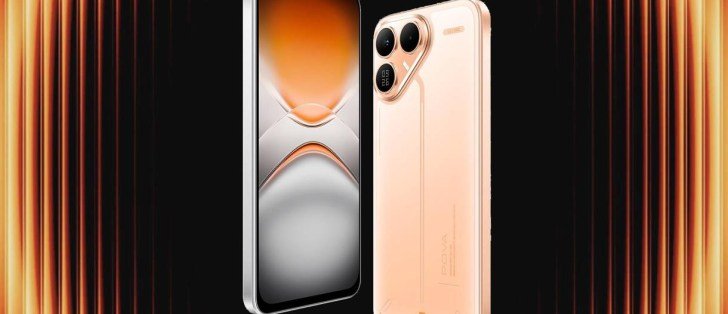
The front of the Pova 8 is a 6.76-inch IPS LCD running at 1080p+ resolution with a 144Hz refresh rate. That is a high refresh number for a budget LCD, and Tecno pairs it with a 240Hz touch sampling rate for responsive input. There is also Wet & Oily Finger Touch Recognition 2.0, which is exactly the kind of feature that sounds trivial until you try to use a phone with sweaty hands at the gym.
Camera hardware is modest and honest about it. The single rear shooter uses a 50MP Sony Lytia 600 sensor with a 1/1.95-inch optical size, an autofocus lens, and 2x in-sensor zoom that crops from the high-resolution sensor rather than relying on a dedicated telephoto. Selfies come from a 13MP front camera housed in the display.
Software is HiOS 16 layered over Android 16, so buyers get a current OS version out of the box, which is more than some competitors manage at launch.
Where the Pova 8 fits
The Pova 8 is a study in trade-offs. It gains a bigger battery with a genuinely impressive longevity rating, a higher refresh display, a more playful rear design, and the latest Android build. It gives up wireless charging and effectively trades down on chip efficiency despite the higher model number. For shoppers in the budget and lower-midrange tier, the calculus comes down to priorities. If you want a phone that simply refuses to die between charges and holds that endurance for years, the Pova 8 makes a strong pitch. If wireless charging and peak efficiency matter to you, the older Pova 7 still has cards to play.
The Pova 8 will be available soon in four finishes: Arc White, Graphite Black, Helios Orange, and Echo Green. Like its predecessor it carries an IP64 rating, meaning it is dust-tight and protected against water splashes, though not full submersion. You can keep an eye on Tecno's lineup through the official Tecno Mobile site as regional pricing and availability roll out.
Comments
Please log in or register to join the discussion