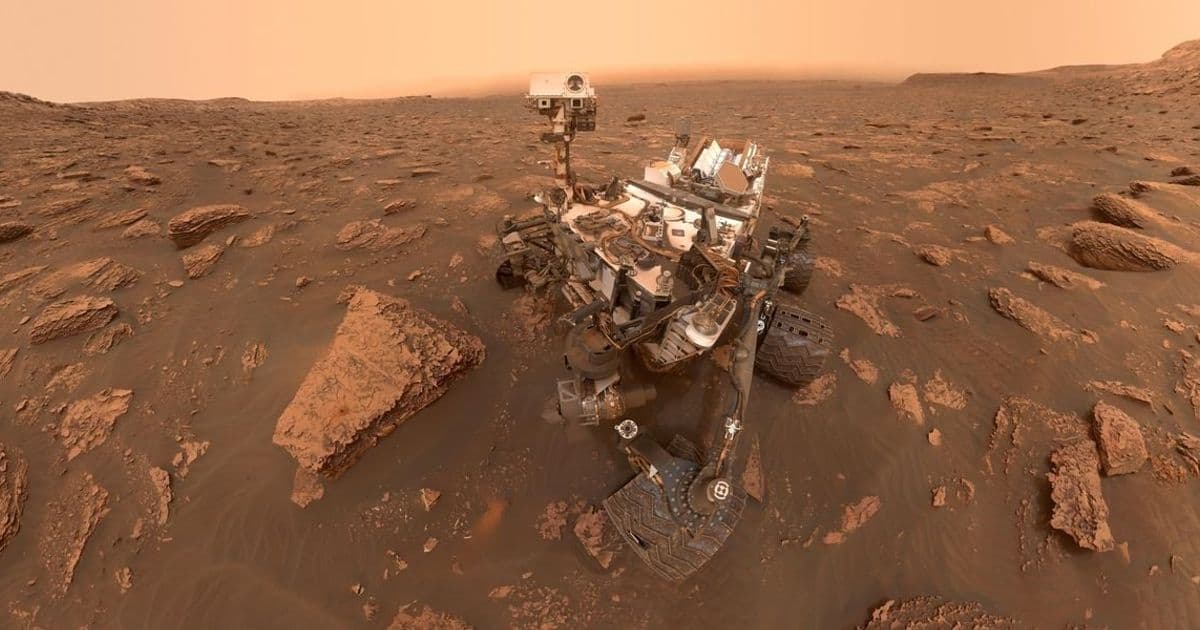
A rover designed for two years has been working for over a decade, and the reason isn't hardware durability. It's a pattern of remote improvisation that turns broken mechanisms into workable ones, 225 million kilometers away.
When NASA's Curiosity rover landed in Gale Crater in August 2012, its primary mission was scheduled to last one Martian year, roughly 687 Earth days. It is now mid-2026, and the rover is still driving, still drilling, still returning data. That longevity gets framed as a triumph of rugged engineering, but the more interesting story is the opposite. Curiosity has survived precisely because so much of it has broken, and because the people running it learned to operate a machine that no longer works the way it was built to.
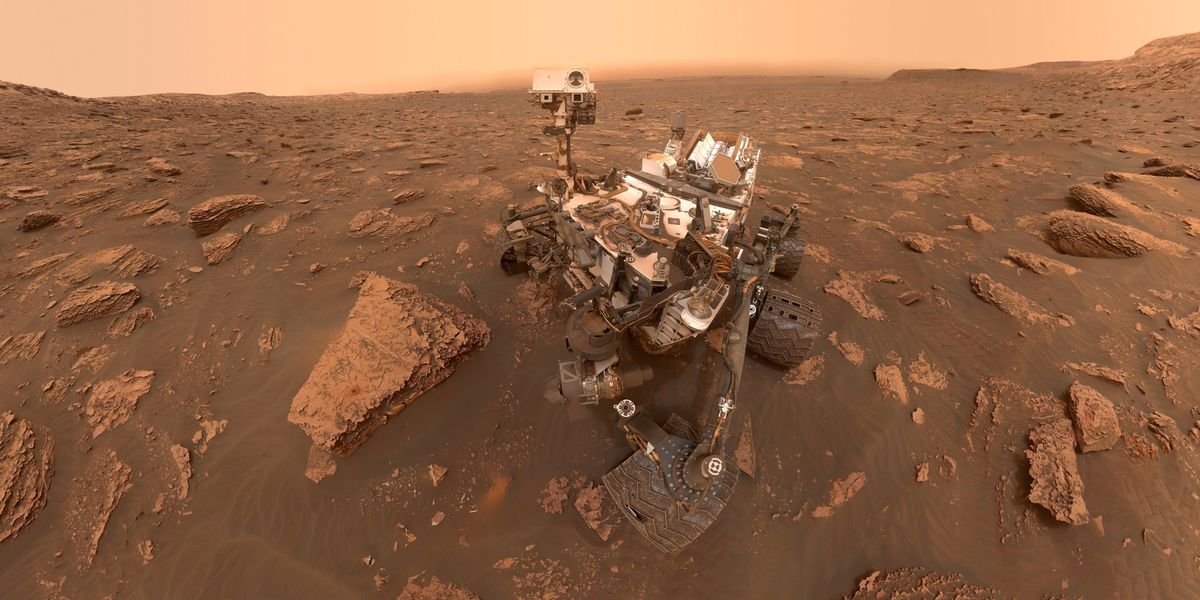
There is a recurring theme in long-duration space hardware: the mission that keeps going is rarely the mission that was launched. The vehicle that's actually operating years later is a composite of original design, degraded components, and a growing stack of software and procedural workarounds written by people reacting to problems they never anticipated. Curiosity is one of the clearest examples of that pattern in active service, and it's worth looking at what those fixes actually were.
The wheels were a problem almost immediately
The most visible damage on Curiosity is to its six aluminum wheels. Each wheel is machined from a single block of aluminum with thin walls, a weight-saving choice that made sense on paper. Within the first year, images sent back to the Jet Propulsion Laboratory showed punctures, tears, and torn-out treads far ahead of schedule. The Martian terrain in that region turned out to be studded with embedded rocks that didn't shift under the wheel, so the thin aluminum took the full load instead of the ground giving way.
There was no way to send replacement wheels. The response came in two parts. First, the team added a traction control algorithm that adjusts the speed of individual wheels in real time based on the terrain, reducing the forces that were tearing the metal. Second, and more mundanely, drivers started routing the rover deliberately around the worst rock fields and choosing softer paths even when they were longer. The team also began regular wheel imaging, treating the wheels as a monitored consumable rather than fixed equipment. The damage didn't stop, but the rate slowed enough that the wheels are projected to outlast the rover's power supply.
The drill that wouldn't drill
The more dramatic save involved the drill. Curiosity's drill uses a feed mechanism that extends the bit forward into rock, stabilized by two contact posts that press against the surface. In late 2016, the feed mechanism stopped working reliably, apparently a mechanical fault in the motor or brake assembly. For a rover whose central purpose is collecting and analyzing rock powder, this was close to mission-ending.
The fix took over a year to develop and is genuinely clever. Engineers abandoned the stabilizer posts entirely and rewrote the drilling technique to hold the bit out in a fixed extended position, then use the rover's entire robotic arm to press the drill into the rock, with force feedback substituting for the lost feed control. They called it feed-extended drilling. It meant re-teaching the arm to do something it was never designed to do, validating the whole approach on a duplicate rover in a lab on Earth, and accepting that the new method put unusual stress on the arm joints. It worked. Curiosity resumed drilling in 2018 and has used the improvised method ever since.
Computers, memory, and the slow art of degradation
Less photogenic but equally important are the fixes to the rover's brain. Curiosity carries two redundant computers, designated side A and side B. Early in the mission a memory fault on the side A computer forced a switch to side B as the primary. Years later, the team has had to manage glitches that periodically cause the rover to reset or enter safe mode, working through them by reformatting memory, isolating bad regions, and adjusting how data is stored and forwarded.
This is the part of spacecraft operations that rarely makes headlines, because the fix is usually a patient sequence of diagnosis, ground testing, and uploaded patches rather than a single heroic move. The pattern is the same as the hardware fixes: accept that a component is degrading, characterize exactly how, and rebuild the operating procedure around the new reality.
What the consensus gets wrong
The popular framing credits Curiosity's survival to over-engineering and redundancy, and there's truth in that. But redundancy explains the first failure, not the tenth. The real enabler is something harder to put on a fact sheet: a flight team that treats the rover as a repairable system even when no physical repair is possible. The repairs are made in software, in driving plans, in revised techniques validated on the Earth-bound twin, and in a willingness to operate hardware outside its original specification.
There is a counter-argument worth taking seriously. Some engineers point out that this style of operation carries hidden risk. Feed-extended drilling stresses an arm that was never rated for it, and traction-control routing depends on imaging that consumes downlink bandwidth and operator time. Each workaround trades a known failure for a new and less understood one. A rover kept alive by improvisation is also a rover whose remaining margins are increasingly hard to predict. The 2018 drill fix could, in principle, accelerate wear somewhere else. That uncertainty is the price of squeezing extra years out of a machine you can't touch.
The more useful lesson sits underneath both views. The instinct in hardware design is to build something that won't break. The lesson from Curiosity, and from the Mars exploration program more broadly, is that for systems you can't service, the more valuable property is whether the thing remains operable after it breaks. That's a design philosophy that shows up in good distributed software too: assume components will fail, and make the system reconfigurable around the failures rather than betting everything on the failures not happening.
Curiosity's successor, Perseverance, inherited some of these lessons directly, including redesigned wheels with thicker treads and a different drilling architecture. The engineering knowledge that kept the older rover rolling is now baked into the hardware of the newer one. That transfer, from improvised field fix to deliberate design choice, is the part of the story that tends to get lost when the coverage focuses on how long the plucky little rover has lasted. It lasted because a large group of people kept rebuilding it from millions of kilometers away, one workaround at a time.
Comments
Please log in or register to join the discussion