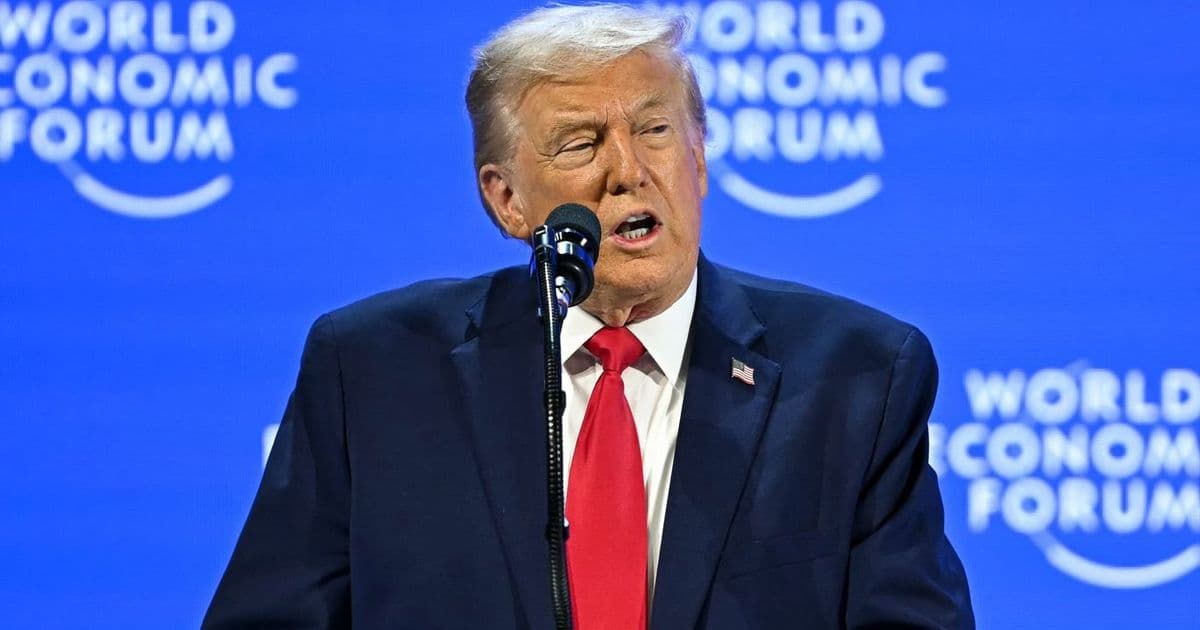
Former President Donald Trump, speaking at the World Economic Forum in Davos, explicitly ruled out using military force to acquire Greenland, a territory he previously suggested the U.S. should purchase from Denmark. The statement marks a shift from his 2019 proposal and carries implications for U.S. foreign policy, Arctic strategy, and international relations.
Former President Donald Trump, addressing the World Economic Forum in Davos, Switzerland, made a definitive statement regarding Greenland, a topic that resurfaced during his previous administration. He stated he would not use military force to take the island, a significant departure from the aggressive rhetoric that characterized his 2019 proposal to purchase the territory from Denmark.
The context for this renewed discussion stems from Trump's ongoing influence in U.S. politics and his potential return to the White House. Greenland, the world's largest island, holds strategic importance due to its location in the Arctic, its vast natural resources—including rare earth minerals critical for technology and defense sectors—and its proximity to North American air defense corridors. In 2019, Trump expressed interest in buying Greenland, an idea that was swiftly rejected by Danish and Greenlandic officials, leading to a diplomatic spat and the cancellation of a planned state visit to Denmark.
His Davos comments, delivered during a speech focused on economic policy and global trade, appear to recalibrate that stance. While he did not elaborate on alternative strategies for securing U.S. interests in the region, the explicit rejection of military action suggests a more conventional diplomatic or economic approach, should he regain office. This shift is notable given his historical preference for unilateral action and transactional diplomacy.
The strategic implications are multifaceted. Greenland is an autonomous territory within the Kingdom of Denmark, a NATO ally. Any move to alter its status would have profound repercussions for transatlantic relations and the alliance's cohesion. The U.S. military already maintains a significant presence at Thule Air Base in northwestern Greenland, a key site for ballistic missile early warning and space surveillance. Strengthening ties with Greenland and Denmark through cooperation, rather than coercion, aligns with broader U.S. strategic goals in the Arctic, where competition with Russia and China is intensifying.
From a market perspective, Greenland's untapped mineral wealth—including deposits of uranium, iron ore, and rare earth elements—represents a potential economic prize. However, development is constrained by harsh environmental conditions, limited infrastructure, and political sensitivities. Any U.S. effort to secure access would likely involve investment in local economies and partnerships with Danish authorities, rather than outright acquisition.
Trump's statement also carries political weight domestically. It signals to voters and allies a more measured approach to foreign policy, potentially softening his image as an unpredictable leader. For the tech and defense industries, which rely on stable supply chains for critical minerals, this could indicate a preference for long-term partnerships over disruptive geopolitical maneuvers.
In summary, Trump's Davos remarks redefine the Greenland conversation from a speculative purchase to a ruled-out military action, leaving room for economic and diplomatic engagement. The move underscores the complex interplay between resource strategy, international law, and alliance politics in the Arctic region, with potential ripple effects for global markets and U.S. foreign policy direction.
Comments
Please log in or register to join the discussion