
India has joined Pax Silica, a US-led coalition building secure supply chains for semiconductors and critical technologies, signaling a strategic alignment amid global tech fragmentation and geopolitical tensions.
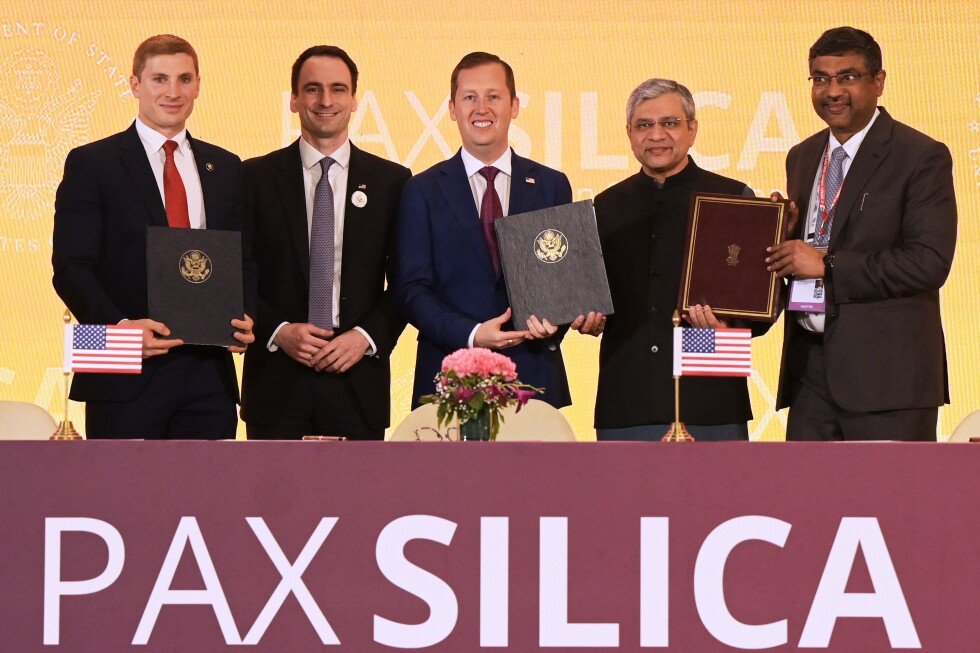
The geopolitical map of technology supply chains continues to fracture as India formally joins Pax Silica, a US-led initiative designed to create resilient semiconductor and advanced manufacturing networks among allied nations. Announced Friday by India's Ministry of Electronics and Information Technology, this move positions India within a growing coalition that includes Japan, South Korea, Australia, and key European partners—all seeking alternatives to China-dominated production lines.
Pax Silica explicitly targets "secure, transparent, and diversified" supply chains for semiconductors, critical minerals, and dual-use technologies. The initiative establishes shared standards for supply chain auditing, export controls, and research collaboration, with working groups focused on semiconductor fabrication, rare earth processing, and AI infrastructure. India's participation follows its own $10 billion semiconductor incentive package and comes as US Undersecretary for Economic Growth Jose Fernandez emphasized that "trusted partners are essential for economic security" in a joint statement.
Evidence of the initiative's strategic weight appears in its timing: Pax Silica emerges as the US imposes sweeping restrictions on semiconductor exports to China while investing $52 billion in domestic chip production through the CHIPS Act. India's inclusion offers mutual benefits—access to American technology investments for New Delhi, and diversified manufacturing hubs for Washington. As Union Minister Ashwini Vaishnaw noted, India aims to become a "global semiconductor hub" by leveraging partnerships like Pax Silica to build domestic fabs while integrating with allied supply chains.
Yet counter-perspectives highlight inherent tensions. India's simultaneous pursuit of strategic autonomy—evidenced by its continued Russian oil imports and independent foreign policy—creates friction with US expectations of alignment. Semiconductor analysts also question whether India can realistically compete with established players like Taiwan Semiconductor Manufacturing Company (TSMC) given infrastructure gaps and bureaucratic hurdles. Meanwhile, China's state media has condemned Pax Silica as a "technological NATO" designed to contain its development, potentially accelerating Beijing's own $150 billion chip self-sufficiency push.
Critically, Pax Silica faces operational challenges beyond geopolitics. Coordinating export controls across dozens of nations risks creating conflicting regulations, while the absence of Taiwan—which produces over 60% of advanced chips—from the coalition limits its near-term impact. As supply chain consultant Pranay Kotasthane observed, "The real test is whether Pax Silica can streamline certification processes faster than companies can find loopholes."
For India, the pact represents a high-stakes bet that aligning with Western tech alliances will accelerate its manufacturing ambitions without sacrificing strategic flexibility. The coming months will reveal whether this balancing act can withstand mounting pressure from both geopolitical fractures and commercial realities.
Relevant Links:
Comments
Please log in or register to join the discussion