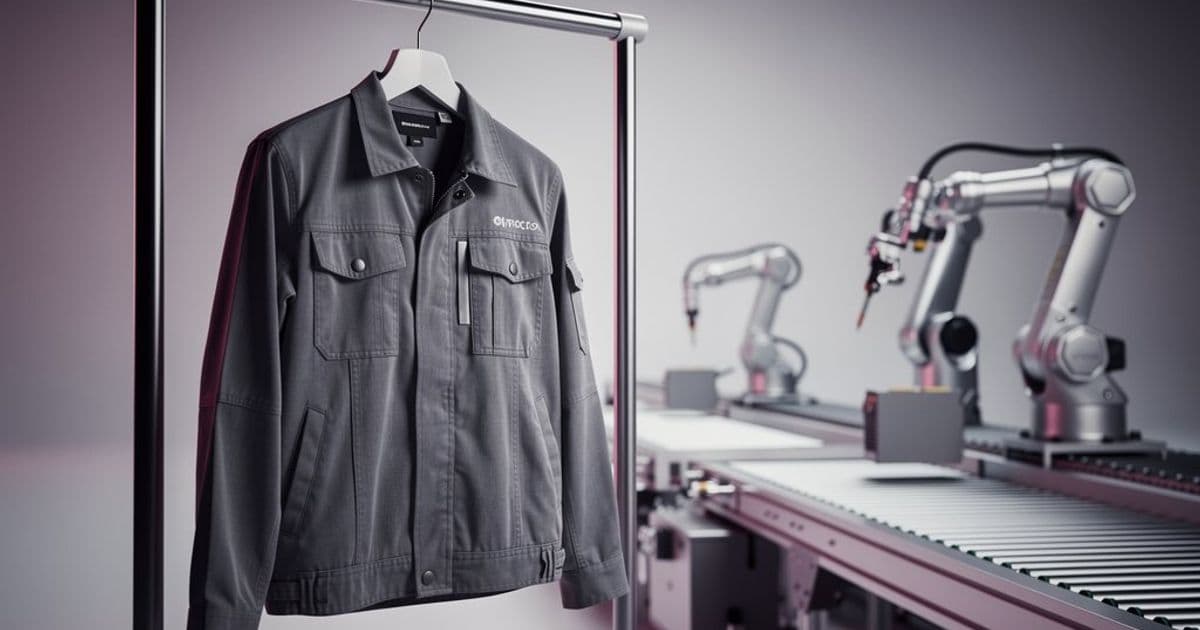
As India aims to become a global manufacturing hub, the country's largest untapped resource is its women. With two-thirds of Indian women outside the formal workforce, factory jobs present a transformative opportunity, though concerns about automation and job displacement loom over this demographic shift.
India's manufacturing ambitions are increasingly tied to a demographic resource that has long been underutilized: its women. As the country pushes to become a global production alternative to China, factories from Karnataka to Gujarat are tapping into a workforce that represents both India's greatest potential and its most significant challenge.
Sadhana's story exemplifies this shift. A decade ago, she left her in-laws' home in northern India with her two children and little else, determined to work in a garment factory supplying Western brands like Gap and H&M. Her decision defied cultural expectations and familial pressure, but it placed her at the forefront of India's evolving labor landscape. Today, she represents millions of Indian women who are entering the formal workforce for the first time, drawn by factory jobs that offer steady wages and economic independence.
The scale of this opportunity is staggering. Approximately two-thirds of India's women remain outside the formal workforce, according to government data. This represents a massive pool of potential labor that could help India achieve its goal of becoming a $5 trillion economy by 2027. The government's Production Linked Incentive (PLI) scheme, which offers billions in subsidies to manufacturers, is explicitly designed to create jobs in sectors like electronics, automotive, and pharmaceuticals—industries where women constitute a significant portion of the workforce in countries like Vietnam and Bangladesh.
In Karnataka's Ramanagara district, home to Lumax Industries and other auto parts manufacturers, women now make up nearly 40% of the factory floor workforce. This represents a dramatic shift from a decade ago, when women were largely confined to informal work or domestic roles. The change is driven by both economic necessity and changing social attitudes, as families recognize the financial stability that factory employment provides.
However, the transition is not without complications. The same automation and artificial intelligence technologies that promise to boost productivity also threaten to displace the very workers India is trying to employ. In textile factories across Tamil Nadu, automated cutting machines and AI-powered quality control systems are reducing the need for manual labor. While these technologies improve efficiency and product quality, they also raise questions about the long-term viability of manufacturing jobs for low-skilled workers.
The challenge is particularly acute for women, who often have less access to technical education and digital skills training. A 2024 study by the Indian Institute of Technology Delhi found that while women constitute 50% of entry-level manufacturing workers, they represent only 15% of technicians and engineers in the same factories. This skills gap could limit their ability to transition to higher-value roles as automation advances.
Despite these concerns, the immediate benefits of factory employment are undeniable. Women workers report higher household incomes, better access to healthcare, and increased decision-making power within their families. In Faridabad's industrial corridor, where electronics assembly plants have sprung up in recent years, women's wages have increased by an average of 35% since 2020, according to local labor unions. This economic empowerment is creating ripple effects throughout communities, with children staying in school longer and families investing in better nutrition and housing.
The Indian government is attempting to address the automation challenge through skill development programs. The National Skill Development Corporation has launched targeted initiatives for women in manufacturing, focusing on digital literacy and technical training. However, the scale of the problem is immense. With millions of women entering the workforce annually, training programs struggle to keep pace with both technological change and the sheer volume of new workers.
International companies are also adapting their strategies. Many multinational corporations, facing pressure to diversify their supply chains away from China, are choosing India partly because of its labor availability. But they are also investing in training programs and gradual automation to balance productivity gains with employment stability. For instance, a major Korean electronics manufacturer recently announced a $200 million investment in a Tamil Nadu facility that will employ 5,000 workers, with 60% being women, alongside a parallel investment in a technical training center.
The geographic distribution of this manufacturing push is also noteworthy. While traditional industrial hubs like Maharashtra and Gujarat continue to attract investment, new factories are increasingly locating in states like Odisha, Jharkhand, and Uttar Pradesh, where female labor force participation is particularly low. This decentralization could help address regional inequalities while providing employment opportunities closer to where many women live.
Yet, the sustainability of this model remains uncertain. As India's manufacturing sector grows, it will need to move beyond low-cost assembly to higher-value manufacturing. This transition requires not just more workers, but more skilled workers. The country's education system, particularly for girls in rural areas, continues to lag behind its industrial ambitions. Without significant improvements in STEM education for women, India risks creating a workforce that is large but not necessarily productive enough to compete globally.
The demographic dividend that India has long celebrated—its young population—now has a gender dimension. The country's manufacturing future depends not just on having enough workers, but on ensuring that women can participate fully and advance in the industrial sector. This requires more than just job creation; it demands a fundamental rethinking of workplace policies, skill development, and the social structures that have historically kept women out of formal employment.
As Sadhana and millions like her stitch garments, assemble electronics, and operate machinery in factories across India, they are writing a new chapter in the country's economic story. Whether this chapter ends with sustainable development and gender equality, or with a new form of labor exploitation and displacement, will depend on how India navigates the complex intersection of demographic change, technological advancement, and social transformation in the years ahead.
Comments
Please log in or register to join the discussion