
This week's reading list reveals how infrastructure decisions are increasingly entangled with geopolitical tensions, with building codes lacking critical cost-benefit analysis, and housing policy caught between access and investment concerns.
The convergence of geopolitical tensions and infrastructure development creates a complex landscape where technological systems, building codes, and housing policy intersect in unexpected ways. Brian Potter's reading list for April 11, 2026, offers a snapshot of this interconnected reality, showing how seemingly local decisions about building standards have global implications, while international conflicts directly impact technological infrastructure development.
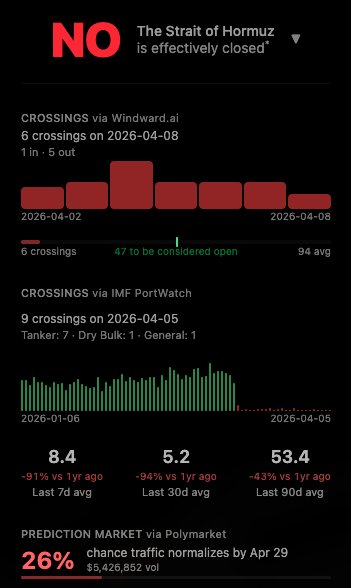
The situation surrounding the Strait of Hormuz exemplifies this intersection. Despite a ceasefire agreement between the US and Iran, the critical maritime passage remains closed, disrupting global supply chains. The Is Hormuz Open Yet? website emerged as a vital tool for tracking ship crossings in real-time, highlighting how technology provides transparency in geopolitical crises. More concerning are the cyberattacks targeting US infrastructure, particularly those targeting Rockwell Automation/Allen-Bradley PLCs. According to CISA, these Iranian-affiliated advanced persistent threat actors have disrupted critical infrastructure sectors through manipulation of human machine interface (HMI) and supervisory control and data acquisition (SCADA) displays. This represents a new frontier in conflict where industrial control systems become battlegrounds.
{{IMAGE:3}}
The threats to OpenAI's Stargate data center in Abu Dhabi demonstrate how cloud infrastructure has become a strategic asset in regional conflicts. Microsoft's consideration of more resilient data centers in high-risk areas suggests a recognition that traditional infrastructure models may be inadequate in an era of heightened geopolitical tensions. The Iranian drone attacks on Saudi Arabia's Jubail petrochemical complex, UAE's Habshan gas facility, and Kuwait's power and desalination plants reveal how critical infrastructure has become both a target and a weapon in modern conflicts.
The most fascinating technological claim comes from the report about "Ghost Murmur," a tool that allegedly uses "long-range quantum magnetometry to find the electromagnetic signal of a human heartbeat" to locate the Iranian weapons officer of the downed F-15E. While such capabilities would represent a significant advancement in detection technology, independent verification of these claims remains elusive, highlighting the challenge of separating fact from fiction in conflict reporting.
Parallel to these geopolitical developments, the building code analysis from UCLA's Lewis Center reveals how regulatory decisions directly impact housing affordability and accessibility. The example of elevator size requirements illustrates how seemingly minor code provisions can have cascading effects. When a fire marshal in Glendale, Arizona proposed elevators larger than international standards to accommodate a 7-foot stretcher lying flat, the cost impact was reported as "none." Yet today, this requirement contributes to a basic four-stop elevator in New York City costing about $158,000, compared to $36,000 in Switzerland. These inflated construction costs ultimately manifest in the prevalence of five- and six-story walk-ups in the US, which are inaccessible to many elderly and disabled tenants—a design choice unheard of in most high-income countries.
The White House Executive Order advocating for building code cost-benefit analysis represents a recognition of this regulatory burden. However, the effectiveness of such analysis remains uncertain, as building codes develop through a complex process involving numerous stakeholders with varying priorities. The distinction between the International Residential Code (IRC) for single-family homes and the stricter International Building Code (IBC) for apartment buildings creates regulatory inconsistencies that affect housing development patterns.
The British building standards recommendation that windows be sized to be cleanable from the inside by "95% of the elderly female population, without the need for stretching" produces an unintended consequence: extremely tiny windows. This highlights how well-intentioned accessibility requirements can sometimes lead to counterproductive outcomes when implemented without holistic consideration of building performance.
The debate over the Senate's ROAD to housing act reveals the complex relationship between housing policy and institutional investment. While the prohibition on institutional investors buying single-family homes aims to preserve housing for individual homeowners, the disposition requirement for newly built rental homes may discourage investment in much-needed housing supply. This creates a policy dilemma: how to balance preventing corporate consolidation of the housing market with ensuring adequate construction of rental units.
The Congress for New Urbanism's proposal to expand the IRC to cover small apartment buildings represents an interesting middle ground, potentially creating more regulatory consistency while allowing for more diverse housing types. Such approaches could help address the US's tendency toward single-family development that has contributed to housing shortages and affordability crises in many urban areas.
These developments collectively suggest that infrastructure policy exists at the intersection of technology, geopolitics, and social values. The challenges are not merely technical but involve complex value judgments about risk, accessibility, affordability, and security. As geopolitical tensions continue to influence infrastructure development and building codes evolve, policymakers face the difficult task of creating regulatory frameworks that balance competing priorities while ensuring the resilience and accessibility of our built environment.
The reading list ultimately reminds us that infrastructure decisions are never purely technical; they reflect our societal choices about risk allocation, resource distribution, and the kind of communities we wish to build. In an era of increasing global tensions and housing challenges, thoughtful analysis of these interconnections becomes more crucial than ever.
Comments
Please log in or register to join the discussion