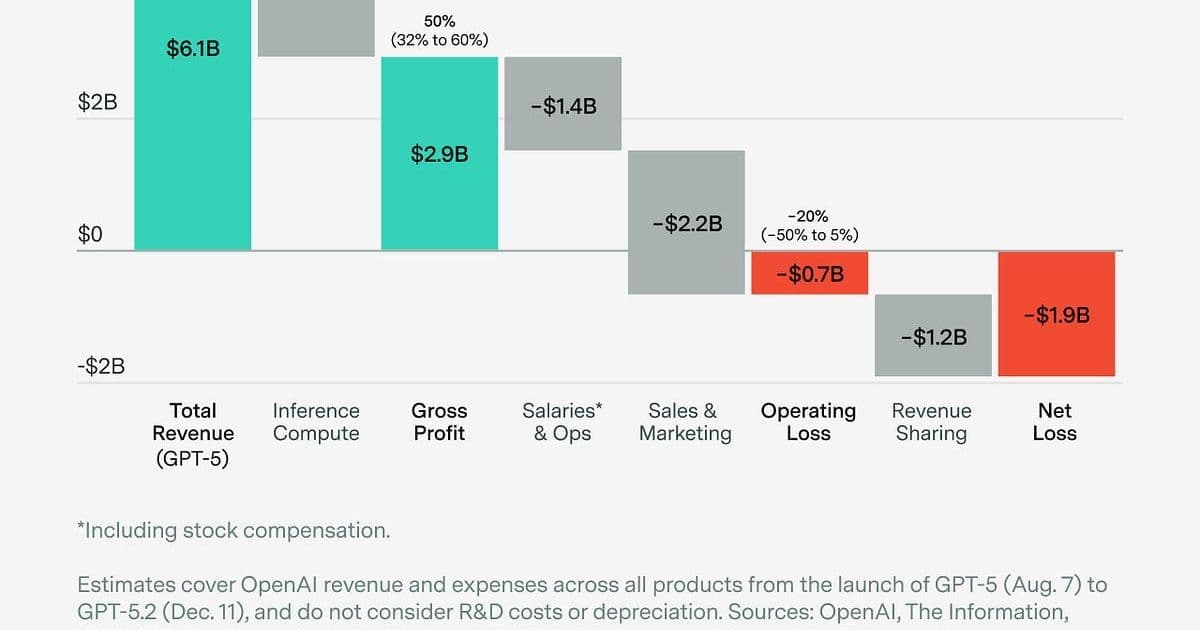
Despite OpenAI's astronomical valuation, our analysis reveals negative operating margins and unsustainable R&D recovery timelines for flagship models like GPT-5.
The Profitability Paradox
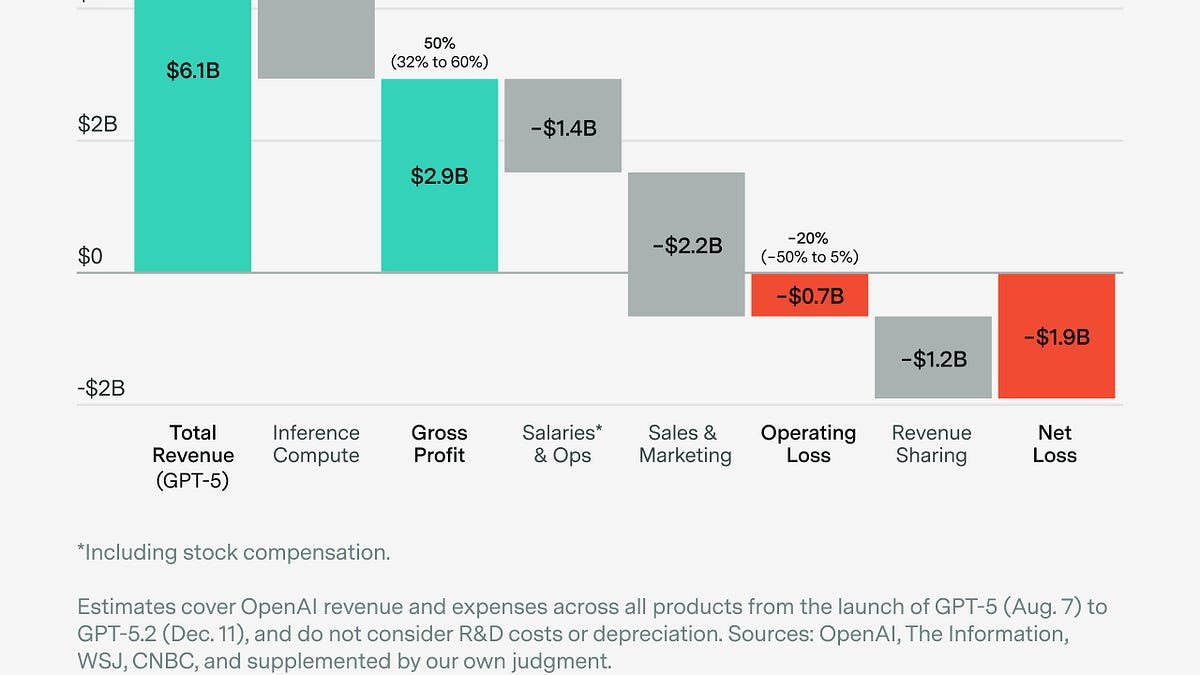
AI labs command valuations exceeding traditional software giants, yet fundamental questions about unit economics remain unanswered. When Sam Altman claims models eventually cover their own R&D costs, does reality match the rhetoric? Our forensic analysis of OpenAI's GPT-5 bundle (August-December 2025) reveals a complex financial landscape where gross margins offer hope but operating realities tell a different story.
Revenue vs. Costs: The GPT-5 Case Study
During GPT-5's 4-month tenure as OpenAI's flagship model, we estimate:
- $6.1B revenue from all offerings (ChatGPT, API, etc.)
- $3.2B inference compute costs (serving user requests)
- $1.2B operational staff compensation
- $2.2B sales & marketing
- $0.2B administrative overhead
This yields a 48% gross margin ($2.9B profit) when considering only compute costs - already below the 60-80% typical for software. But including all operational expenses reveals an 11% operating loss (-$700M). Microsoft's reported 20% revenue share agreement further erodes margins.
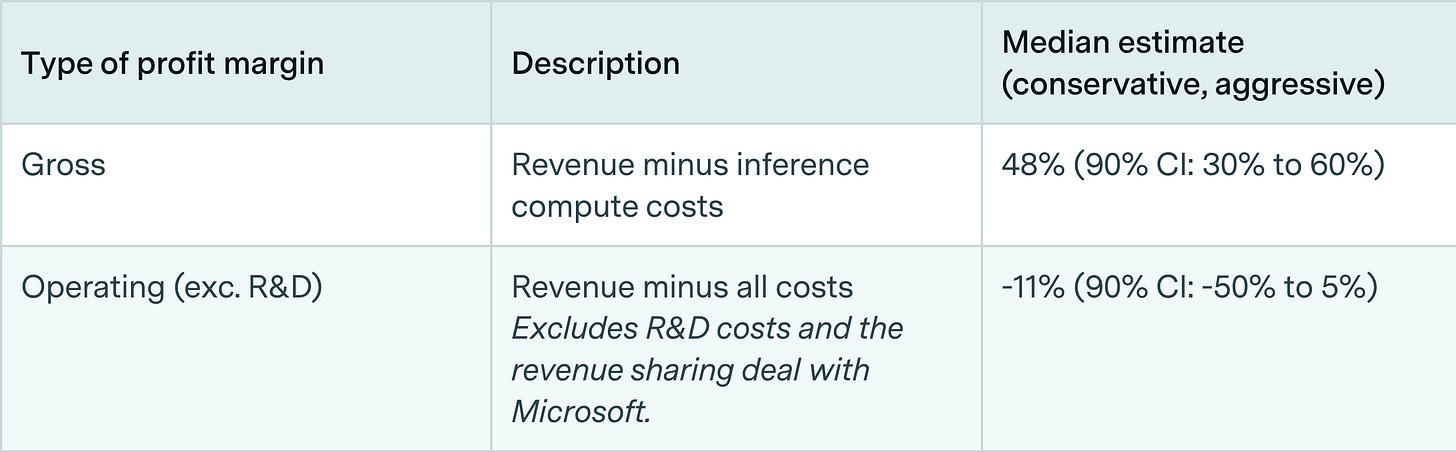 Confidence intervals from Monte Carlo analysis show consistent losses across scenarios
The R&D Recovery Problem
Even assuming optimistic gross margins, GPT-5's short lifecycle prevented R&D cost recovery. We estimate:
- $5B R&D investment in the 4 months preceding GPT-5's launch
- Just $3B gross profit during its active period
Model obsolescence accelerates this challenge - Gemini 3 Pro surpassed GPT-5 within months, forcing OpenAI to deploy GPT-5.2. This creates a depreciating infrastructure effect where R&D must be recouped before competitors displace the model.
Why Investors Still Bet on AI
Three factors sustain investment despite current economics:
- Growth trajectory: OpenAI's revenue tripled annually ($20B+ run rate)
- Enterprise stickiness: Corporate contracts increase switching costs
- Future efficiency: Algorithmic advances could slash compute costs 10x
The Path Forward
Profitability hinges on extending model relevance cycles and diversifying revenue. OpenAI is now testing ads (projected $2-15B annually) while pursuing vertical-specific enterprise solutions. As Anthropic's comparable margins suggest, the entire frontier AI sector faces similar economics. The question isn't whether AI creates value - it's which labs will build sustainable capture mechanisms before funding patience expires.
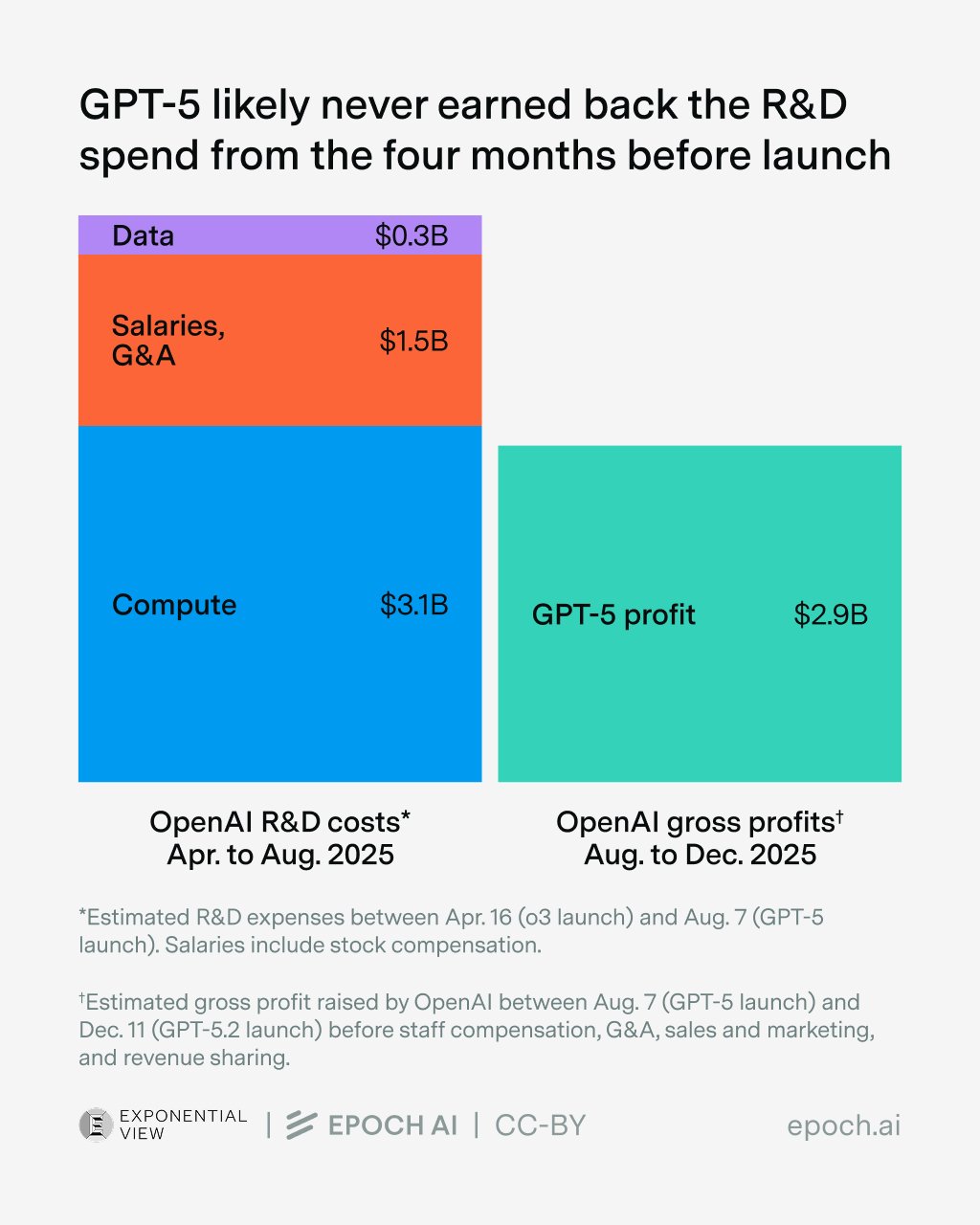 Competition forces rapid iteration, compressing revenue windows
Comments
Please log in or register to join the discussion