
The traditional front line in Ukraine has vanished, replaced by a lethal 'kill zone' saturated with drones, electronic warfare, and desperate survival tactics. This analysis, drawn from frontline military accounts, reveals how unmanned systems and sensor technology are defining a new era of close combat. The report details the terrifying reality for infantry, the critical role of drones in logistics and assault, and the constant electronic duel shaping the battlefield.

Main image: The desolate landscape of the modern 'kill zone' (Credit: Texty.org.ua)
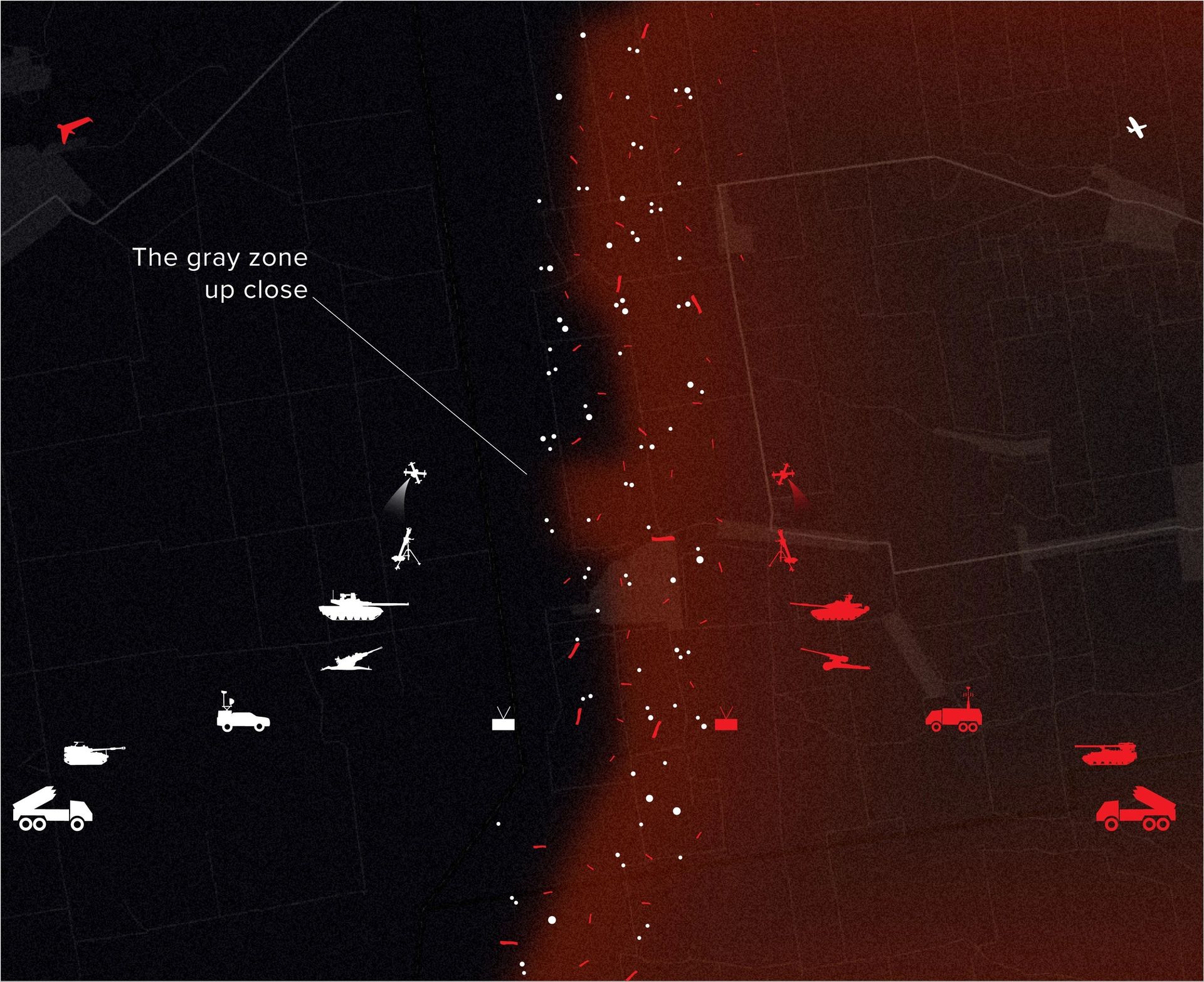
Forget the clear demarcations of trench warfare. In eastern Ukraine, the concept of a defined front line has dissolved. Military personnel describe a terrifying evolution: a 20-30 kilometer deep "gray zone" under constant drone surveillance and artillery fire, within which lies the much deadlier "kill zone" – a 500m to 10km wide strip where Ukrainian and Russian positions are chaotically intermingled. This is a battlefield defined not by massed infantry charges, but by pervasive sensors, unmanned systems, and a desperate game of hide-and-seek with death.
The Anatomy of Chaos
The kill zone is a shattered landscape: a nightmarish mix of ruined villages, charred forests, endless craters, burnt-out vehicles, and the grim presence of unrecovered casualties. Trenches zigzag, often partially abandoned or repurposed, while hundreds of meters of razor wire, fishing nets, and crucially, strands of fiber-optic cable from drones snake across the terrain. Survival hinges on concealment and avoiding detection by the ever-present eyes in the sky.
Survival in the Burrows
Infantry, critically depleted on both sides, hold scattered positions within this chaos. Soldiers occupy "burrows" – hastily dug shelters, often just 2-4 square meters, hidden under rubble, trees, or within the remnants of basements. Key features:
- Camouflage is paramount: Entrances are hidden; netting covers trenches to snag drones and grenades.
- Thermal protection: Anti-thermal imaging cloaks are essential to evade detection.
- Isolation: Positions can be so scattered that Russians might occupy one end of a trench complex, Ukrainians the other.
- Skyward Threat: "The most terrifying thing for infantry is drones that hover overhead and drop ammunition," sources state. Shelters prioritize protection from above.
 Infantry navigate a perilous landscape under constant drone surveillance (Credit: Texty.org.ua)
The Drone Carousel and the Assault
Drones are the undisputed masters of this domain. They operate in a near-constant "carousel," cycling to maintain persistent surveillance at altitudes from 100m to 5km.
- Reconnaissance Drones: Scan for targets, directing artillery and guiding other assets.
- FPV (First-Person View) Kamikaze Drones: Hunt personnel and light vehicles with terrifying precision.
- Cargo Drones: Deliver critical supplies (ammo, water, food, batteries) in 10-20kg drops to isolated positions.
- Game Changer: Fiber-Optic FPV Drones: Immune to electronic warfare (EW), these drones can loiter for extended periods, connected via thin cables, waiting to ambush targets. Their telltale cables litter the ground, ensnaring wildlife.
Assaults are now small-scale, stealthy affairs:
- Creeping Infiltration: Individuals or tiny groups (often just 2-5 soldiers) crawl for days using anti-thermal cloaks, supplied by drone drops.
- Motorized Infiltration: Buggy or motorcycle raids attempt quick dashes across the zone under weather cover.
- Targets: Priority is given to destroying FPV drone operators, mortar crews, and command elements. Armored assaults are rare due to vulnerability.
The Electronic Duel
Countering the drone threat is a relentless, high-stakes technological battle:
- Electronic Warfare (EW) Networks: Dedicated units deploy systems to detect, jam, and disrupt enemy drone communications across frequencies. Vehicles mount EW gear.
- Individual EW: Every infantry group carries personal EW devices, though effectiveness varies, and battery life is a critical constraint.
- Anti-Drone Guns: Handheld jammers used to disrupt drone control signals at close range.
- Shotguns & Nets: Infantry use shotguns for close-in drone defense; nets are deployed to physically snag drones or dropped grenades. "Drone pilots try to circumvent electronic warfare, while those responsible for electronic warfare try to 'catch' drone frequencies," the report notes. This cat-and-mouse game defines the electromagnetic spectrum of the battlefield.
 Electronic warfare systems are critical for disrupting the constant drone threat (Credit: Texty.org.ua)
Logistics and Survival on the Razor's Edge
Movement in the kill zone is near-suicidal during daylight. All logistics – rotation, evacuation, resupply, mining – occurs under cover of darkness, rain, or fog.
- Rotation Peril: Relieving troops involves perilous journeys via pickup trucks partway, followed by foot movement carrying 20-40kg loads. Rotations that should happen every few days often stretch into weeks or months.
- Ground Drones: Experimental use for logistics and medical evacuation, though reliability is an issue.
- Mining Evolution: Minefields are laid manually, by drone drops, or via artillery-delivered cluster munitions. Mines are fiendishly camouflaged (e.g., hidden in debris or animal carcasses). Fiber-optic drones also act as static mines. Sappers work only during limited visibility windows.
- Stealth Tech: Night vision, red flashlights, electric vehicles (for quiet operation), and camouflage are essential for any movement.
Defense: Coordination Against the Swarm
Repelling assaults requires seamless integration across the brigade/battalion:
- Constant Reconnaissance: Scouts analyze enemy patterns and predict infiltration routes 24/7.
- Engineering: Routes are mined and blocked with physical obstacles.
- Rapid Interdiction: Artillery, mortars, and FPV drones engage spotted assault groups before they reach rifle range of Ukrainian positions. "The sooner the scouts manage to detect the enemy, the more time there will be to destroy it."
The report starkly concludes: "The enemy's direct presence near the infantryman's positions is a failure of the command's defensive organization." Success hinges on sufficient personnel, drones, ammunition, and crucially, the skill and coordination of UAV operators, artillery, and EW units.
Source & Methodology: This analysis is based on verified frontline accounts from Ukrainian military personnel (infantry, drone operators, EW specialists, scouts, sappers) serving in Donetsk, Kharkiv, and Zaporizhzhia regions in late 2024 and early 2025, gathered by Inna Gadzynska, Nadia Kelm, and Roman Kulchinskyi for Texty.org.ua. Illustrations by Ivan Kypibida; Layout by Nikita Holovinskyi. The dynamic nature of the conflict means situations vary across the front. (Original Source: 20 kilometers of the gray zone. The front line has become blurred - Texty.org.ua)
The Ukrainian kill zone offers a harrowing preview of future infantry combat: a sensor-saturated, drone-dominated environment where survival depends as much on electronic countermeasures, camouflage technology, and decentralized logistics as on marksmanship. This relentless technological duel, fought amidst unimaginable hardship, underscores how unmanned systems and electronic warfare have irrevocably reshaped the very nature of the battlefield.
Comments
Please log in or register to join the discussion