A one-year share lock-up just freed roughly 37 billion yuan worth of Insta360 stock for 28 pre-IPO investors, the same week the company shipped its first handheld gimbal to challenge DJI. The numbers underneath tell a familiar hardware story: revenue is climbing fast, profit is not.
Insta360 (688775.SH) hit two pressure points in the same week, and they are worth separating because the market tends to blur them together. On June 11, a one-year lock-up expired on 56.5% of the company's shares, roughly 37 billion yuan in value, handing exit rights to 28 pre-IPO financial backers. A day earlier, the company launched the Luna Ultra, its first handheld gimbal camera and a direct shot at DJI's Osmo Pocket line. One event is about who owns the stock. The other is about whether the business deserves the valuation. They are not the same question.
What actually changed on June 11
Lock-up expiries get reported with alarming numbers, and 37 billion yuan is alarming on its face. But the figure describes shares that became eligible to trade, not shares that will hit the market. The 28 investors gaining exit rights are financial backers, none from the founding team, so their incentives are straightforward: realize returns that have compounded for years. The clearest example is IDG, whose roughly $1.65 million across Series A and B more than 11 years ago now corresponds to a stake worth about 8 billion yuan. The other large holders are Qiming Ventures-backed QM101 LIMITED at 8.44% and Xunlei at 7.84%. Xunlei's position is the more striking data point: at around 5 billion yuan, it is more than double Xunlei's own U.S. market capitalization, which says as much about how the market prices Xunlei as it does about Insta360.
The stock has already fallen roughly 57% from its September 2025 peak of 377.77 yuan, so a good deal of the anticipated selling pressure may be priced in. Lock-up overhangs are real, but they are a supply-and-demand event on the share register, not a verdict on the product. The product question is the one that matters over a longer horizon.
The growth-without-profit pattern
Here the financials deserve a close read, because they fit a pattern that shows up repeatedly in consumer hardware. Revenue went from 2.04 billion yuan in 2022 to 9.74 billion yuan in 2025, nearly a 5x climb in three years. Impressive top-line growth. Net profit, however, declined to 929 million yuan in 2025, and Q1 2026 net profit dropped 52% to 84.62 million yuan. Net margin has compressed to about 3.4%.
That combination, revenue up sharply while profit erodes, usually means one of a few things: the company is buying market share through price, it is spending heavily ahead of revenue, or its product mix is shifting toward lower-margin categories. Insta360's R&D line points to the second factor. The company spent 1.53 billion yuan on R&D in 2025 and 465 million yuan in Q1 2026 alone, funding drones, gimbal cameras, and wireless microphones. That is a deliberate bet: expand from a profitable niche in 360-degree cameras into adjacent categories that DJI already dominates. The bet is defensible, but it is a bet, and the margin compression is the cost of placing it. Inventory tied to new product launches adds working-capital risk on top of that.
The Luna Ultra and what it signals
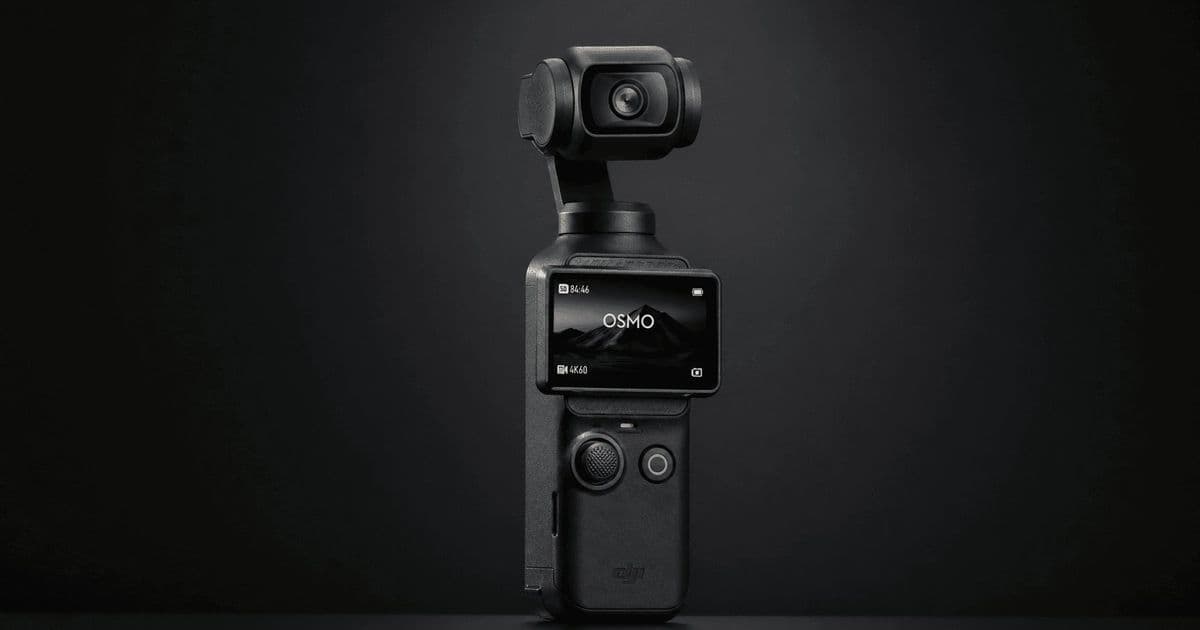
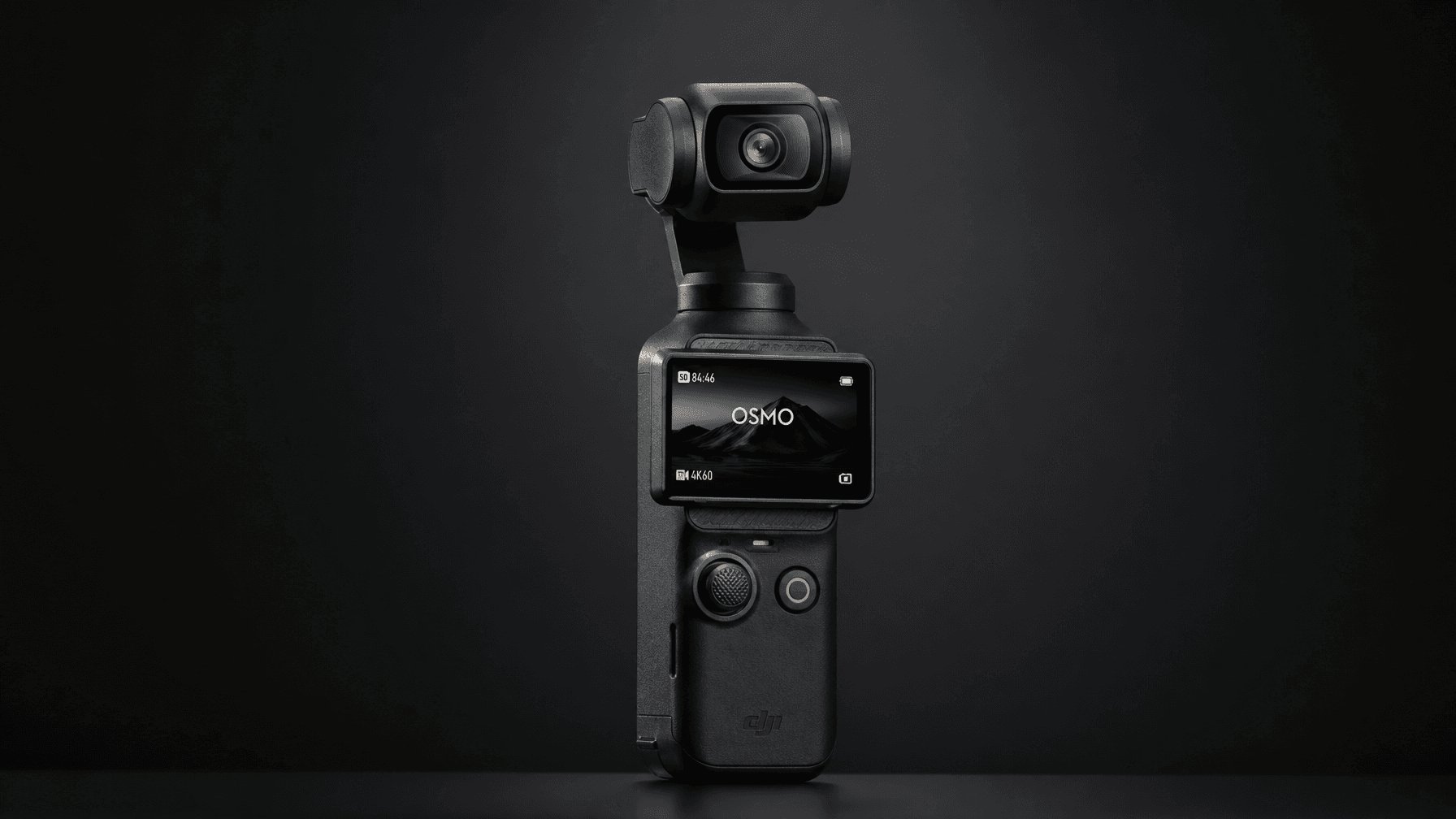
The Luna Ultra is the clearest evidence of the strategy. It is Insta360's first handheld gimbal camera, aimed squarely at DJI's Osmo Pocket series, which has owned this form factor with little credible competition. On paper the hardware is aggressive: a Leica co-engineered 1-inch 8K main camera, a secondary telephoto with 6x lossless zoom, a detachable 2-inch remote screen, and an ear-hook head-tracking module. The spec sheet reads like a company trying to win on features rather than incumbency.
The pricing is the more telling decision. At 3,999 yuan, the Luna Ultra came in well under the rumored 5,299 yuan. Undercutting your own leaked price is not a confidence signal about margins; it is a signal that the priority is unit volume and displacing DJI, not protecting profitability on day one. That is consistent with the 3.4% margin. You do not price like this if your near-term goal is to widen the spread between revenue and profit.
DJI is unlikely to sit still. Market sources point to an Osmo Pocket 4P launch as early as June 15, which would put a direct response on shelves within days of the Luna Ultra. A fast counter from the incumbent is the worst case for a challenger's pricing power, because it removes the window in which a new entrant can sell at a premium before competition resets expectations. If both products land within a week of each other, the comparison becomes immediate and the buyer gets to choose on features and price with no incumbency advantage to Insta360.
What to watch, and what not to over-read
The honest read is that the lock-up and the product launch are loosely related at best. Insider selling, if it comes, reflects portfolio decisions by funds that have held the stock for a decade, not a real-time judgment on the Luna Ultra. The number that will actually settle the strategy question is margin recovery over the next few quarters. If R&D spending and aggressive pricing eventually convert into a wider, more durable product moat against DJI, the current profit dip is an investment phase. If the moat does not materialize and DJI simply matches the spec sheet at a similar price, then Insta360 has spent 1.53 billion yuan to enter a fight on terms set by a larger, better-capitalized rival.
For now the company is doing what hardware firms do when they expand: trading margin for reach and hoping the reach compounds faster than the margin erodes. The Q1 2026 numbers do not yet show that working. The next two quarters, and DJI's response, will.
Comments
Please log in or register to join the discussion