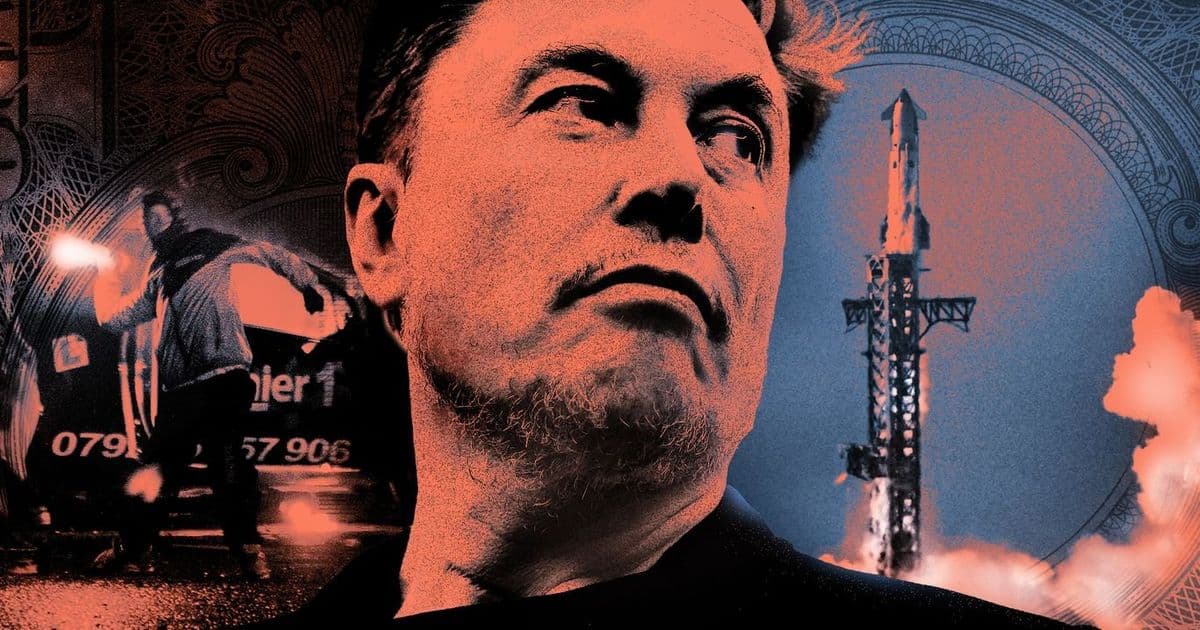
Elon Musk now runs Tesla, SpaceX, xAI, X, Neuralink and the Boring Company with a level of personal control that conventional governance models were never built to contain. The numbers behind that control, and what they mean for shareholders, regulators and the broader tech market, tell a story about where power in the industry has concentrated.
Elon Musk has reached a position no other operating executive in modern business holds: control over a portfolio of companies whose combined private and public valuations run into the trillions, paired with personal influence that sits largely outside the checks that normally bind public-company CEOs. The framing of Musk's "age of impunity" captures something real about the structure of his businesses, not just his behavior. When a single person sits atop the most valuable automaker by market cap, the dominant commercial launch provider, a fast-rising AI lab, and a global social platform, the usual accountability mechanisms start to look optional.
The business reality behind the headlines
Start with Tesla, the only one of Musk's major ventures that is publicly traded. For most of the past several years Tesla's market capitalization has swung between roughly $600 billion and well over $1 trillion, a valuation that has consistently priced the company less like a car manufacturer and more like a software-and-autonomy platform. That gap matters. Traditional automakers such as Ford and General Motors trade at single-digit price-to-earnings multiples. Tesla has traded at multiples that only make sense if investors believe in robotaxis, full self-driving, energy storage, and humanoid robotics paying off years out. Much of that belief is, functionally, a bet on Musk personally.
That personalization of value is the core of the governance problem. Tesla's board has repeatedly been criticized for being unusually deferential, and the long-running fight over Musk's multibillion-dollar pay package, the largest in corporate history when first approved, became the clearest test of whether normal shareholder mechanisms could constrain him. A Delaware court struck the package down, shareholders re-ratified versions of it, and the company moved to reincorporate in Texas. Each step demonstrated the same pattern: when standard guardrails pushed back, the structure around Musk bent to route past them rather than rein him in.
Why private companies amplify the effect
SpaceX, xAI, Neuralink and the Boring Company are private, and that is not incidental. Private ownership means no quarterly earnings calls, no public proxy votes, no SEC-mandated disclosure of executive conduct, and no activist investors filing resolutions. SpaceX alone has been valued in private secondary rounds at figures approaching and exceeding $350 billion, which would rank it among the most valuable private companies ever. Its Starship program and its Starlink satellite network give it strategic weight that extends into national security and global connectivity, areas where a single operator's decisions carry consequences far beyond a balance sheet.
The 2022 acquisition of Twitter, now X, folded a global communications platform into this same structure. Taking the company private removed it from public-market scrutiny at the moment its ownership became most contested. xAI's subsequent absorption of X tied the social platform's data and distribution directly to an AI training operation, concentrating media reach, model development and Musk's personal megaphone inside one privately held entity.
The strategic implications
For investors, the lesson is that conventional risk models struggle with key-person concentration at this scale. Diversification within Musk's empire is illusory because the same individual sets direction, allocates capital and absorbs reputational shocks across every entity. A controversy that originates on X can move Tesla's stock; a regulatory dispute at SpaceX can color sentiment toward xAI's fundraising. The companies are legally separate but economically and politically entangled through one person.
For regulators, the difficulty is jurisdictional. The agencies built to police corporate conduct, the SEC, the FTC, the NLRB, the FAA, the FCC, each touch only a slice of the portfolio, and the private entities sit largely beyond the disclosure regimes that give those agencies leverage. Enforcement actions have landed, but they tend to produce settlements and workarounds rather than structural change.
For the broader tech market, Musk's position signals where industry power has migrated. The dominant story of the past decade was platform consolidation inside public megacaps subject to antitrust pressure and shareholder governance. The model emerging around Musk is different: strategic assets in launch, autonomy, AI and communications held privately, financed through secondary markets and insider rounds, insulated from the public accountability that once came with scale. Whether that model proves durable depends less on any single product cycle and more on whether capital markets and governments decide that concentrated, lightly checked control is a feature worth funding or a risk worth pricing.
The valuations suggest the market has, so far, chosen to fund it. The open question is what happens the first time the person at the center of all of it makes a decision the structure cannot absorb.
Comments
Please log in or register to join the discussion