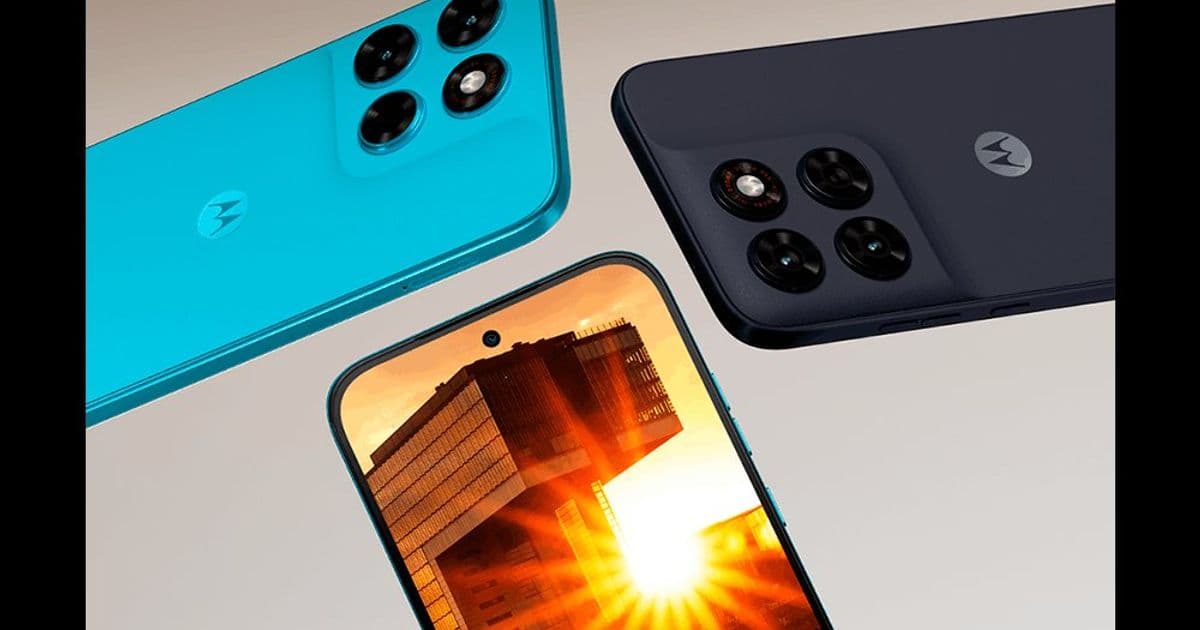
Motorola has reissued the Moto G87 in Brazil as the Moto G Max, keeping the same Dimensity 6400 chipset, 200 MP camera, and 6.8-inch AMOLED panel down to the millimeter. The interesting part isn't the rebrand. It's whether a $488 midranger can justify that asking price when the specs read like a phone half its cost.
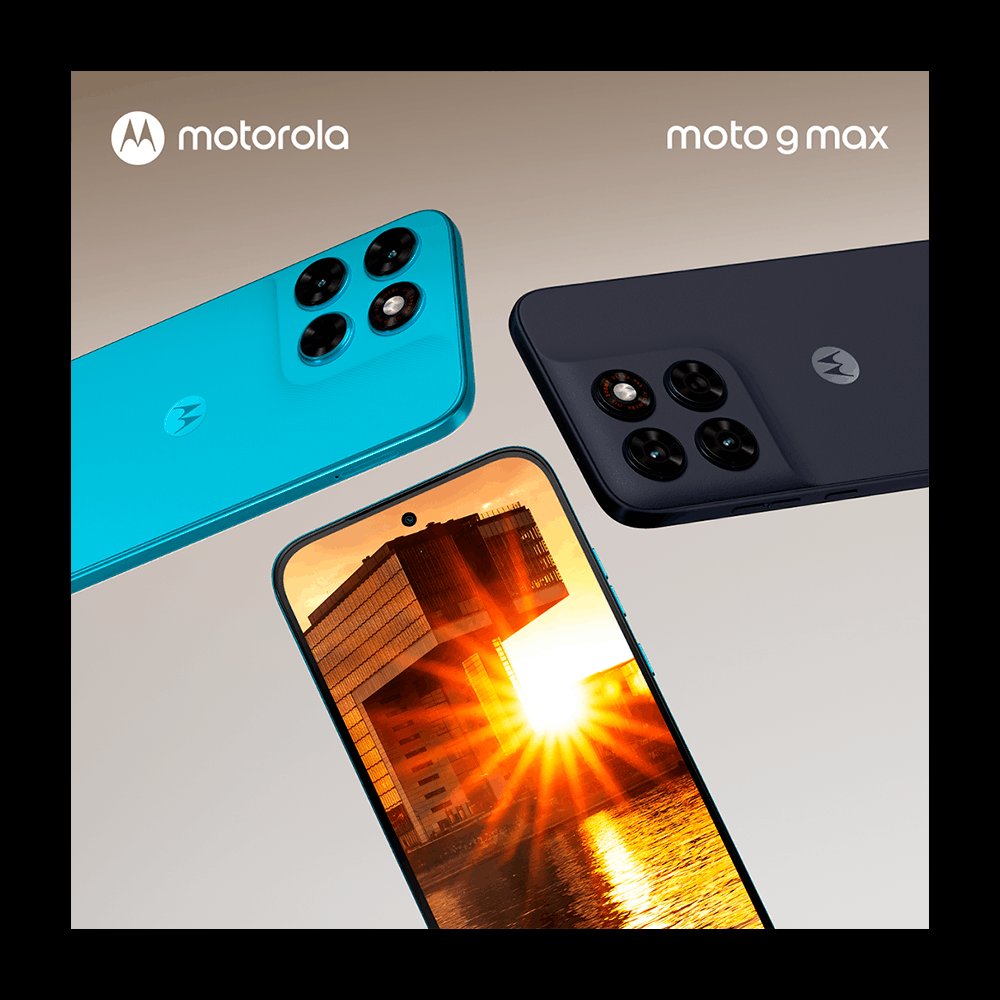
Motorola has a habit of selling the same phone twice, and the new Moto G Max is the clearest example yet. Launched in Brazil this week, the G Max is a straight rebadge of the Moto G87 that arrived earlier in 2026. Same chassis, same dimensions, same internals. The only thing that changed is the name on the box and, depending on how you count, the regional pricing strategy.
What's new
Nothing, mechanically. That is the honest answer. The Moto G Max ships with a MediaTek Dimensity 6400, 8 GB of RAM, and 256 GB of storage in a single configuration. There is no microSD slot, so the 256 GB you buy is the 256 GB you keep. It runs Android 16 out of the box, which is the one genuinely current spec here, though Motorola has said nothing about how many OS upgrades or security patches the phone will receive. For a device that costs the equivalent of $488, that silence matters more than it would on a $150 handset.
The display is the standout sheet-spec. You get a 6.8-inch AMOLED running at 2772 x 1272, a 120 Hz refresh rate, and a quoted 5,000-nit peak brightness with Gorilla Glass 7i on top. Peak brightness figures like that are measured on tiny HDR highlight windows, not full-screen, so don't expect the whole panel to hit anywhere near that number in daylight. Still, AMOLED at 120 Hz with that resolution is a genuinely good panel for the midrange, and it is the most defensible part of the spec sheet.
The camera array leads with a 200 MP primary sensor at f/1.8 with optical stabilization, backed by an 8 MP ultrawide and a 32 MP front camera. The 200 MP headline number is mostly about pixel binning. In practice the sensor combines pixels to output cleaner, lower-resolution shots, and the OIS is the more meaningful inclusion for handheld low-light work.
{{IMAGE:2}}
Power comes from a 5,200 mAh battery with 33 W wired charging. There is no wireless charging, and 33 W is middling by 2026 standards, where competitors in this price band routinely push 67 W or higher. Motorola rounds out the package with stereo speakers tuned for Dolby Atmos, IP68 and IP69-class water and dust resistance, MIL-STD-810H durability certification, and an in-display fingerprint reader. The body measures 7.38 mm thick and weighs 183 grams, which is comfortably slim for a phone carrying a battery this size.
How it compares
The most direct comparison is the phone it replaces, the Moto G87, because they are physically identical. If you already own a G87, the G Max offers you nothing. If you are cross-shopping, the comparison that actually hurts is against the broader midrange field.
The Dimensity 6400 is an entry-to-midrange chip. It handles everyday apps, video, and light gaming without complaint, but it is not in the same class as the Dimensity 7000-series or Snapdragon 7-series silicon you can find in similarly priced phones from Xiaomi, Realme, or Samsung's A-series. At $488 converted, the G Max is asking flagship-adjacent money for processing power that belongs two tiers down. Regional pricing in Brazil is notoriously inflated by import taxes, so the BRL 2,519.10 sticker is not a fair global yardstick, but a buyer in São Paulo is still paying that number against locally available alternatives that offer faster chips for less.
Where the G Max earns its keep is durability and the screen. The IP68/IP69 rating plus MIL-STD-810H is unusually thorough for the segment, and that AMOLED panel genuinely outclasses the LCDs you find on cheaper rivals. Motorola has clearly decided to compete on build quality and display rather than raw performance, which is a reasonable bet for a buyer who keeps a phone for years and never opens a demanding game.
Who it's for
This is a phone for someone who wants a tough, good-looking, water-resistant daily driver and does not care about benchmark numbers. The combination of a bright AMOLED screen, IP69 sealing, MIL-STD certification, and a large battery makes it a sensible pick for outdoor use, job sites, or anyone hard on their hardware. The 200 MP camera with OIS is a nice bonus rather than a reason to buy.
It is not for power users, mobile gamers, or anyone who tracks software support timelines, because Motorola's update commitments on the G-series have historically been thin and the company has said nothing here. If you can buy the identical Moto G87 for less in your region, do that instead. The Moto G Max is now on sale through Motorola Brazil's website, and the rebrand appears to be a Brazil-specific move with no indication it will roll out elsewhere.
Comments
Please log in or register to join the discussion