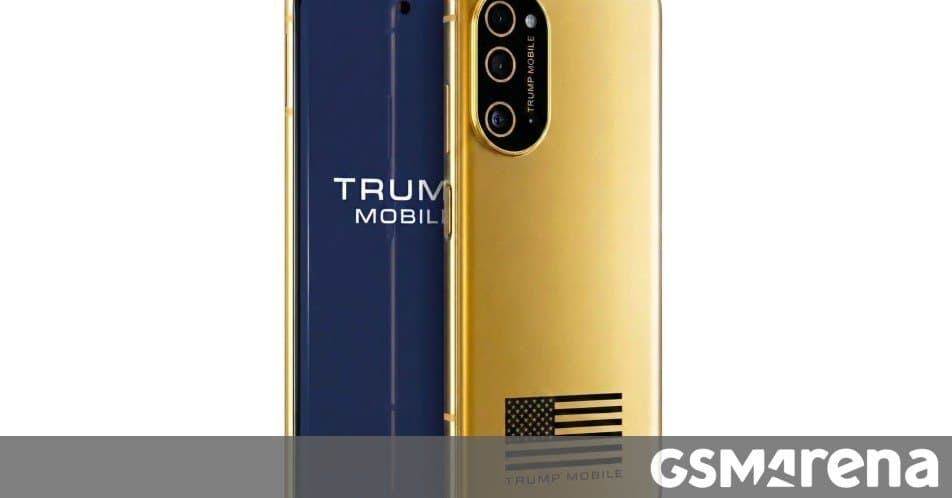
An iFixit teardown shows the long-delayed Trump Mobile T1 Phone is essentially an HTC U24 Pro under a different shell, undercutting the brand's original made-in-the-USA pitch and pointing to a shared Chinese ODM behind both handsets.
After nearly a year of shifting renders, changing specs, and a promised ship date that kept slipping, the Trump Mobile T1 Phone has finally started reaching media outlets. The verdict from the people who pry phones apart for a living is blunt: this is an HTC U24 Pro wearing a new outfit.
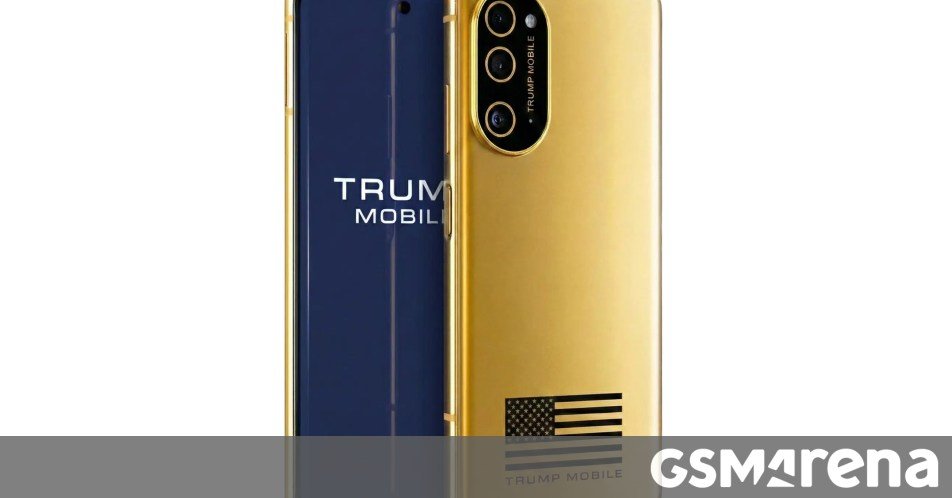
The repair specialists at iFixit ran their teardown and found the two devices to be nearly identical internally. That matches what the external photos already suggested. The T1 looks like the HTC U24 Pro from 2024, just with a different color scheme and a reworked back panel. When the boards, connectors, and component layout line up that closely, you are not looking at two phones that happened to converge on the same design. You are looking at the same phone.
What the teardown actually tells us
The most direct consequence concerns where this phone comes from. Trump Mobile's earliest marketing leaned on a made-in-the-USA claim. That language has since softened to "assembled in the USA," which is a meaningfully different statement. Assembly can mean final integration of components manufactured elsewhere, and there is no practical way for an outside observer to fully verify even that. A phone built around an existing HTC design almost certainly has its core manufacturing rooted outside the United States.
It helps to understand how a company ends up selling someone else's hardware. HTC sold the bulk of its smartphone engineering division to Google years ago, in the deal that helped seed the Pixel line. Since then HTC has released only a handful of phones each year, available in a small number of markets. A company operating at that volume rarely designs and builds every handset from scratch. Instead it leans on an ODM, an original design manufacturer.
How an ODM rebadge works
An ODM designs and builds finished products that other brands then sell under their own name. Think of it as a catalog of ready-made phones. A brand picks a model, specifies a color, maybe swaps the back panel or preloads its own software, and ships it. The brand never touches the underlying engineering.
This is the most likely explanation for the T1. The reasoning goes like this: HTC contracts a Chinese ODM to produce the U24 Pro. Trump Mobile approaches the same ODM, browses the catalog, and selects the same base model. Two brands, one factory design, near-identical internals. The practice is common across the industry and is part of why so many budget and mid-range phones from different names feel interchangeable. The economics favor it. Building a phone platform costs an enormous amount, and reusing a proven design spreads that cost across multiple buyers.
Specs by inference
Trump Mobile lists only a vague "Snapdragon 7 Series" chip without a generation or model number. If the T1 really is a U24 Pro underneath, the silicon is almost certainly the Snapdragon 7 Gen 3, the same SoC HTC used. That is a capable upper-midrange platform built on a 4nm process, pairing a prime Cortex-A715 core with performance and efficiency cores and an Adreno GPU. It handles everyday workloads and most games comfortably, though it sits a clear tier below the flagship Snapdragon 8 series.
The HTC U24 Pro paired that chip with 12GB of RAM and storage options of 256GB or 512GB, a 6.8-inch 120Hz OLED, and a 50MP main camera. Until Trump Mobile publishes verified specs of its own, the U24 Pro sheet is the best available proxy for what buyers will actually receive.
Why this matters for buyers
A rebadged phone is not inherently a bad phone. The U24 Pro is a reasonable mid-range device, and getting the same hardware under another label does not change what the silicon can do. The friction is the gap between the marketing and the reality. A made-in-the-USA pitch attached to an existing Taiwanese-branded, likely Chinese-built design sets an expectation the product does not meet.
There is also an ecosystem dimension worth weighing. HTC's software support cadence has thinned considerably as its phone business contracted, which raises real questions about how long a rebadged variant will see Android version bumps and security patches. A phone's useful life increasingly depends on update commitments, and a low-volume brand selling a low-volume ODM design is not the place to expect years of guaranteed support. Anyone shopping at this price point can find phones from Samsung, Google, or Motorola with clearer and longer software promises.
The T1's saga also lands against a backdrop of the brand having already confirmed a customer data exposure, a reminder that the wrapper around a phone, the service, the privacy handling, the support, matters as much as the hardware inside. The teardown settles the hardware question. The rest of the picture is what should give prospective buyers pause.
Comments
Please log in or register to join the discussion