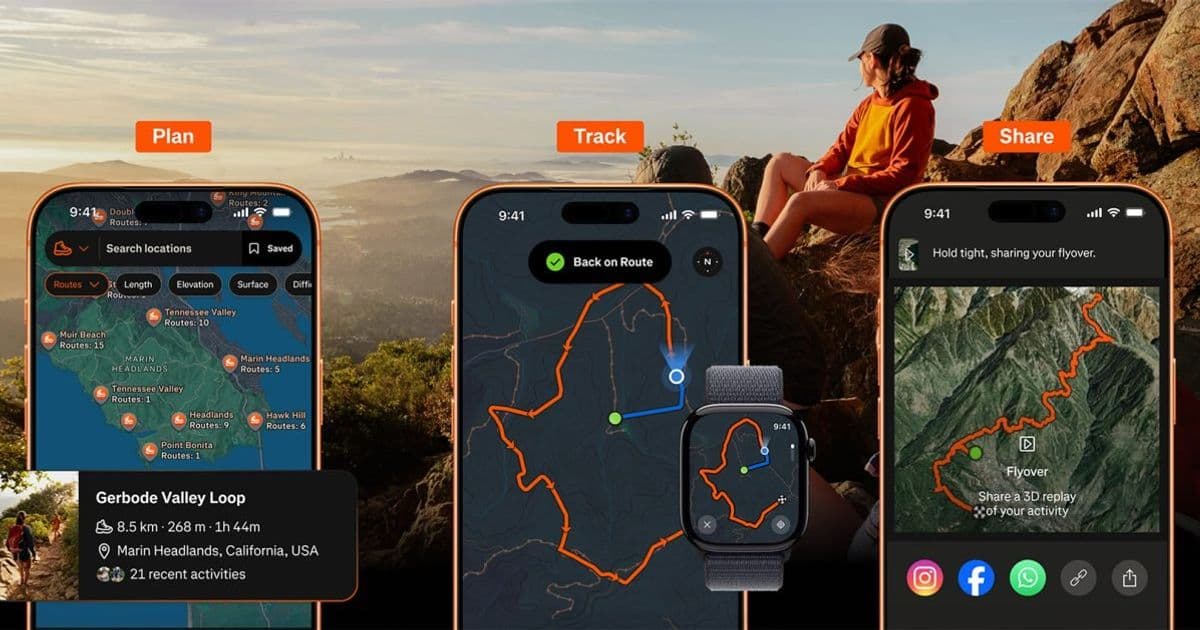
Strava's latest release adds advanced route planning, off-route alerts, and standalone Apple Watch navigation for hikers, splitting the feature set across free and paid tiers in ways worth tracking if you build or rely on fitness apps on either platform.
Strava pushed version 467.0.0 today, June 11, 2026, with a hiking-focused feature set that touches both the iOS and Android apps and, notably, the Apple Watch companion app. The headline for anyone maintaining a fitness or outdoor app: route-following now works directly on Apple Watch, so a hiker can leave the phone in a pack and still get turn-by-turn guidance from the wrist.
The update follows a year in which hiking clubs on the platform grew 5.8 times, and Strava is clearly responding to where its users are going. You can read the full announcement on Strava's blog and grab the build from the App Store or Google Play.
What actually shipped
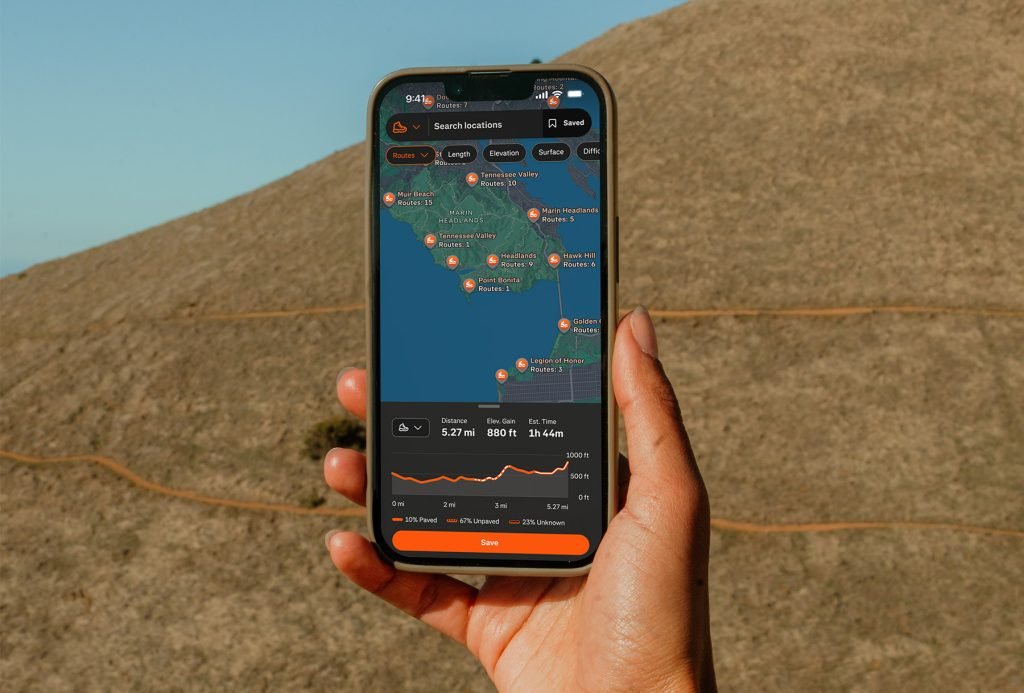
Strava split the new tools across free and paid tiers, which matters if you're benchmarking your own freemium structure against a market leader. Free users get Route Discovery, which surfaces popular trails in your area much like the existing running and walking route suggestions. The heavier planning and navigation tools sit behind the subscription.
For paying members, Route Builder lets you assemble custom hikes with distance and elevation readouts before you head out. During the hike itself, subscribers get off-route alerts, downloadable routes for offline navigation, and the Apple Watch route-following mentioned above. Strava also added live elevation data and a full-screen record map reachable in a single tap, plus activity replays.
On the social side, the release brings sticker stats, support for hiking-specific clubs, and cinematic 3D aerial animations that render your completed route. Most of these are live now. One piece, Map Style Improvements with richer surface data and points of interest, is held back until later this summer.
Why the Apple Watch piece is the real story
Standalone navigation on Apple Watch is harder than it sounds, and it's the part of this release that carries the most platform weight. Route-following without a paired phone means the watch app has to hold the route data locally, drive the GPS, and render map guidance on a tiny screen while managing battery against a multi-hour activity. That's a meaningfully different engineering problem than mirroring a phone session.
If you're building anything comparable, the relevant building blocks live in CoreLocation for the GPS fix and WorkoutKit for managing the underlying workout session on watchOS. A standalone watch experience also leans on CLLocationManager running in a background workout context so location keeps flowing while the screen sleeps. The trade-off is power draw: continuous high-accuracy GPS on Apple Watch will chew through a battery, which is likely why Strava reserves offline navigation for subscribers who opt into longer activities rather than enabling it everywhere.
Downloadable routes for offline use point to local persistence of route geometry, the kind of thing you'd back with a cached GPX or encoded polyline stored on-device so navigation survives a dead cell connection on a ridgeline. Off-route alerts then become a distance-from-path calculation run against that cached geometry, comparing the live fix to the nearest segment and firing a haptic when the deviation crosses a threshold.
The cross-platform gap to watch
Strava ships on both iOS and Android, but the wrist navigation feature is framed specifically around Apple Watch. Android developers and Wear OS users should read that carefully. There's no mention of a Wear OS equivalent in this release, which tracks with a broader pattern: companion-watch features frequently land on watchOS first because the hardware and platform APIs are more uniform than the fragmented Wear OS device pool. If you maintain a cross-platform app, this is a reminder that wrist-tier parity is rarely automatic and usually needs its own roadmap line.
For anyone integrating with Strava rather than competing with it, the changes also ripple into the data you can pull. Richer elevation and surface data, plus the new points-of-interest layer coming this summer, expand what's available through the Strava API. If your app consumes Strava activity data, expect new fields and plan your parsing accordingly so a richer payload doesn't break existing decoders.
Migration and what to do now
There's no breaking change forcing action here, but a few practical steps make sense. Update to 467.0.0 to test the new watch flow against your own integrations before the summer map update lands. If you ship a competing fitness app, treat the free-versus-paid split as market signal: route discovery as a free hook, offline navigation and standalone watch guidance as the paid value. And if you support Apple Watch in your own product, the standalone-navigation pattern Strava just validated is worth prototyping now, because users who get phone-free guidance from one app will start expecting it from the rest.
The rollout is staged, so not every account will see all features immediately. The map style work is explicitly later this summer, which gives both Strava and anyone building against its data a runway to prepare for the richer surface and POI information before it becomes the default.
Comments
Please log in or register to join the discussion