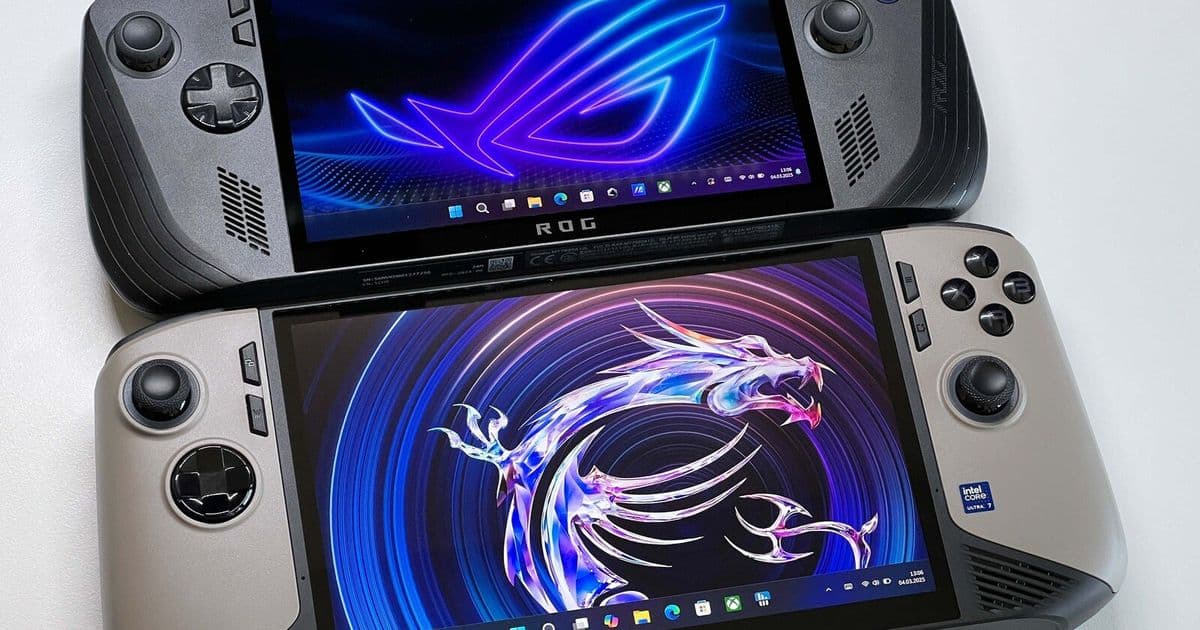
Intel surprises the industry by advancing the release of its next-generation handheld gaming chips, with the Arc G3 and Arc G3 Extreme set to debut on May 28, 2026, ahead of Computex. These promising chips, featuring 14-core CPUs and powerful Xe GPUs, could potentially challenge AMD's dominance in the handheld gaming market.
What's New
Intel is shaking up the handheld gaming landscape with an unexpected early release of its Arc G3 and Arc G3 Extreme processors. Originally anticipated to debut at Computex 2026 (June 2-5), these chips are now scheduled to make their first public appearance on May 28, 2026. The accelerated timeline suggests Intel is confident in its new architecture and eager to establish a foothold in the growing handheld gaming market.
The Arc G3 series represents Intel's latest evolution of the Panther Lake architecture, previously teased at CES 2026 under the codename Core G3. Official naming confirms these will be marketed as Arc G3 and Arc G3 Extreme, aligning with Intel's existing discrete GPU naming convention. This strategic naming likely positions these chips as part of Intel's broader Arc ecosystem, potentially offering better driver support and software optimization across Intel's product lineup.
Both chips feature a 14-core CPU configuration consisting of 2 Performance-cores (P-cores), 8 Efficiency-cores (E-cores), and 4 Low-Power Efficiency-cores (LPE-cores). This hybrid architecture is designed to balance raw processing power with energy efficiency—a critical consideration for battery-powered devices. The Extreme variant distinguishes itself with a slightly higher boost clock speed of 4.7 GHz compared to the standard Arc G3's 4.6 GHz, promising marginal but potentially meaningful performance gains in gaming scenarios.
The most significant difference lies in the integrated GPU. The Arc G3 Extreme houses an Arc B390 GPU with 12 Xe cores, while the standard Arc G3 utilizes an Arc B370 GPU with 10 Xe cores. This 20% increase in GPU core count could translate to substantial performance differences in graphically intensive games, particularly at higher resolutions and quality settings.
How It Compares
In the handheld gaming market, Intel's Arc G3 series faces stiff competition from AMD's existing Ryzen Z1 and Z1 Extreme processors, which currently power most premium handheld gaming devices. According to preliminary benchmarks conducted on simulated hardware, the Arc G3 Extreme already demonstrates promising results, reportedly outperforming AMD's flagship Ryzen Z2 Extreme in several gaming scenarios.
The performance advantage, if realized in final hardware, would mark a significant milestone for Intel in the handheld gaming space. AMD has dominated this segment since its inception, with the Steam Deck and ASUS ROG Ally establishing the baseline for handheld gaming performance. Intel's potential to surpass AMD's offerings would not only validate its Arc architecture but also force competitors to accelerate their own development cycles.
Beyond raw performance, Intel's Panther Lake architecture brings notable power efficiency improvements to the table. Handheld gaming devices operate under strict thermal and power constraints, making efficiency as important as raw performance. The LPE-cores in the Arc G3 series are specifically designed for background tasks and less demanding processes, allowing the P-cores to remain available for gaming workloads without constantly ramping up power consumption.
Comparing the two Arc G3 variants reveals an interesting strategic positioning. The minimal difference in CPU clock speeds (0.1 GHz) suggests Intel is targeting GPU performance as the primary differentiator between the standard and Extreme models. This approach mirrors Intel's desktop strategy, where GPU configurations often define product tiers. For consumers, this means the choice between models will likely come down to budget and the specific performance requirements of their gaming library.
Who It's For
The Arc G3 series targets several key market segments within the handheld gaming ecosystem. For OEMs like MSI and Acer, these chips offer an alternative to AMD's Ryzen Z series, potentially enabling more diversified product lineups and competitive differentiation. MSI is expected to showcase an 8-inch handheld console, likely a revision of its Claw series, while Acer is poised to present the Predator Atlas 8. Both manufacturers have struggled with previous handheld offerings—Acer's Nitro Blaze, for instance, was announced but never reached market—making a successful launch with Intel's new chips crucial for their handheld gaming ambitions.
For gamers, the Arc G3 series represents a potential upgrade path from current-generation handhelds. The promised performance improvements could enable higher frame rates, improved visual fidelity, or better power efficiency, translating to longer gaming sessions without compromising on experience. The chips' architecture also suggests better optimization for modern gaming workloads, potentially addressing some of the performance inconsistencies seen in Intel's previous Arc implementations.
Developers stand to benefit from Intel's continued investment in its Arc ecosystem. With improved driver support and software tools, game studios may find it easier to optimize titles for Intel's architecture, reducing development time and improving cross-platform compatibility. This could lead to a more robust library of handheld-optimized games, further strengthening the appeal of Intel-powered devices.
For Intel itself, the Arc G3 series represents a critical opportunity to establish credibility in the discrete graphics market. While desktop Arc GPUs have shown promise, the handheld segment offers a more controlled environment where Intel can refine its architecture before tackling the high-performance desktop and laptop markets. Success in handhelds could build consumer confidence in Intel's graphics capabilities, potentially driving adoption in other product categories.
The early launch strategy indicates Intel recognizes the importance of timing in the competitive handheld market. By debuting before Computex, Intel can generate buzz and secure partnerships with OEMs, potentially influencing the direction of the entire handheld gaming ecosystem. This aggressive approach could force competitors to adjust their roadmaps, creating a ripple effect across the industry.
Looking ahead, the success of the Arc G3 series will depend on several factors: final performance benchmarks, real-world efficiency, driver stability, and OEM implementation. If Intel can deliver on the promise shown in preliminary tests, the Arc G3 and Arc G3 Extreme could mark the beginning of a new era in handheld gaming, challenging AMD's dominance and introducing much-needed competition to a rapidly growing market.
Comments
Please log in or register to join the discussion