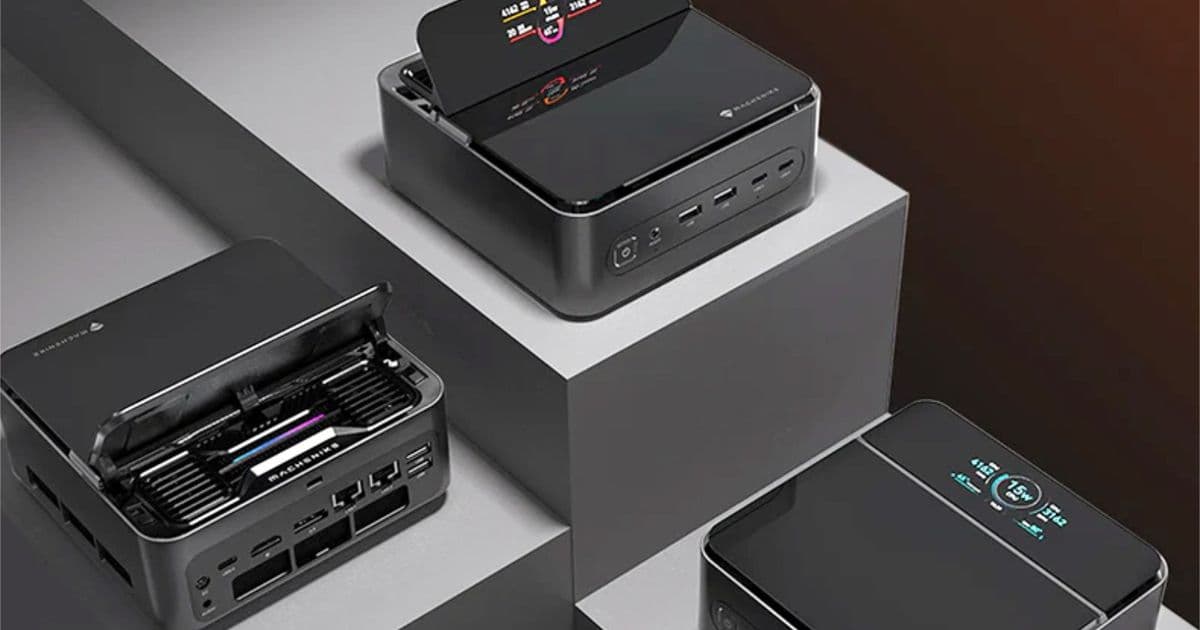
Machenike has launched a more affordable version of its unique GTS mini-PC in China, swapping the flagship Core Ultra 9 processor for a Core Ultra 5 225H. The new model delivers nearly 80% of the CPU performance for about 30% less money, making it a compelling option for budget-conscious buyers who still want the distinctive 2.33-inch foldable display.
Machenike's GTS mini-PC, first launched in China last year, has been a standout for its unusual design featuring a 2.33-inch foldable status display. The original model paired this unique hardware with Intel's top-tier Core Ultra 9 285H processor, positioning it as a premium compact system. We've tested that same processor in other mini-PCs like the Asus NUC 15 Pro+, Beelink GTI15 Ultra, and GMKtec EVO-T1, where it consistently delivered strong multi-threaded performance for its class.
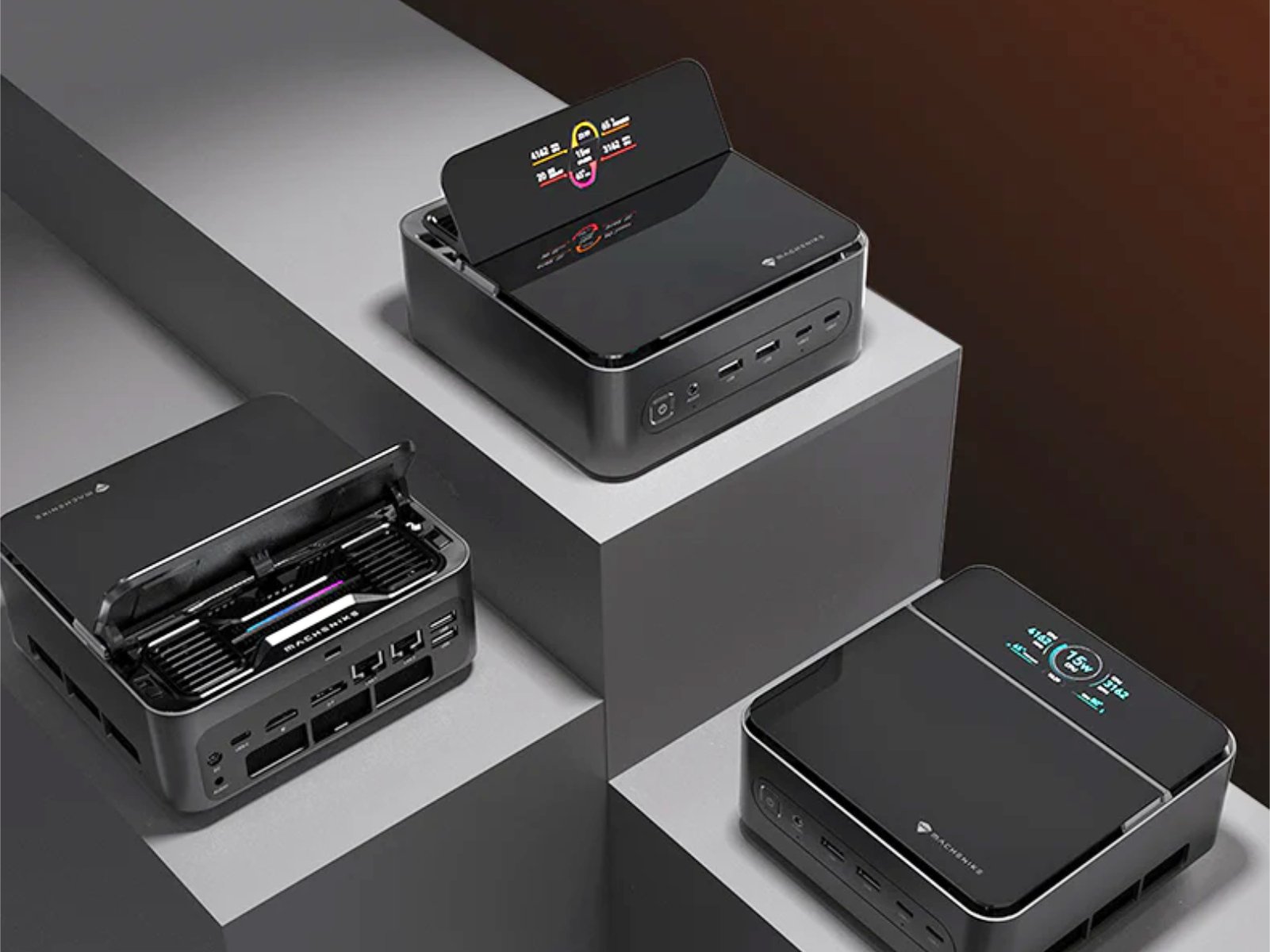
Now, Machenike has addressed the primary barrier to adoption for many potential buyers: price. The company has released a new variant in China equipped with the Intel Core Ultra 5 225H processor instead of the Ultra 9. This move follows the company's earlier confirmation on its global website that the Core Ultra 5 configuration was planned, though international availability remains unannounced.
The Performance vs. Price Equation
The price difference between the two models is substantial. The original Core Ultra 9 285H configuration retailed for approximately $1,165 (CNY 7,999). The new Core Ultra 5 225H variant is listed for ~$815 (CNY 5,669) before any potential subsidies—a reduction of roughly 30%.
This price gap significantly exceeds the performance delta between the two processors. Based on our benchmark data, the Core Ultra 5 225H trails the Core Ultra 9 285H by less than 20% in CPU-heavy, multi-threaded tasks. This means buyers are paying significantly less for nearly 80% of the computational performance in processor-bound workloads.
The gap widens, however, when considering graphics performance. The Core Ultra 5 225H uses the Intel Arc 130T integrated GPU, which falls about 30% behind the Arc 140T found in the flagship Core Ultra 9 285H. For users focused on gaming or GPU-accelerated tasks, this difference is more pronounced, though both iGPUs are primarily suited for light gaming and productivity rather than demanding 3D workloads.
Configuration and Storage
Despite the company's initial mention of multiple memory configurations in November, Machenike is offering the new Core Ultra 5 variant with a single, fixed specification: 32 GB of RAM and 1 TB of storage. This is a generous amount for a mini-PC of this class, providing ample headroom for multitasking and storage needs. The original Ultra 9 model was also available with these specifications, so the only variable between the two systems is the processor and its integrated graphics.
What This Means for Buyers
For users who prioritize CPU performance for tasks like software development, data analysis, or general productivity, the Core Ultra 5 225H variant represents a much better value proposition. The 20% performance reduction is unlikely to be noticeable in most daily workflows, while the $350 savings is substantial.
However, gamers or users who rely on GPU acceleration should consider the trade-off more carefully. The 30% drop in integrated graphics performance could mean the difference between playable and unplayable frame rates in certain titles, though neither model is designed for serious gaming.
The unique foldable display remains a key differentiator. This 2.33-inch panel can show system metrics, notifications, or custom information, adding a layer of utility that most mini-PCs lack. It's a feature that appeals to both enthusiasts and professionals who want at-a-glance system monitoring without cluttering their main display.
Availability and Next Steps
Machenike has not yet announced when the Core Ultra 5 225H variant will be available outside of China. The company's global website listed the configuration as planned, but no timeline was provided. International buyers interested in the GTS mini-PC will need to wait for official distribution channels or consider import options, which may affect the final price.
The launch of this cheaper variant suggests Machenike is targeting a broader market segment. By offering a more accessible entry point, the company can appeal to users who were intrigued by the GTS's unique design but deterred by its premium pricing. It also creates a clear product ladder within the same chassis, allowing buyers to choose based on their performance needs and budget.
For those considering the GTS mini-PC, the decision now comes down to a straightforward calculation: is the 20% CPU performance gain worth the 30% price premium? For most users, the answer is likely no, making the Core Ultra 5 225H variant the more sensible choice—assuming it becomes available in their region.
As Machenike expands its distribution, the GTS series could become a notable player in the competitive mini-PC market, offering a blend of distinctive design and practical performance that sets it apart from more conventional alternatives.
Comments
Please log in or register to join the discussion