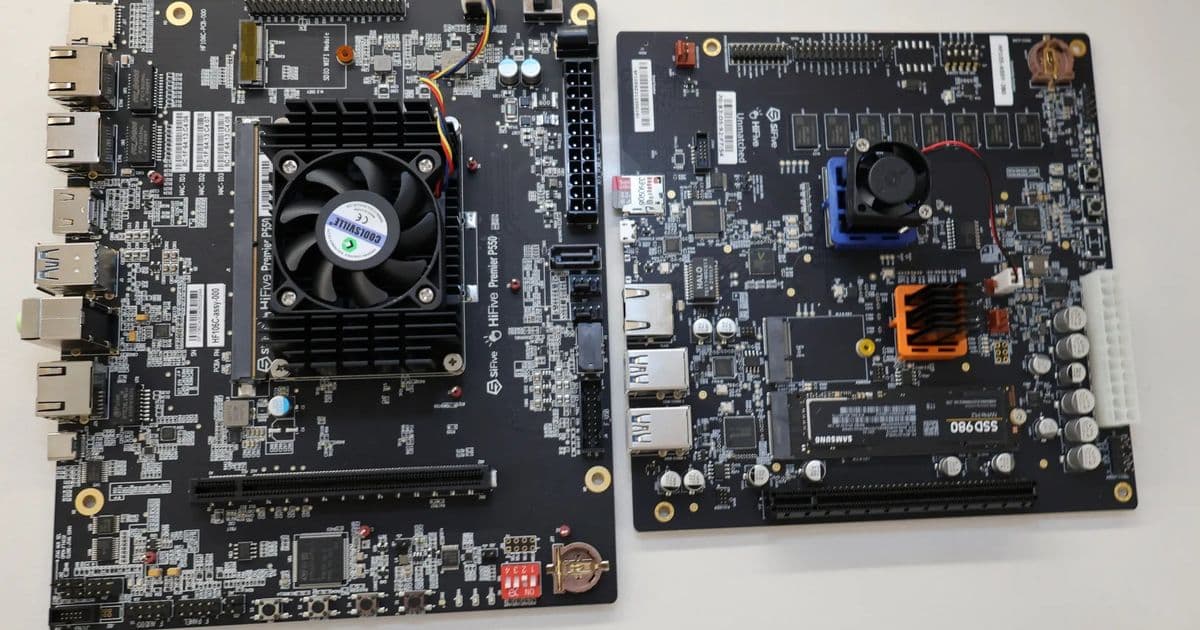
Fedora developers are struggling with extremely slow RISC-V build times, with package compilation taking up to five times longer than x86_64, forcing reliance on QEMU emulation and delaying RISC-V's adoption as a primary architecture.
The current generation of RISC-V processors is creating significant headaches for Fedora Linux developers, with build times for core packages running approximately five times slower than x86_64 systems. This performance gap is forcing the open-source community to rely heavily on QEMU emulation and is delaying RISC-V's potential adoption as a primary architecture in Fedora.
The Build Time Problem
Marcin Juszkiewicz of Red Hat, who has been working on RISC-V package builds for Fedora Linux, detailed the severity of the issue in his latest blog post titled "RISC-V is sloooow." Using GNU Binutils as a benchmark, the performance disparity becomes clear:
| Architecture | Build Time (8 cores) | Notes |
|---|---|---|
| x86_64 | 29 minutes | With LTO optimizations |
| RISC-V | 143 minutes | Without LTO |
| POWER PPC64LE | 46 minutes | |
| AArch64 | 36 minutes | |
| i686 | 25 minutes | Fastest |
These numbers show that even without Link-Time Optimizations (LTO), which would make builds even slower, RISC-V takes nearly five times longer than x86_64 to compile the same package. The situation is so dire that developers are forced to disable LTO system-wide for RISC-V builds to avoid prohibitively long compilation times.
Hardware Limitations
The current RISC-V SoCs available to developers are simply not keeping pace with other architectures. Juszkiewicz points to a few potential improvements on the horizon:
- UltraRISC UR-DP1000 SoC on Milk-V Titan motherboard (up to 64GB RAM)
- SpacemiT K3-based systems (limited to 32GB RAM)
However, he notes these will only provide incremental improvements rather than solving the fundamental performance gap. The goal is to achieve build times below one hour for packages like Binutils, with LTO enabled, on rackable and manageable server hardware comparable to other architectures.
QEMU as a Workaround
With physical hardware proving inadequate, Fedora developers have turned to QEMU emulation as a workaround. The results are telling:
- 80 emulated RISC-V cores can compile LLVM in about four hours
- Physical Banana Pi BPI-F3 builder takes more than ten hours for the same task
This reliance on emulation highlights how far behind current RISC-V hardware is compared to what's needed for practical software development workflows.
Impact on Fedora's RISC-V Strategy
The slow build times are directly impacting Fedora's ability to support RISC-V as a primary architecture. Juszkiewicz states clearly: "Without it, we can not even plan for the RISC-V 64-bit architecture to became one of official, primary architectures in Fedora Linux."
This creates a chicken-and-egg problem: developers need better hardware to build packages efficiently, but better hardware won't be developed without demonstrated demand and community support.
Looking Ahead
Despite these challenges, Fedora is moving forward with plans to start building Fedora Linux 44 for RISC-V. The strategy includes:
- Using the same kernel image across all builders (currently a mix of versions)
- Continuing to disable LTO optimizations
- Bringing in new, faster builders for heavier packages
- Improving hardware capabilities over time
The Broader Context
The performance gap between RISC-V and established architectures like x86_64 and ARM64 reflects the current state of the RISC-V ecosystem. While RISC-V offers compelling advantages in terms of open standards and customization potential, it's still catching up in raw performance and maturity.
For developers and enthusiasts interested in RISC-V, this situation means accepting significantly longer build times or relying on emulation for now. The community is clearly working toward solutions, but the path to parity with other architectures remains a multi-year journey.
As next-generation RISC-V processors begin to emerge, the hope is that they'll narrow this performance gap enough to make RISC-V a viable primary architecture for distributions like Fedora. Until then, developers will need to balance the architectural benefits of RISC-V against the practical realities of much slower build times.
Comments
Please log in or register to join the discussion