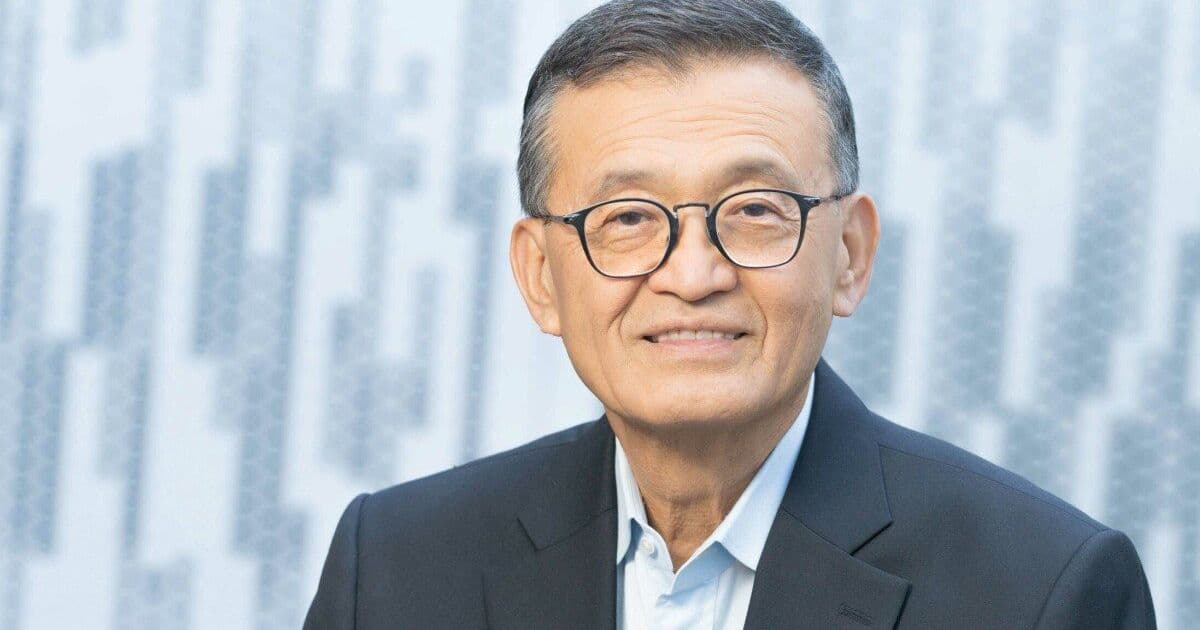
Intel CEO Lip-Bu Tan discloses early hiring difficulties as top talent shunned the company due to bankruptcy concerns, revealing the depth of Intel's crisis before strategic investments and a focus on agentic AI and advanced chip manufacturing began turning the tide.
Intel CEO Lip-Bu Tan has revealed the extent of the company's hiring challenges during his early tenure, with top talent turning down opportunities due to fears that Intel was on the verge of bankruptcy. Speaking at the JP Morgan Global Technology, Media and Communications Conference, Tan candidly shared: "I tried to recruit some talent. They said 'It's almost a bankrupt company, why should I join you?'"
This revelation underscores the precarious position Intel found itself in when Tan took over the leadership of the once-dominant chipmaker. The company's balance sheet was in such dire straits that potential recruits were unwilling to risk their careers by joining what they perceived as a failing enterprise.
Rebuilding Intel's financial foundation became Tan's immediate priority. This effort has since yielded significant results, most notably through securing equity investment from the Trump administration, which converted funds from the CHIPS program in exchange for a stake in the company. Tan also leveraged his extensive professional network, with Nvidia CEO Jensen Huang committing $5 billion and Softbank's Masayoshi Son – a former Intel board member – joining as a backer.
"So far, knock on wood, I made money for them, and they're quite happy," Tan remarked, highlighting the improved financial position that has enabled Intel to buy back a stake it had sold to Apollo, reducing earnings-per-share dilution in the process.
Now, a year into his role, Tan is steering Intel through its comeback with a focus on agentic AI, inference workloads, and an ambitious chipmaking roadmap that extends beyond Intel's upcoming 14A process node to future 10A and 7A chipmaking technologies.
When asked about progress on Intel's process technology, Tan reported that the recently introduced 18A is experiencing a 7 percent per month yield improvement, and the next-generation 14A node is "ahead of schedule" compared to the end-of-year target. "And now I'm starting to look at the 10A, 7A, the roadmap," Tan said. "People don't go to you just for one node. They're looking for the roadmap for the future. So we want to build a long-term business. And then we can drive the efficiency, the defect density, and then we can go to that Rule of 45, how to drive the operating efficiency, the profitability, cash generation."
Intel's 18A and 14A processes refer to 18 and 14 angstroms, respectively. With 10 angstroms equaling 1 nanometer, this suggests Intel is working toward sub-nanometer process technology with its 7A node. While Intel hasn't disclosed specific timelines for these advanced nodes, Tan indicated that 14A risk production would begin in 2028 with volume production in 2029, positioning it competitively with TSMC's A14. Consequently, 10A and 7A nodes are unlikely to be used for chip manufacturing before 2030.
A critical component of Intel's revival strategy is its transition into a foundry service provider for third-party customers. Tan confirmed that Intel is engaged with multiple clients but declined to identify any, noting that disclosure was up to the customers themselves. "Manufacturing used to be Intel's strength, but it lost its way, and has never really been in the foundry service business," Tan admitted, explaining why he recently recruited Shawn Han, a veteran with three decades of experience at Samsung Foundry, to serve as SVP of Foundry Services.
Tan also highlighted the strong interest in Intel's foundry services, noting that customers are even willing to help with pre-payments on wafer substrate materials. "Some of the substrate material is very [short], they're all asking us to prepay the substrate commitment," he claimed. "And we ask our customers, if you are serious to use our EMIB-T [packaging technology], can you help me on the substrate prepay? They jump on it. So they show the commitment, they really want our technology. And this is not a few million, it's billions in the next few years."
Intel's strategic pivot toward AI represents another crucial element of its recovery plan. Tan expects agentic AI and inference workloads to favor CPUs over the GPUs that have driven Nvidia's success. "It used to be that training is 1 CPU to 8 GPUs. And now in the agentic AI with all the agents, startups all tell me, Lip-Bu, CPU actually is more useful, even single-threaded," he explained. "So I can start to see not just my wishful thinking, customers have said to me, Lip-Bu, more like 1:1. And now even some of them tell me it's 4:1. So 4 CPU to 1 GPU, for the inference and agents. And so CPU [is in] high demand, and I try to make sure that we can meet the requirement from the customer."
Despite these positive developments, Intel still faces significant challenges. The company lost $267 million on revenues of $52.9 billion during 2025, an improvement from the $18.8 billion loss the previous year but still far from profitability. Tan's ambitious plans for Intel's revival will require sustained execution across multiple fronts: financial recovery, technological advancement in chip manufacturing, successful transition into foundry services, and capitalizing on emerging AI trends.
The transformation of Intel from a struggling chipmaker on the brink of bankruptcy to a company with renewed ambitions in advanced manufacturing and AI represents one of the most significant turnarounds in the tech industry. As Tan continues to execute his vision, the coming years will determine whether Intel can reclaim its former position as a leader in semiconductor technology.
Comments
Please log in or register to join the discussion