Intel's discontinued OpenPGL path guiding library has been adopted by the Academy Software Foundation, ensuring continued development for the VFX industry after Intel cut the project amid 2025 restructuring.
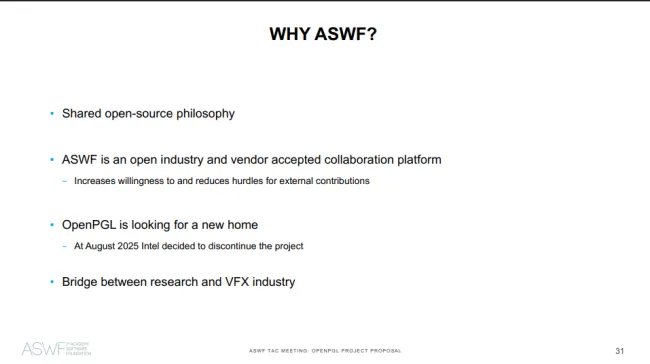
Intel's OpenPGL, an open-source path guiding library that gained significant traction in the visual effects industry, has found a new home at the Academy Software Foundation (ASWF) after Intel discontinued the project in 2025 amid company-wide cost-cutting measures.
From Intel to Industry Stewardship
Originally launched in 2022 as part of Intel's oneAPI Rendering Toolkit, OpenPGL was designed to enhance path-based renderers through advanced path guiding capabilities. The Apache 2.0 licensed library quickly gained adoption beyond Intel's ecosystem, with Blender integrating OpenPGL and other industry players including OpenMoonRay, Autodesk, Corona, Cinema 4D, and V-Ray reportedly incorporating the technology into their commercial offerings.
However, like many open-source initiatives at Intel during 2025's restructuring, OpenPGL development came to an abrupt halt. The GitHub repository, while not formally archived, has seen no commits for eight months, signaling the project's official discontinuation.
ASWF Adoption Ensures Future Development
The Academy Software Foundation, a Linux Foundation-hosted project dedicated to advancing open-source software in content creation, voted to adopt OpenPGL following a Technical Advisory Council review. The transition was formalized through community voting, with the project becoming a new working group within the foundation.
According to the adoption announcement, "The project was initiated in 2022 by Intel as part of the Intel oneAPI Rendering Toolkit, but was recently discontinued due to restructuring and shifting priorities. Given the project's widespread adoption and usefulness to the VFX industry, we want to bring OpenPGL under the ASWF umbrella."
Industry Impact and Notable Adoptions
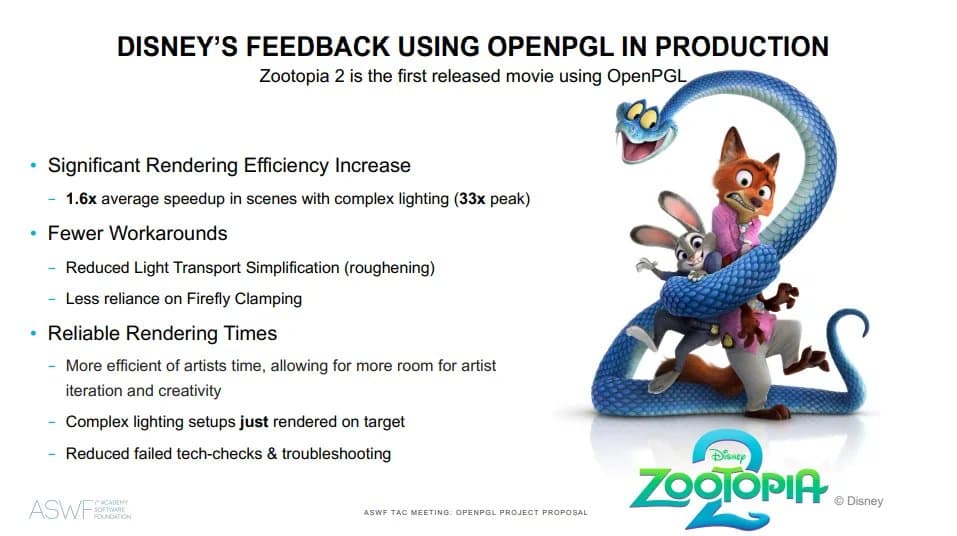
The significance of OpenPGL's adoption extends beyond its technical merits. A presentation deck outlining the case for ASWF stewardship revealed that Disney's Hyperion renderer utilizes OpenPGL, with Zootopia 2 being the first released film to leverage the technology. This Hollywood adoption underscores the library's practical value in high-end production environments.
Sebastian Herholz, who served as the primary OpenPGL developer at Intel, is notably mentioned as joining Blender, suggesting continued industry expertise will support the project's evolution under its new governance structure.
Technical Significance for Path Guiding
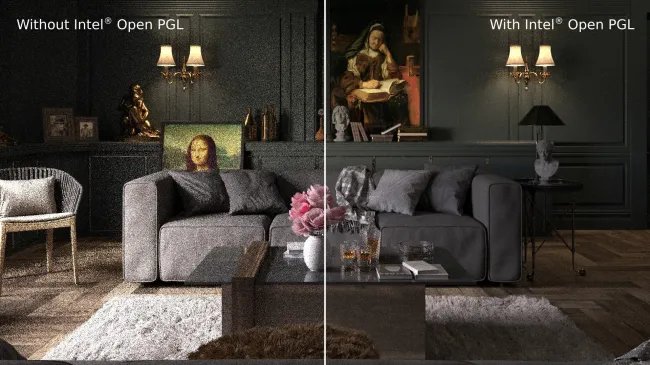
OpenPGL's path guiding capabilities address a critical challenge in rendering: efficiently sampling light paths in complex scenes. By providing intelligent guidance for path tracing algorithms, the library helps reduce noise and improve convergence rates, particularly in scenes with complex lighting scenarios such as caustics, participating media, and global illumination.
The library's adoption by major industry players speaks to its effectiveness in production environments where rendering performance and quality directly impact project timelines and budgets.
Community and Industry Benefits
The transition to ASWF governance represents a positive outcome for the open-source community and the broader VFX industry. Under the foundation's stewardship, OpenPGL will benefit from:
- Sustained development and maintenance
- Community-driven feature development
- Industry-wide collaboration and standardization
- Long-term project viability independent of any single corporate sponsor
This model has proven successful for other ASWF projects, providing a stable foundation for critical open-source infrastructure in the content creation pipeline.
Looking Forward
With OpenPGL now secured within the ASWF ecosystem, the project is positioned for continued growth and refinement. The foundation's experience managing similar initiatives suggests a structured approach to development, community engagement, and industry alignment.
For current users of OpenPGL, including major studios and software vendors, the transition offers reassurance that the technology they've integrated into production pipelines will continue to evolve and receive support. For the broader rendering community, it represents another example of how open-source collaboration can preserve and advance critical technologies beyond their corporate origins.
The story of OpenPGL—from Intel innovation to industry-wide adoption to foundation stewardship—illustrates the evolving landscape of open-source development in specialized technical domains, where community governance often provides more sustainable long-term support than corporate sponsorship alone.
Michael Larabel reported this story for Phoronix on February 18, 2026
Comments
Please log in or register to join the discussion