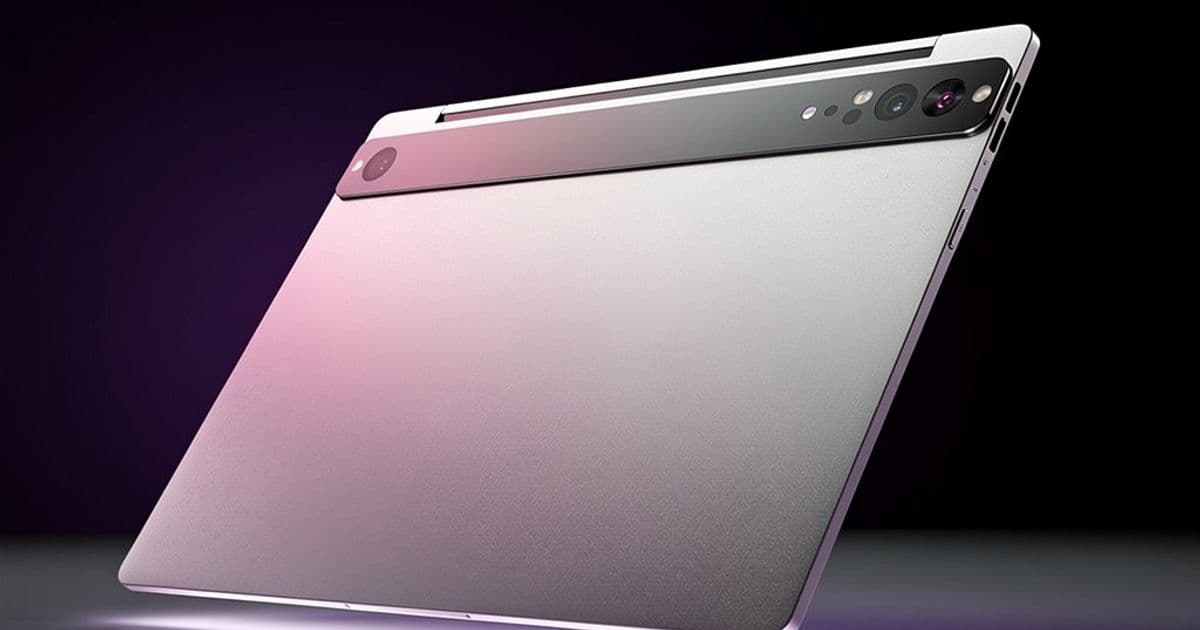
With the first Core Ultra Series 3 Panther Lake laptops imminent, Intel has released a firmware update for the integrated image processing unit (IPU 7.5) that powers the premium web cameras on higher-end models. The update introduces new features, fixes bugs, and includes a new signing key for production chips, but continues the trend of requiring closed-source user-space libraries for full hardware acceleration.
The launch window for Intel's first Core Ultra Series 3 "Panther Lake" laptops is narrowing, with retail availability expected to begin next week. In preparation, Intel has pushed a significant firmware update for the platform's integrated image processing unit (IPU 7.5), a key component for the premium web camera experience on higher-end models.
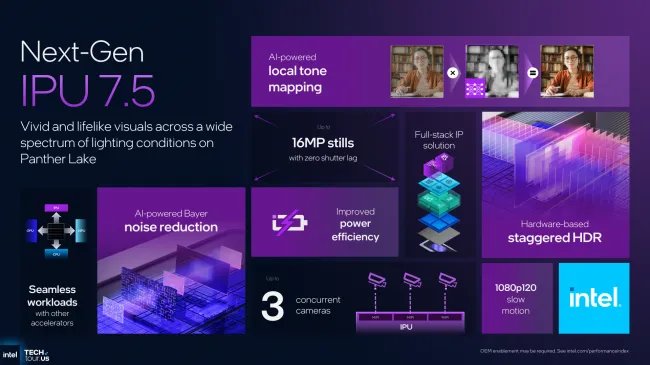
The IPU 7.5 is a dedicated hardware accelerator for image signal processing (ISP) tasks, handling everything from noise reduction and auto-exposure to face tracking and background blur directly on the silicon. This offloads the CPU, which is critical for maintaining performance during video conferencing on thin-and-light laptops where thermal headroom is limited. As Intel highlighted at its Arizona event, the IPU 7.5 is positioned as a differentiator for a "leading web camera experience."
It's important to note that not all Panther Lake laptops will utilize this hardware. Lower-end configurations will likely fall back to standard USB-based web cameras that rely on software processing. The premium IPU experience is tied to MIPI-connected camera sensors, a common setup in higher-tier ultrabooks and business laptops.
The Firmware Update Details
The new firmware package, now available in the linux-firmware.git repository, contains three key changes:
New Signing Key: A new cryptographic signing key has been added to support Production Release Qualified (PRQ) Panther Lake chips. This is a standard security measure to ensure firmware authenticity and integrity, preventing the installation of malicious or incompatible firmware on production hardware.
New Features: Intel's release notes mention the addition of "some new features," but provide no specific details on what these capabilities are. This is typical for pre-launch firmware, where functionality may be refined up until the last moment. Potential additions could include new computational photography modes, improved low-light processing algorithms, or support for additional sensor types.
Bug Fixes: As with any firmware update, a number of stability and correctness bugs have been addressed. These fixes are crucial for ensuring a reliable user experience from day one, especially for a new hardware platform.
The Open-Source Conundrum
For Linux users and open-source enthusiasts, the story of Intel's IPU hardware is a familiar one. While the firmware itself is now available in the standard Linux firmware tree, full utilization of the IPU's capabilities remains gated by closed-source user-space libraries.
This situation has persisted since the introduction of the IPU in the Alder Lake generation. The hardware is present and the firmware is available, but the complete, optimized image signal processing pipeline is delivered through proprietary binaries. Without these libraries, the system must fall back to software-based ISP running on the CPU, typically using the open-source libcamera stack. This fallback works, but it sacrifices performance and power efficiency—the very reasons the IPU exists.
For a homelab builder or a developer working on computer vision applications, this creates a tangible trade-off. You can get the hardware working on Linux, but you're leaving significant performance on the table unless you accept the closed-source components. It's a classic example of the gap between hardware availability and open-source driver support.
Build Recommendations & What to Watch
For those planning a Panther Lake-based build or evaluating a laptop for purchase, the IPU firmware update is a positive sign of platform maturity. Here’s what to consider:
For Video Conferencing Professionals: The IPU 7.5 is a major asset. Look for laptops that explicitly mention MIPI camera connections or premium web camera features. The firmware update ensures these systems will be stable at launch.
For Linux Developers & Enthusiasts: Be prepared for the closed-source library requirement. If you plan to do any custom image processing or computer vision work on the IPU hardware, you'll need to integrate Intel's proprietary libraries. Alternatively, you can rely on libcamera's software ISP, which is fully open-source but less efficient.
For Benchmarking: As mentioned, Phoronix will be publishing detailed benchmarks of Panther Lake Linux performance soon. Pay close attention to the IPU-related tests, which will quantify the performance delta between the hardware-accelerated path and the software fallback. This data will be critical for understanding the real-world impact of the closed-source stack.
The updated firmware is a necessary step for a smooth launch, but it also underscores the ongoing challenge in the Linux hardware ecosystem: getting full, open access to the silicon's capabilities. Panther Lake's IPU 7.5 is powerful, but its full potential on Linux is still partially locked behind a proprietary door.
Comments
Please log in or register to join the discussion