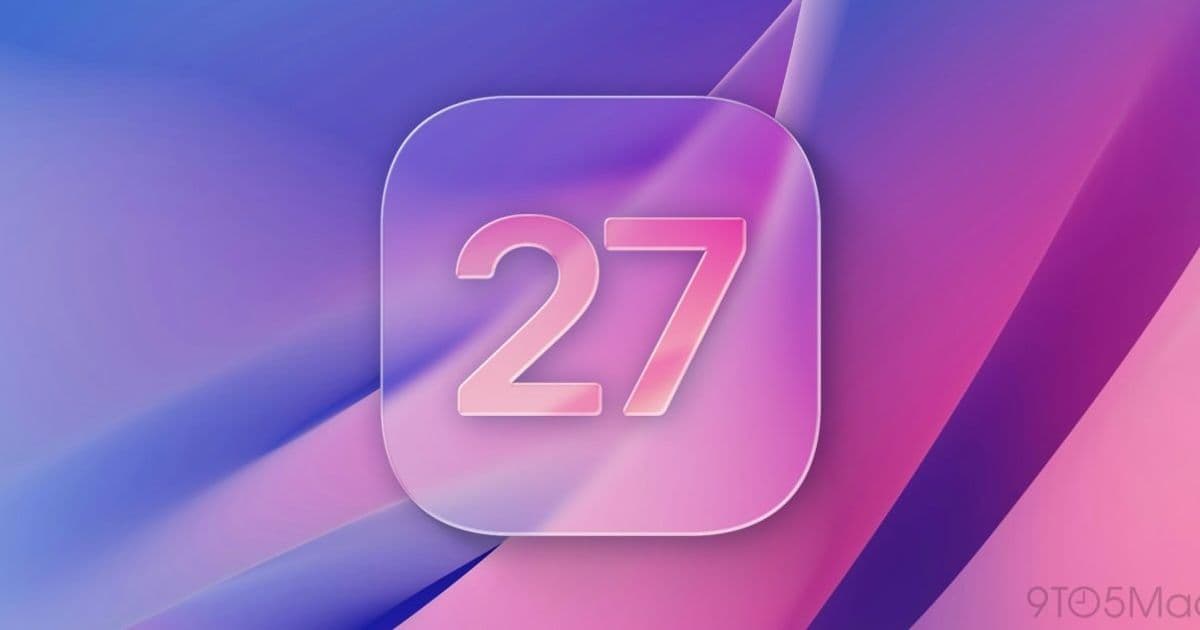
Apple's upcoming iOS 27 won't bring major changes to the controversial Liquid Glass design, according to Bloomberg's Mark Gurman, though a systemwide customization slider remains a possibility.
In just a few months, Apple is expected to unveil its latest round of operating systems: iOS 27, macOS 27, watchOS 27, and so on. Previous reports on iOS 27 have heavily focused on how this year's operating systems should focus more on performance improvements and overall stability. In today's Power On newsletter, Bloomberg's Mark Gurman reports that we probably won't see any serious changes to Liquid Glass, though there could still be some minor ones.
A lot of people aren't the biggest fans of Liquid Glass, partly due to poor readability. Personally, I've always liked Liquid Glass quite a bit – but I do understand a lot of people's concerns. Design lead Alan Dye, who was largely in charge of designing Liquid Glass, even departed Apple late last year – leaving for Meta. That meant a new design lead, Steve Lemay, took his place. Many had hoped that new design leadership would mean that things would go in a different direction shortly.
Since the debut of iOS 26, we've gotten a few options to customize Liquid Glass, with iOS 26.1 adding the 'Tinted' option, and iOS 26.4 adding the option to disable Liquid Glass highlights. Despite those tweaks, Gurman reports that we probably won't see any sweeping changes with Liquid Glass, reporting that "the latest internal versions of iOS 27 and macOS 27 don't reflect major design changes."
Ultimately, Liquid Glass took a lot of time to design, so it won't get overhauled overnight. He says to expect "years of gradual improvements."
iOS 27 might add another slider
Still, Gurman reports that Apple might add one more layer of customization to Liquid Glass: During development of iOS 26, Apple had been working on a systemwide slider that would allow users to finely control the level of the glass effect. The company was able to implement this feature for the clock on the lock screen but ran into engineering challenges when trying to extend it across the entire system — including app folders, the home screen and navigation bars.
If Apple manages to make that systemwide control work in iOS 27 as desired — alongside broader engineering improvements — the entire conversation around Liquid Glass could once again change dramatically. This is seemingly more speculative than direct reporting, but nonetheless – it would be really cool seeing a systemwide slider to adjust your level of glass, beyond just the 'Clear' and 'Tinted' option we have today – similar to how it works with the lock screen clock.
Are you happy with Liquid Glass, or would you like to see more sweeping changes sooner? Let us know in the comments.
Understanding Liquid Glass and its reception
Liquid Glass represents Apple's most ambitious visual redesign in years, introducing a translucent, glass-like aesthetic across iOS, iPadOS, and macOS. The design philosophy aims to create depth and hierarchy through transparency effects, allowing content to show through interface elements.
However, the implementation has faced criticism from various quarters. Readability concerns top the list of complaints, with users reporting difficulty distinguishing between interactive elements and static content when transparency effects are applied. The glass-like appearance can sometimes reduce contrast, making text and icons harder to discern, particularly for users with visual impairments.
Performance considerations have also emerged as a point of discussion. The complex rendering required for Liquid Glass effects demands more GPU resources, potentially impacting battery life and frame rates on older devices. Some users have reported that the visual effects can feel "heavy" or "sluggish" compared to previous, more straightforward interface designs.
The departure of Alan Dye, the design lead behind Liquid Glass, to Meta late last year sparked speculation about potential design direction changes. Dye had been instrumental in shaping Apple's visual language for years, and his exit raised questions about whether Apple would pivot away from the glass aesthetic under new leadership.
The case for gradual evolution
Gurman's report that iOS 27 won't see major Liquid Glass changes aligns with Apple's typical design philosophy. Major visual overhauls can disrupt user workflows and require significant relearning, so Apple often prefers incremental improvements that maintain familiarity while addressing pain points.
The "years of gradual improvements" approach suggests Apple is committed to refining rather than replacing Liquid Glass. This strategy allows the company to:
- Address specific usability issues without breaking established patterns
- Optimize performance and battery impact over time
- Gather user feedback and data to inform targeted improvements
- Maintain visual consistency across the ecosystem
This measured approach contrasts with the more dramatic design shifts seen in some competing platforms, where yearly visual overhauls can create fragmentation and user frustration.
The potential of a systemwide customization slider
The rumored systemwide slider represents an interesting middle ground between maintaining Liquid Glass and giving users more control. If implemented successfully, it could address several key concerns:
Accessibility improvements: Users could reduce transparency effects to improve contrast and readability, addressing one of the most common complaints about Liquid Glass.
Performance optimization: Lowering the glass effect intensity could reduce GPU load, potentially improving battery life and performance on older devices.
Personalization options: The slider would give users fine-grained control over their visual experience, similar to how they can already customize lock screen clock transparency.
Gradual adoption: Users uncomfortable with full Liquid Glass effects could dial them back while still maintaining some of the design language's benefits.
However, implementing such a systemwide control presents significant engineering challenges. The effects need to work consistently across diverse interface elements – from app folders and home screen icons to navigation bars and system controls. Ensuring visual coherence while allowing variable transparency levels requires careful design consideration.
What this means for developers
For app developers, the likely continuity of Liquid Glass design means minimal disruption to existing apps. However, several considerations remain important:
Testing across transparency levels: If the systemwide slider becomes available, developers should test their apps at various transparency settings to ensure readability and usability remain intact.
Performance monitoring: Continued optimization for Liquid Glass effects may be necessary, particularly for apps with complex interfaces or animations. Accessibility compliance: Ensuring apps work well with reduced transparency could become increasingly important as users gain more control over visual effects.
Design consistency: Apps that embrace rather than fight against Liquid Glass effects may provide better integration with the overall system experience.
Looking ahead
The next few months will reveal whether Apple can overcome the engineering challenges to deliver the systemwide slider Gurman mentions. Even if that specific feature doesn't materialize in iOS 27, the report suggests Apple is actively exploring ways to make Liquid Glass more flexible and user-friendly.
For users frustrated with the current implementation, the message is clear: major changes aren't coming immediately, but incremental improvements are likely to continue. The "years of gradual improvements" timeline suggests Apple views Liquid Glass as a long-term design direction rather than a short-term experiment.
Whether this approach satisfies critics remains to be seen. Some users may continue to prefer more traditional, opaque interface designs, while others might appreciate the depth and modernity that Liquid Glass aims to provide. The potential addition of user control through a systemwide slider could help bridge this divide by allowing each user to find their preferred balance between visual effects and usability.
The iOS 27 announcement, expected at Apple's Worldwide Developers Conference in June, will provide more concrete details about what changes – if any – are coming to Liquid Glass and how Apple plans to address ongoing user concerns about the design language.
Comments
Please log in or register to join the discussion