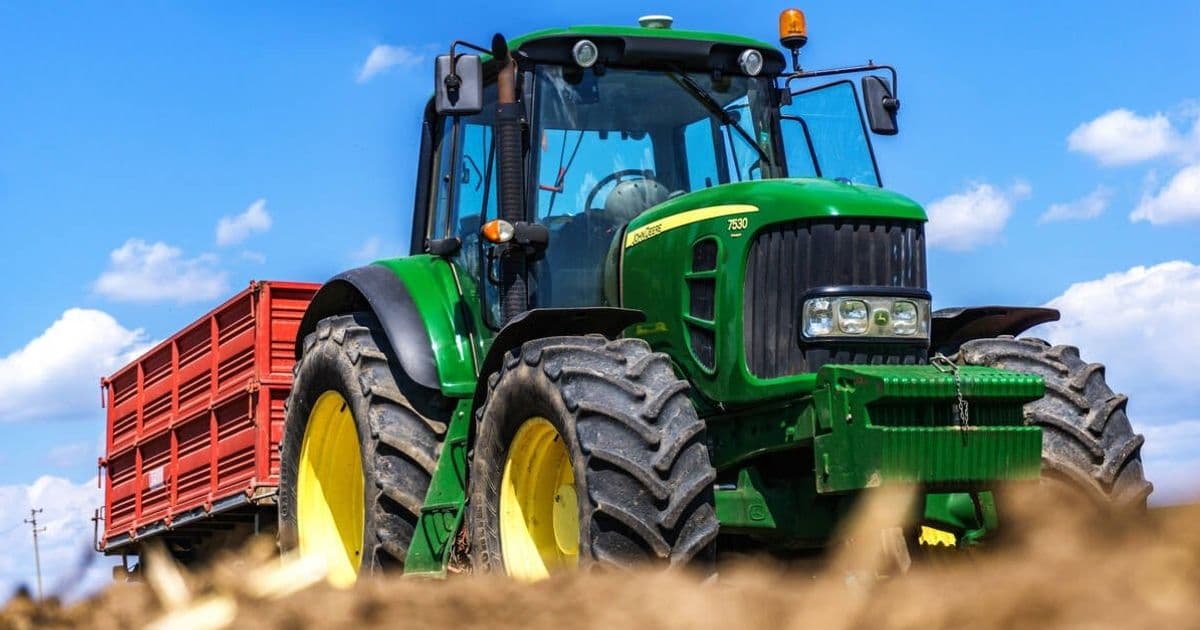
Iowa's House Agriculture Committee voted 18-5 to advance right-to-repair legislation that would give farmers access to proprietary repair software, challenging John Deere's control over tractor maintenance.
Iowa has taken a significant step toward expanding farmers' rights to repair their own equipment, with the state's House Agriculture Committee voting 18-5 last week to advance a right-to-repair bill that could fundamentally change how agricultural machinery maintenance operates in the nation's second-largest farming state.
The bill, HSB 751, addresses a long-standing frustration among farmers who have found themselves increasingly dependent on authorized dealers for repairs to their modern, software-driven tractors and combines. Equipment manufacturers like John Deere have historically restricted access to proprietary diagnostic software, tools, and documentation, effectively creating a repair monopoly that critics argue drives up costs and extends downtime during critical farming seasons.
"When farmers have to send their equipment away for repair, it results in downtime, loss of productivity, and therefore vital revenue," explains the bill's supporters. The legislation aims to remove these barriers by requiring manufacturers to provide independent repair shops and farmers with the same diagnostic tools and repair information currently available only to authorized dealers.
The timing is particularly significant for Iowa, which boasts nearly 87,000 farms responsible for 7.5 percent of the nation's agricultural output. With approximately 83 percent of the state's land dedicated to farming, any legislation affecting agricultural operations has the potential for widespread impact. Only California surpasses Iowa in agricultural production, making the Hawkeye State a crucial battleground for right-to-repair legislation.
Electronics repair advocate iFixit has expressed optimism about the bill's prospects, stating that "we think it's got a good chance of passing." The organization specifically called out John Deere as a company actively working against such legislation, noting that "if you buy a half-million-dollar machine, you should not need corporate permission to keep it running."
The right-to-repair movement has gained momentum across the United States in recent years, with Colorado being the only state to pass legislation specifically addressing farming equipment. Other states have implemented similar laws for consumer electronics and powered wheelchairs, but agricultural machinery has remained a contentious area due to the complexity of embedded software systems and manufacturers' claims about safety and intellectual property protection.
Economic implications are substantial. The Public Interest Research Group (PIRG) estimates that comprehensive right-to-repair legislation could save U.S. farmers $4.2 billion annually. For independent farmers operating on tight margins, these savings could mean the difference between profitability and financial strain, particularly during years when crop prices are low or weather conditions are challenging.
John Deere's position on this issue has evolved over time, though not without controversy. In 2023, the company signed a memorandum of understanding with the American Farm Bureau Federation, agreeing to provide independent repair shops with necessary tools in exchange for the AFBF not supporting right-to-repair legislation beyond the agreement's scope. However, this arrangement has come under scrutiny.
US Senator Elizabeth Warren wrote to John Deere's CEO in October 2024, alleging that the company had effectively reneged on the deal by providing repair shops with "impaired tools and inadequate disclosures." The senator suggested that John Deere may have signed the memorandum primarily as a strategy to kill right-to-repair legislation while maintaining the status quo.
Adding another layer to the controversy, Senator Warren also suggested that John Deere might be violating the Clean Air Act by restricting repairs to emissions systems. The Environmental Protection Agency has weighed in on this issue, with Administrator Lee Zeldin stating that "temporary overrides of proprietary emission control systems are allowed under the Clean Air Act."
Zeldin's statement emphasized the EPA's position that the right to affordable repairs is crucial for farming communities to thrive. "For far too long, manufacturers have wrongly used the Clean Air Act to monopolize the repair markets, hurting our farmers," he said. "Common sense is following the law as it is written, and that is what the Trump EPA is committed to doing."
The EPA's clarification that temporary emission control system overrides are permissible under federal law directly challenges manufacturers' arguments that repair restrictions are necessary for environmental compliance. This regulatory backing provides additional support for right-to-repair advocates who argue that manufacturers have been using environmental regulations as a pretext for maintaining repair monopolies.
John Deere has not yet responded to requests for comment on the Iowa legislation or the broader right-to-repair debate. The company's previous statements have emphasized concerns about safety, emissions compliance, and the protection of proprietary technology, though critics argue these concerns are overstated and used to justify anti-competitive practices.
The Iowa bill's advancement represents more than just a local policy change—it signals a potential shift in the national conversation about who controls the repair of increasingly complex agricultural equipment. As farming operations become more dependent on technology, the question of who has the right to maintain and repair that technology becomes increasingly important to the agricultural economy.
With the bill moving forward in Iowa and similar legislation being considered in other states, the pressure on equipment manufacturers to adapt their business models continues to grow. The outcome in Iowa could serve as a model for other agricultural states grappling with the same issues of equipment access, repair costs, and farmer autonomy.
For Iowa's farmers, the potential benefits are clear: reduced downtime, lower repair costs, and greater independence in maintaining their operations. For the broader agricultural community, the Iowa bill represents a test case for whether farmers can reclaim control over the equipment that has become essential to modern farming practices.
Comments
Please log in or register to join the discussion