
Leaked dummy units of Apple's upcoming iPhone 18 Pro, Pro Max, and the highly anticipated foldable iPhone Ultra provide our first concrete look at the next generation of iPhones. The leaks confirm significant camera upgrades, reveal the foldable device's form factor, and highlight Apple's continued design evolution.
Apple's upcoming flagship lineup has been revealed through leaked dummy units showing the iPhone 18 Pro, iPhone 18 Pro Max, and the mysterious foldable device reportedly named iPhone Ultra. These physical models, created based on CAD renders sent to case makers, typically offer accurate representations of final products, giving us valuable insights into Apple's design direction for the second half of 2026.
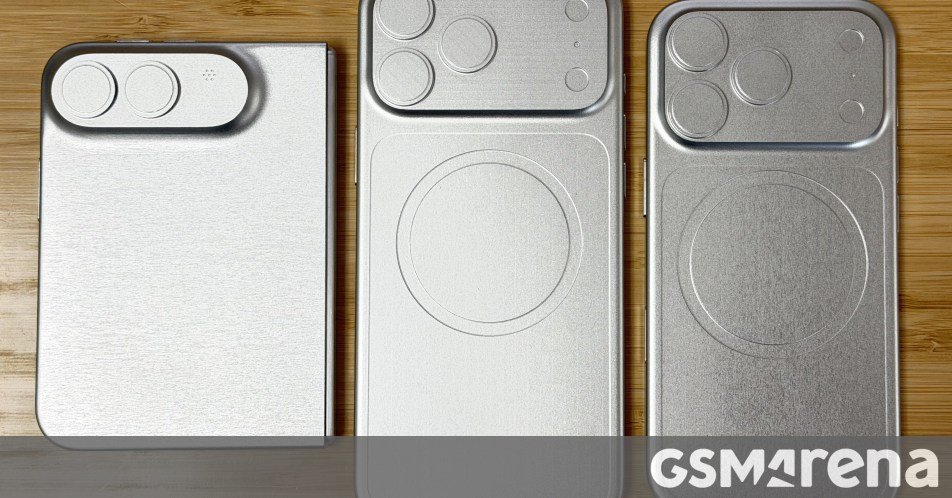
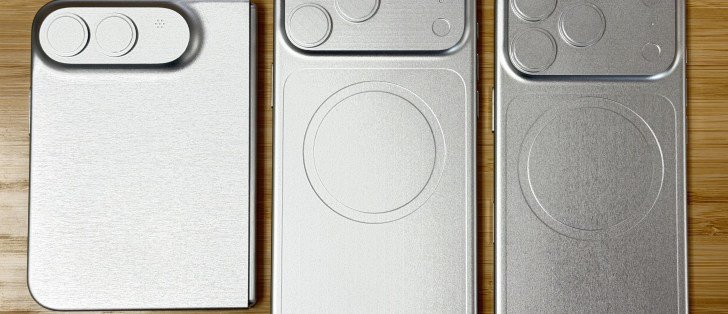
The dummy units confirm several significant changes across the Pro models while introducing a completely new form factor with the Ultra. For photography enthusiasts, the most noticeable upgrade is the substantial increase in camera island thickness. The iPhone 18 Pro Max measures 11.54mm when including the camera plateau, up from 11.23mm on its predecessor. When fully accounting for the camera protrusion, the total thickness reaches 13.77mm, compared to 12.92mm on the iPhone 17 Pro Max. This suggests Apple may be implementing larger camera sensors or additional optical elements to enhance low-light performance and computational photography capabilities.
Interestingly, the iPhone Ultra appears to omit MagSafe support entirely, a surprising decision for Apple's premium device. This raises questions about whether the foldable will support wireless charging at all or if Apple has developed an alternative proprietary solution. The Ultra is also rumored to feature just two cameras, which seems minimal for a device positioned as Apple's most expensive iPhone ever. This could indicate a focus on computational photography over raw sensor count, or perhaps Apple plans to differentiate the Ultra with unique camera capabilities rather than quantity.
When unfolded, the iPhone Ultra presents a form factor that bridges the gap between smartphones and tablets. Its screen width closely matches the length of an iPhone 17 Pro Max, while standing at 111.5mm tall. Comparisons with an iPad mini reveal that while the iPhone's screen will be smaller, its bezels are expected to be significantly thinner, resulting in a more compact overall package. This design approach suggests Apple is targeting users who desire tablet-like productivity in a more portable form factor.
The timing of these releases follows Apple's typical product cycle, with the iPhone 18 Pro, Pro Max, and Ultra expected to launch together at Apple's annual September event. Standard models including the iPhone 18, iPhone 18e, and iPhone Air 2 are rumored to arrive the following spring, maintaining Apple's strategy of separating premium and mainstream launches.
From an ecosystem perspective, the iPhone Ultra represents Apple's first serious entry into the foldable market, a segment that has gained significant traction among Android manufacturers. The omission of MagSafe could indicate Apple's attempt to create a unique charging ecosystem for its foldable device, potentially integrating charging directly into the hinge mechanism or developing a new magnetic alignment system. This would differentiate the Ultra from existing foldables while maintaining Apple's reputation for innovative hardware design.
The camera configuration of the Ultra raises interesting questions about Apple's photography strategy. With only two cameras in what's expected to be a premium device, Apple may be focusing on quality over quantity, potentially leveraging its computational photography expertise to deliver superior results. Alternatively, the Ultra could feature enhanced zoom capabilities or advanced sensor-shift technology that doesn't necessarily require additional camera modules.
For case makers and accessory manufacturers, these leaks provide crucial information for developing compatible products. The increased camera thickness on the Pro models will require redesigned cases to accommodate the larger camera bumps, while the Ultra's foldable nature presents entirely new challenges for protective solutions. The absence of MagSafe on the Ultra suggests accessory makers will need to develop alternative mounting solutions for this device.
As Apple continues to refine its product lineup, these leaks offer a glimpse into how the company is balancing innovation with practicality. The Pro models show incremental improvements to existing designs, while the Ultra represents a more significant departure from traditional smartphone form factors. This dual approach allows Apple to cater to different market segments while maintaining its reputation for quality and user experience.
The September launch will be critical for Apple as it faces increasing competition in the premium smartphone market. The camera upgrades in the Pro models and the introduction of the Ultra could help Apple maintain its premium positioning, especially as the company continues to invest in computational photography and display technologies that differentiate its products from competitors.
Comments
Please log in or register to join the discussion